
Some cats are content on the sofa, but plenty clearly want to be out exploring the world for themselves. Harness training a cat is the safe way to give them that, and it comes down to patience, small steps, and rewards your cat genuinely loves. Before you start, you will need a well-fitting cat harness and lead and a pocket of treats.
Why Harness Train Your Cat?
Harness training your cat is worth the effort because it lets them explore the outdoors safely, without the risks that come with roaming free. Fresh air, new smells and a bit of exercise do wonders for an indoor cat's mood and confidence, especially one that spends most of the day watching the world through a window.
There is a practical side too. A cat that already accepts a harness and lead is calmer at the vet, easier to manage during travel, and simpler to settle into new spaces. For nervous or shy cats, short supervised outings can build real confidence over time.
Harness Training a Cat Step by Step
Harness training a cat works best as a sequence of small stages, each one building on the last. Move to the next step only when your cat is relaxed and happy with the current one. If they seem worried at any point, go back a stage rather than pushing on.
Step 1: Choose the Right Cat Harness
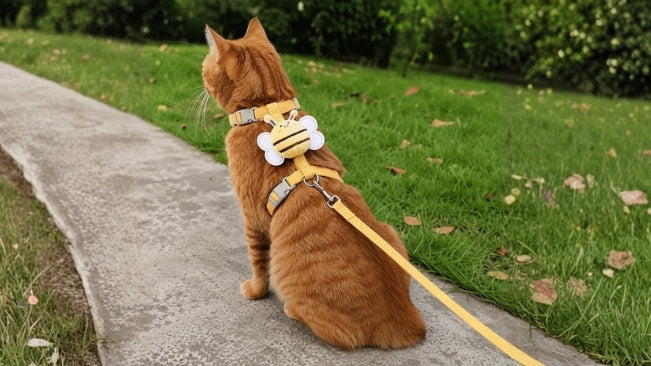
Choosing the right cat harness is where good training starts, because a harness your cat can wriggle out of undoes all your work. Go for a lightweight one made specifically for cats, with the lead attaching at the back rather than the neck, so it never pulls on their throat. A vest-style harness is your safest bet for a first-timer, as it spreads pressure gently and leaves your cat little to escape from.
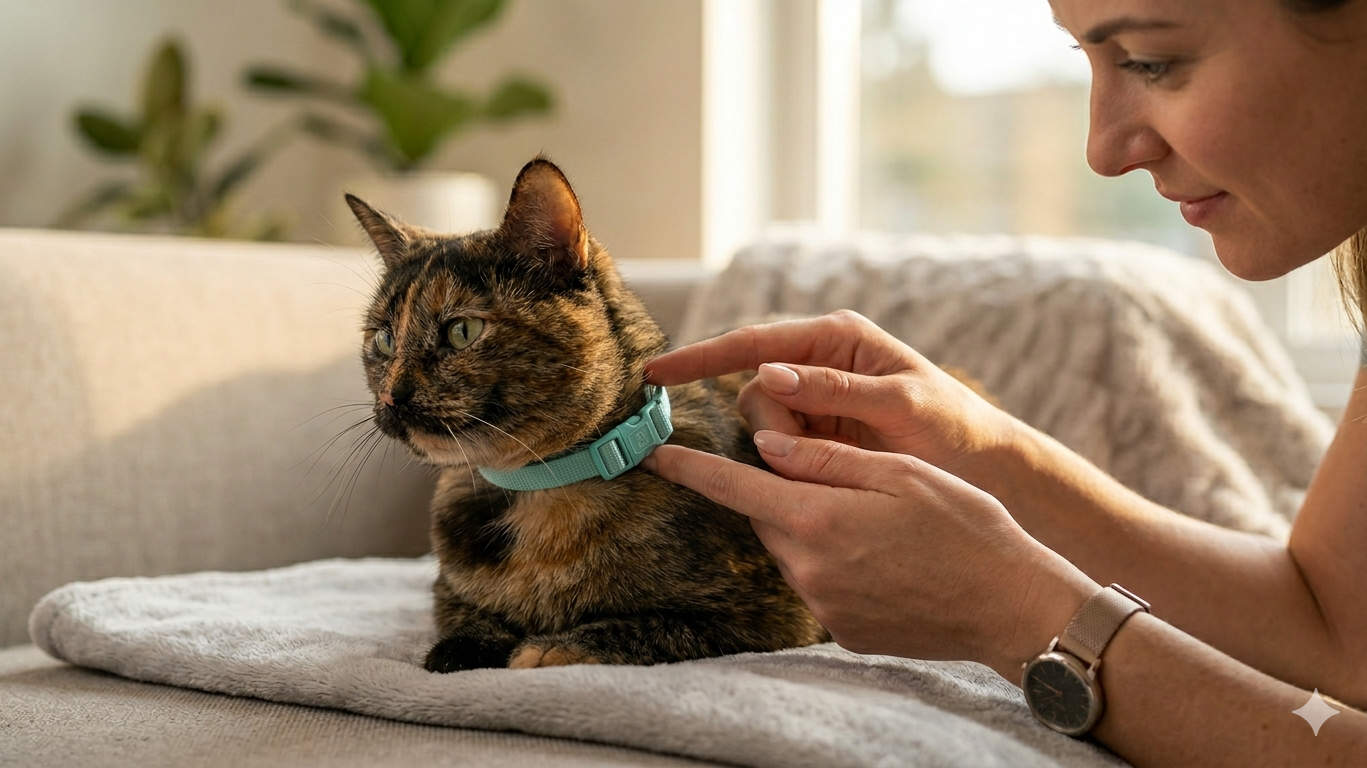
A cat collar is still ideal for everyday wear and an ID tag, but for walks you want the fuller support of a harness. Adjustable straps matter here, since you will be fine-tuning the fit as your cat gets used to it.
Step 2: Let Your Cat Get Used to the Harness
Letting your cat get used to the harness before you put it on prevents the panic that ends most attempts early. Leave the harness near their food bowl or favourite sleeping spot for a few days, so it picks up familiar smells and stops being something new and strange.
Reward any interest with a treat or gentle praise. The goal is simple: your cat should see the harness and think of good things, not a battle.
Step 3: Put the Harness on Your Cat
Putting the harness on your cat is the stage where fit really matters, so keep the first sessions short and reward every calm moment. Slip it on, fasten it, hand over a treat, and take it off again after a minute or two before your cat loses interest. Repeat daily, slowly building up the time it stays on.
Check the fit each time. You should be able to slide two fingers between the harness and your cat's body: snug enough that it cannot slip off, loose enough to stay comfortable. That two-finger rule is the same one that tells you how tight a cat collar should be, and it applies just as well to a harness.
Step 4: Attach the Lead Indoors
Attaching the lead indoors lets your cat feel its weight in a space they already trust. Clip it on and let it drag along the floor while you supervise, distracting your cat with play or treats so they barely notice it is there.
Once they seem unbothered, pick up the lead and follow your cat around rather than steering them. Hold a treat a step ahead and reward them for moving towards you. Never pull or drag: the lead is there to guide, not to control.
Step 5: Take Your First Walk Outdoors
Taking your first walk outdoors should only happen once your cat is fully relaxed on the lead inside. Start somewhere quiet and enclosed, like a garden or patio, and carry your cat out rather than letting them dash through an open door. Keep these first outings short and let your cat set the pace as they sniff and explore.
Before any outdoor access, check with your vet that your cat is fully vaccinated and microchipped. Not every cat takes to the outdoors, and that is perfectly fine. The harness alone still gives them safe access to a balcony or a sunny doorstep.
How Long Does It Take to Harness Train a Cat?
Harness training a cat usually takes anywhere between a few days and several weeks, depending on your cat's age and temperament. Kittens and young cats often adapt quickly, while older or more cautious cats simply need more time and gentler pacing.
Short, regular sessions work far better than long ones. A confident kitten might be padding around indoors on the lead within a week, whereas a wary adult could spend a fortnight just learning to enjoy wearing the harness. Neither pace is wrong.
Troubleshooting Harness Training
Troubleshooting harness training almost always means slowing down rather than trying harder. If your cat freezes or flops onto their side the first time they wear the harness, that is a normal reaction. Keep sessions brief, reward any movement, and go back to simply wearing the harness indoors until they relax.
If your cat refuses the harness altogether, return to the settling-in stage and leave it out longer with a few treats scattered nearby. A cat that keeps backing out is usually wearing a harness that is too loose, so check that two-finger fit and consider a snug vest style. And if your cat panics the moment they are outside, head straight back indoors, shorten the sessions, and pick a calmer, quieter spot next time.
Every cat learns at their own speed, so celebrate the small wins and let your cat lead the way. When they are ready to explore, the right kit makes all the difference. Have a look through our cat harnesses and leads, chosen with comfort and security in mind, and find the one that suits your cat best.
Ready to Explore With Your Cat?
Every cat learns at their own speed, so celebrate the small wins and let your cat lead the way. When they are ready for the outside world, the right kit makes all the difference. Browse our full cat range to find the harness, lead and extras that suit them best.