
Dog coats for winter keep your dog warm and dry when the temperature drops and pavements turn cold, wet or icy. This guide covers which dogs need one, when to use it and what to look for.
Which dogs need a winter coat?
Not every dog needs a winter coat, but some feel the cold far more than others. Small and toy breeds lose heat quickly because of their size, and short-haired or thin-coated dogs such as greyhounds, whippets and Chihuahuas have little natural insulation to fall back on. Lean dogs, puppies and older dogs tend to struggle too, and it is these dogs that get the most out of a good winter dog coat on a cold walk.
Dogs that have recently been clipped lose some of their usual protection too. Breeds that sit low to the ground can also pick up a cold, wet belly the moment they touch snow or icy grass. Thick, double-coated breeds are the exception: Huskies, Malamutes and many larger working dogs carry their own built-in winter coat and are usually content in the cold without one. Every dog is an individual, so if your companion has a health condition or you are unsure, it is always worth a quick word with your vet.
How do you know if your dog needs a coat?
You can tell your dog needs a coat by watching how they behave in the cold rather than guessing. A dog that is feeling the chill will often shiver, slow down, tuck their tail, lift their paws off cold ground or seem reluctant to carry on with the walk. Some will whine or keep turning back towards home.
A simple rule of thumb helps here: if you are reaching for your own coat before heading out, your four-legged friend may appreciate one too. Puppies and older dogs can tire faster in the cold, so they are worth checking on more often. Keep an eye on your pet throughout the walk, and if they show signs of getting too cold, head home and let them warm up gradually.
At what temperature does a dog need a coat?
Most dogs that feel the cold benefit from a coat once the temperature drops to around 5°C, a figure many UK vets and animal welfare charities point to as a sensible rule of thumb. Small dogs and thin-coated breeds often notice it sooner, and below 5°C it is worth watching every dog for signs of discomfort, whatever the breed.
Temperature is only part of the picture. Wind, rain and wet snow make the air feel much colder against your dog's skin, so a damp 6°C walk can be harder going than a dry, still 3°C one. For wet and snowy conditions in particular, warmth on its own is rarely enough.
What to look for in a winter dog coat?
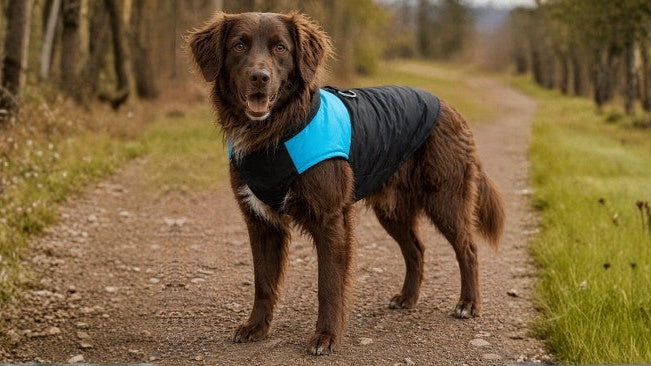
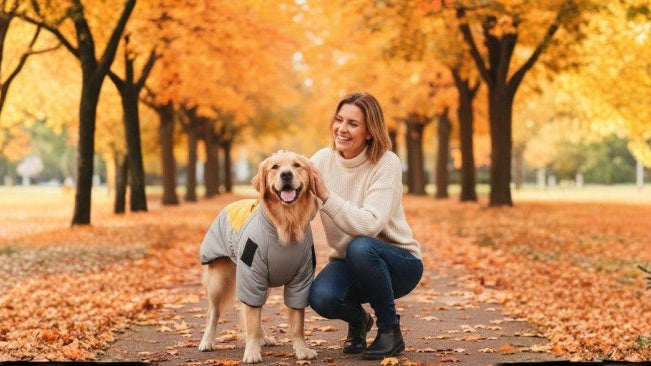
A good winter dog coat combines warmth, weather protection and a comfortable fit that lets your dog move freely. Coverage matters: a jacket style that wraps around the chest and belly suits small or low-slung dogs, while a blanket style over the back and shoulders works well for taller dogs. Full-body coats with sleeves give the most cover for dogs that really feel the cold.
Beyond the shape, look for a soft fleece lining or padding for warmth, reflective detailing for dark winter mornings and evenings, and an opening for a harness or lead. We stock winter dog coats for small, medium and large dogs, chosen with these features in mind, so your pet stays warm and visible without being restricted.
Do you need a waterproof dog coat?
A waterproof dog coat is usually worth it in the UK, where winter brings rain and sleet as often as snow. A waterproof, windproof outer layer stops the cold and wet reaching your dog's skin, which is where most of the discomfort starts. Water-resistant coats shrug off a light shower, but for heavy rain or snow a fully waterproof coat keeps your dog drier for longer. Several coats in our range pair a waterproof outer with a warm lining for exactly this.
How to measure your dog for a winter coat?
Measuring your dog for a winter coat takes three quick measurements: back length, chest girth and neck. For the length, run a soft tape along the back, between the base of the neck and the base of the tail. Take the girth around the widest part of the ribcage, then measure the neck where a collar normally sits. Check these against the size guide on each product, and aim for a coat that sits snugly without rubbing or restricting the legs.
Getting your dog used to wearing a coat
Getting your dog used to wearing a coat is easiest when you take it slowly and keep it positive. Start with short sessions indoors, paired with treats and praise, so the coat becomes something your dog links to good things rather than a fuss. Once they are relaxed in it, move on to short walks.
Never force a coat on a dog that is clearly anxious about it, and build up gradually instead. A coat is meant for cold outdoor walks, so take it off once you are back in the warmth to keep your dog from overheating indoors.
Finding the right winter coat for your dog
Finding the right winter coat comes down to your own dog: their size, their coat, their age and the weather where you walk. We choose every coat the way we would for our own dogs, weighing up warmth, waterproofing and a fit that holds up to a real British winter. Have a look through our winter coat range to find the style and size that suits your companion, and give the colder months the welcome they deserve.