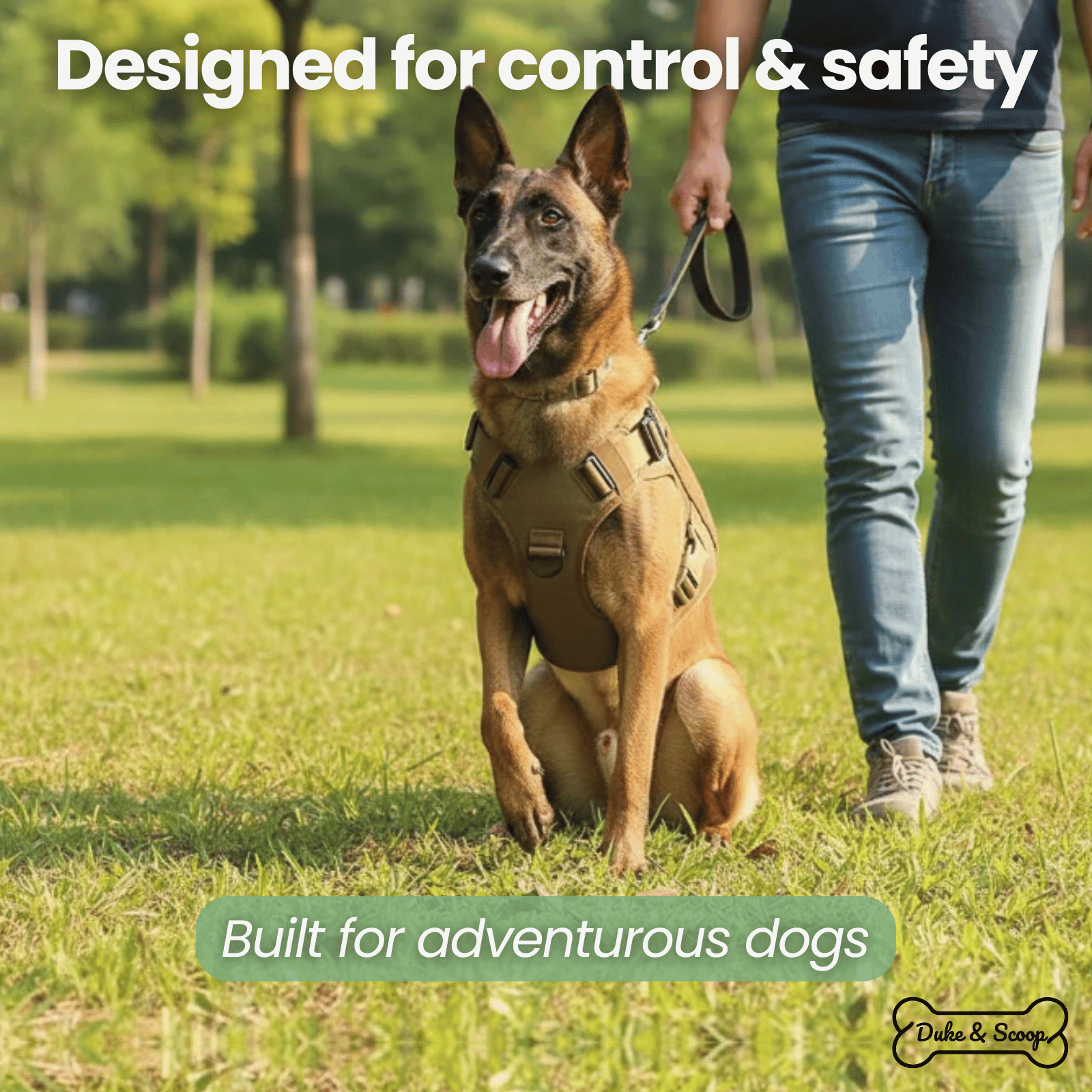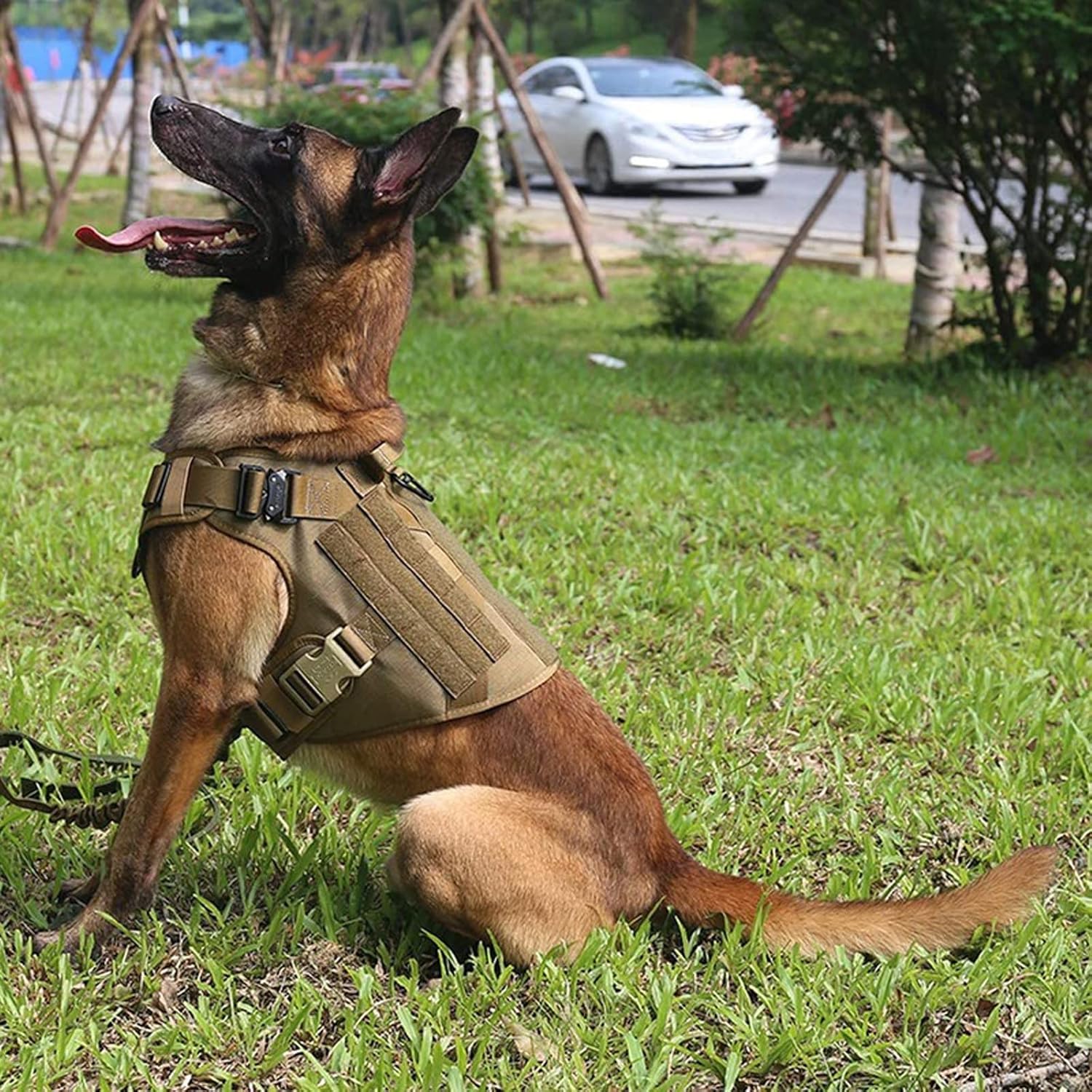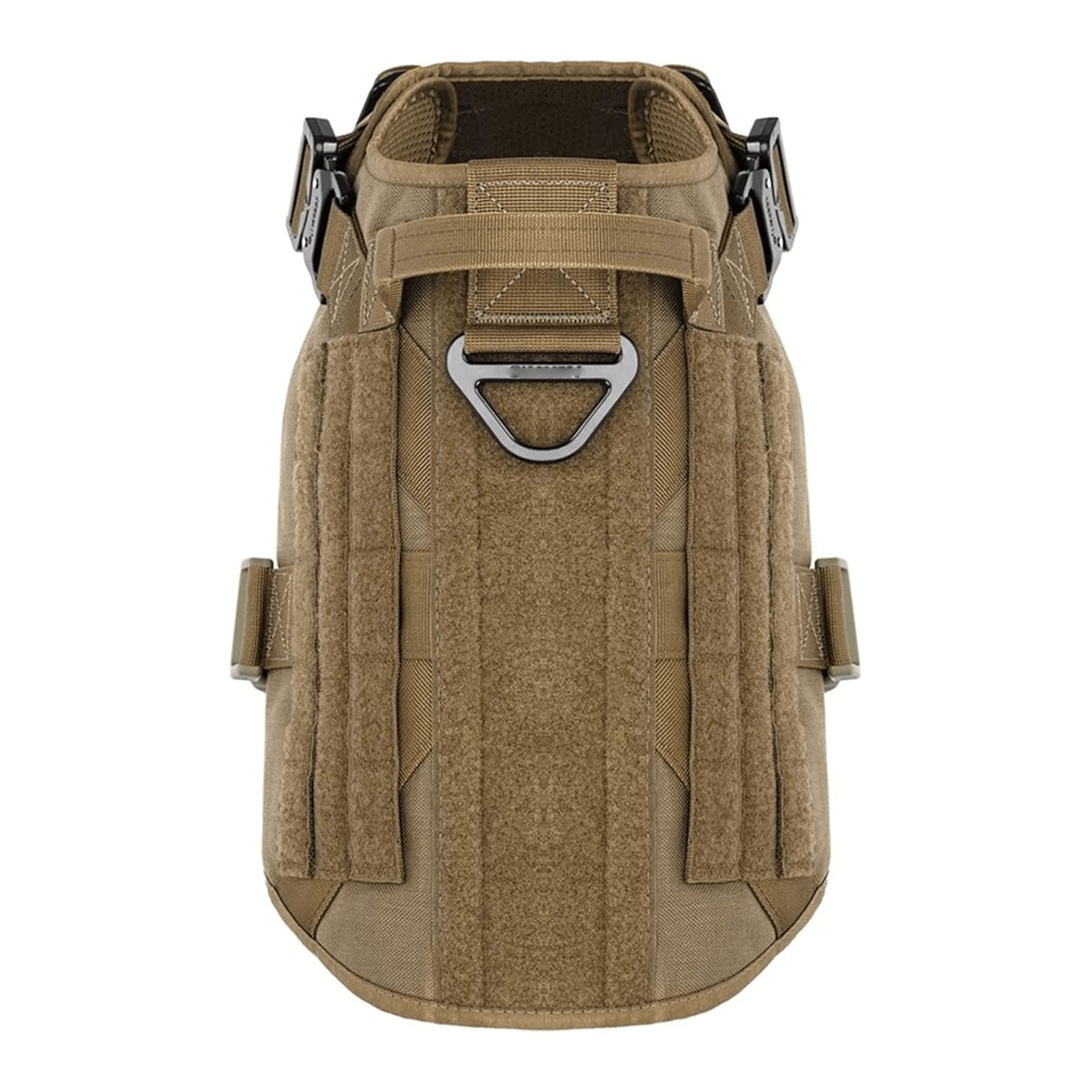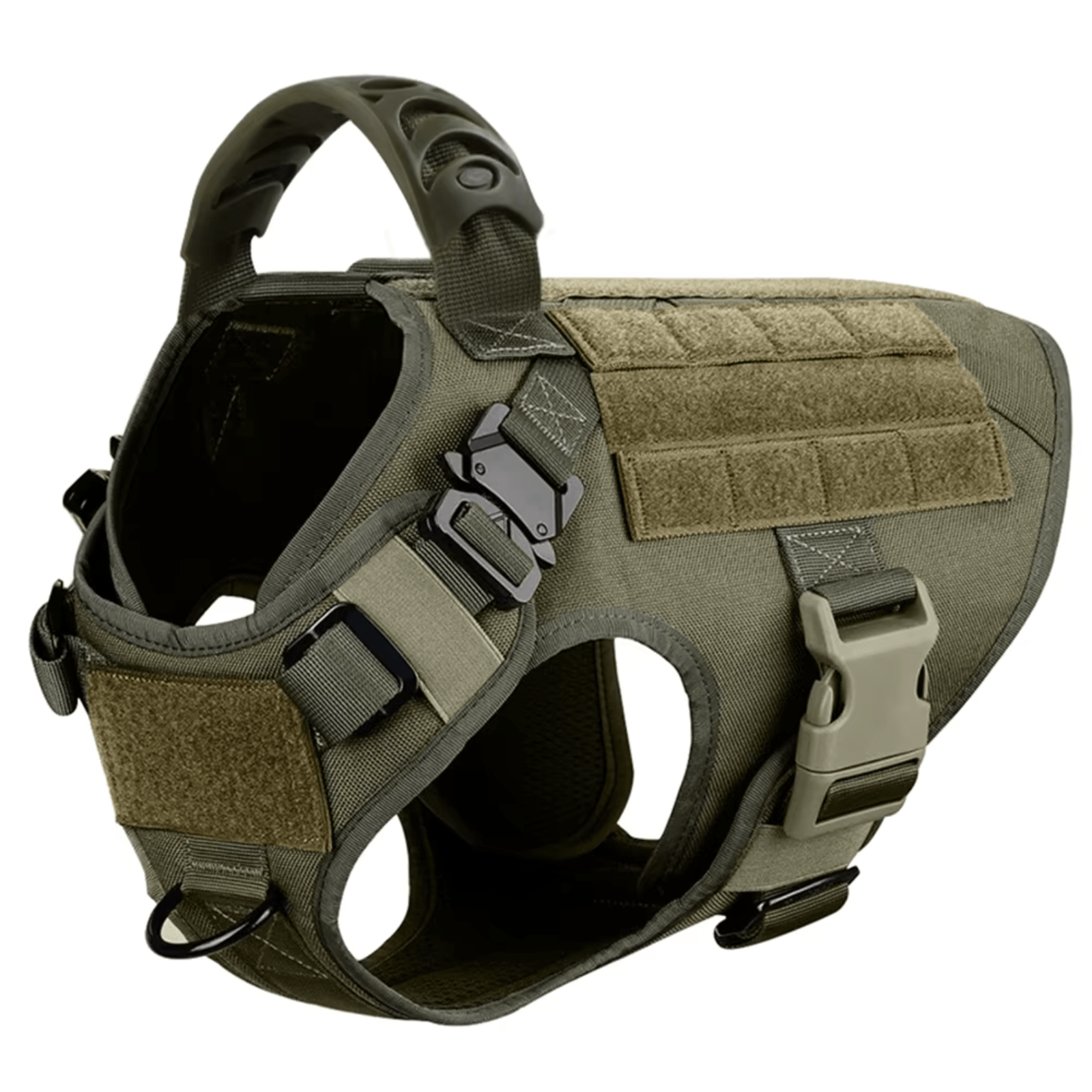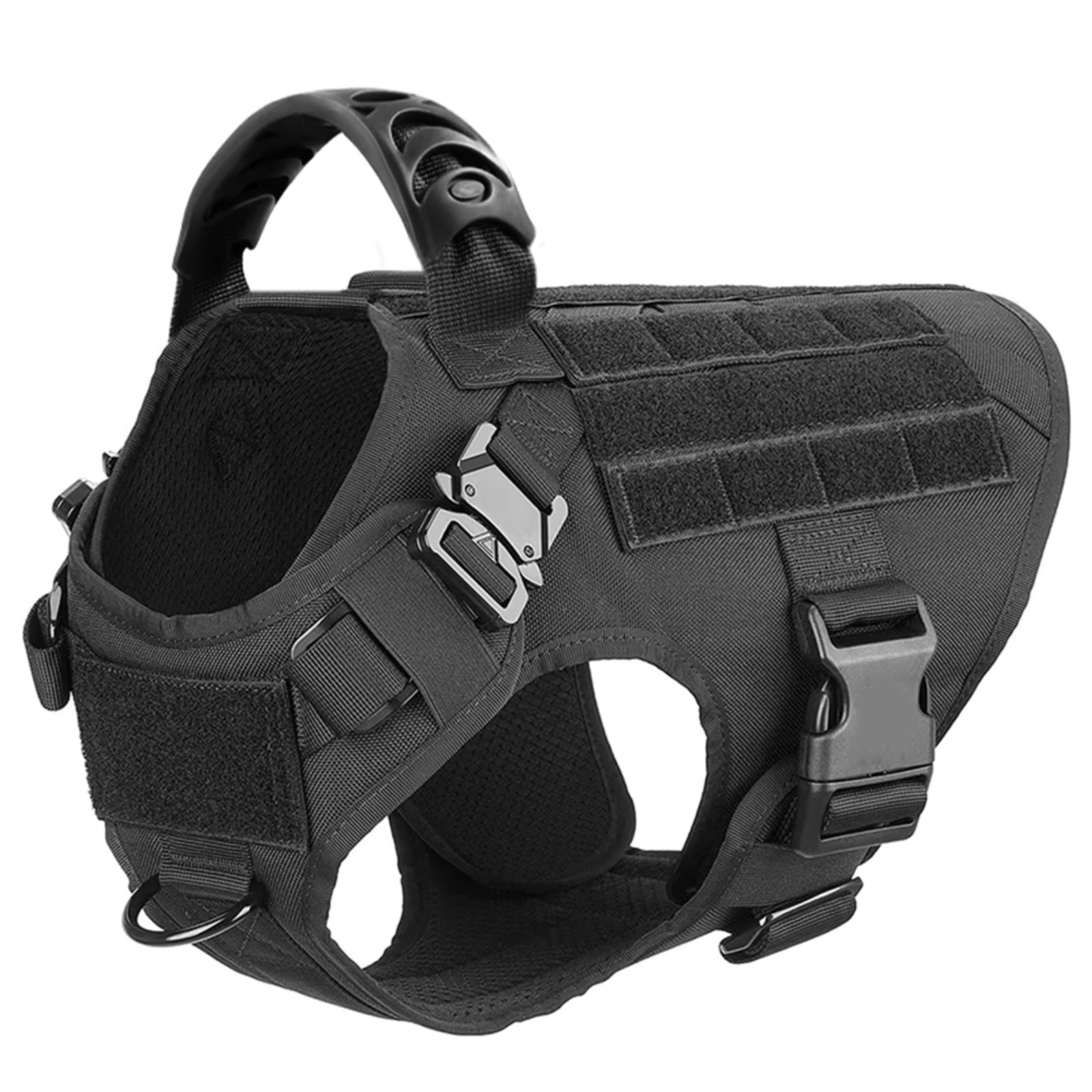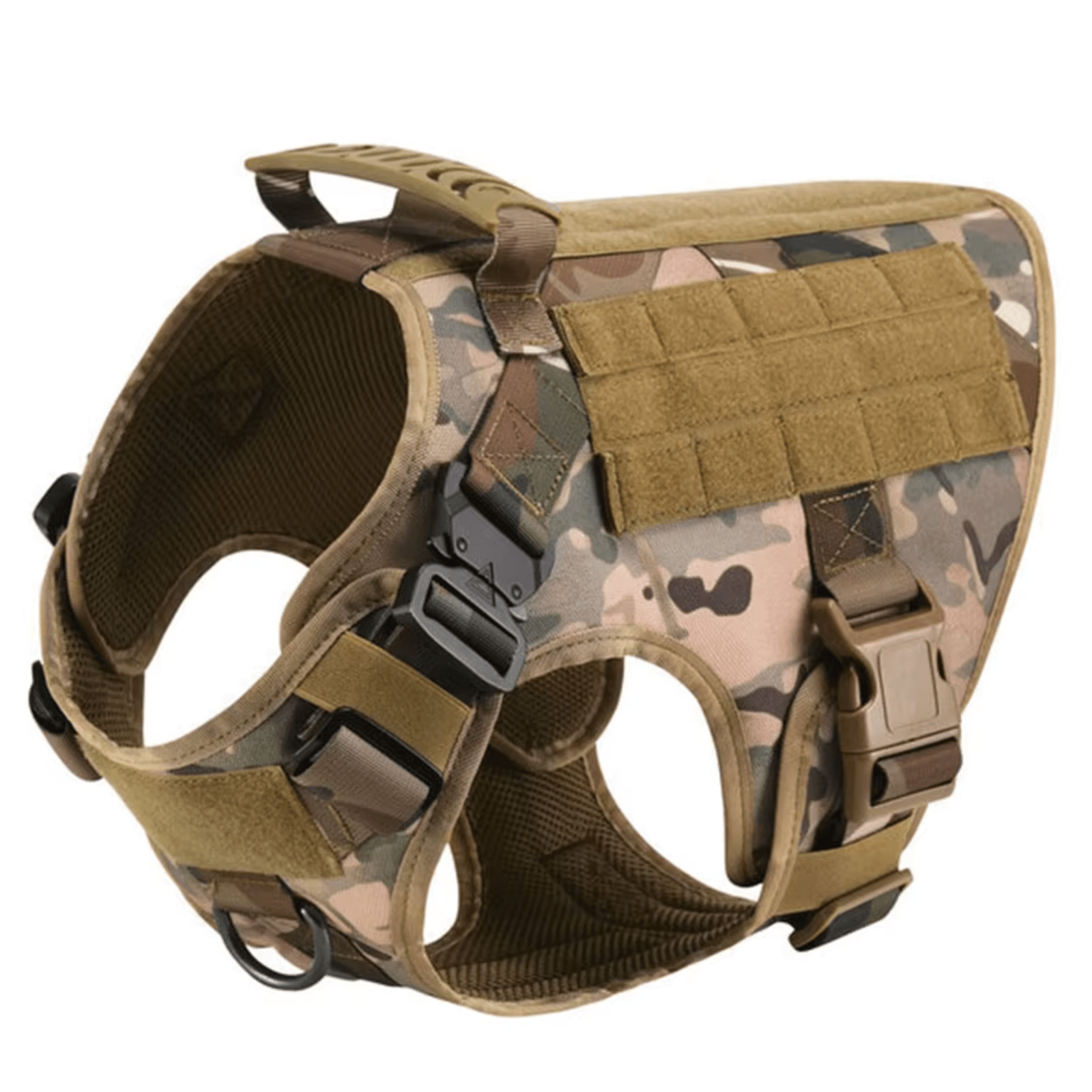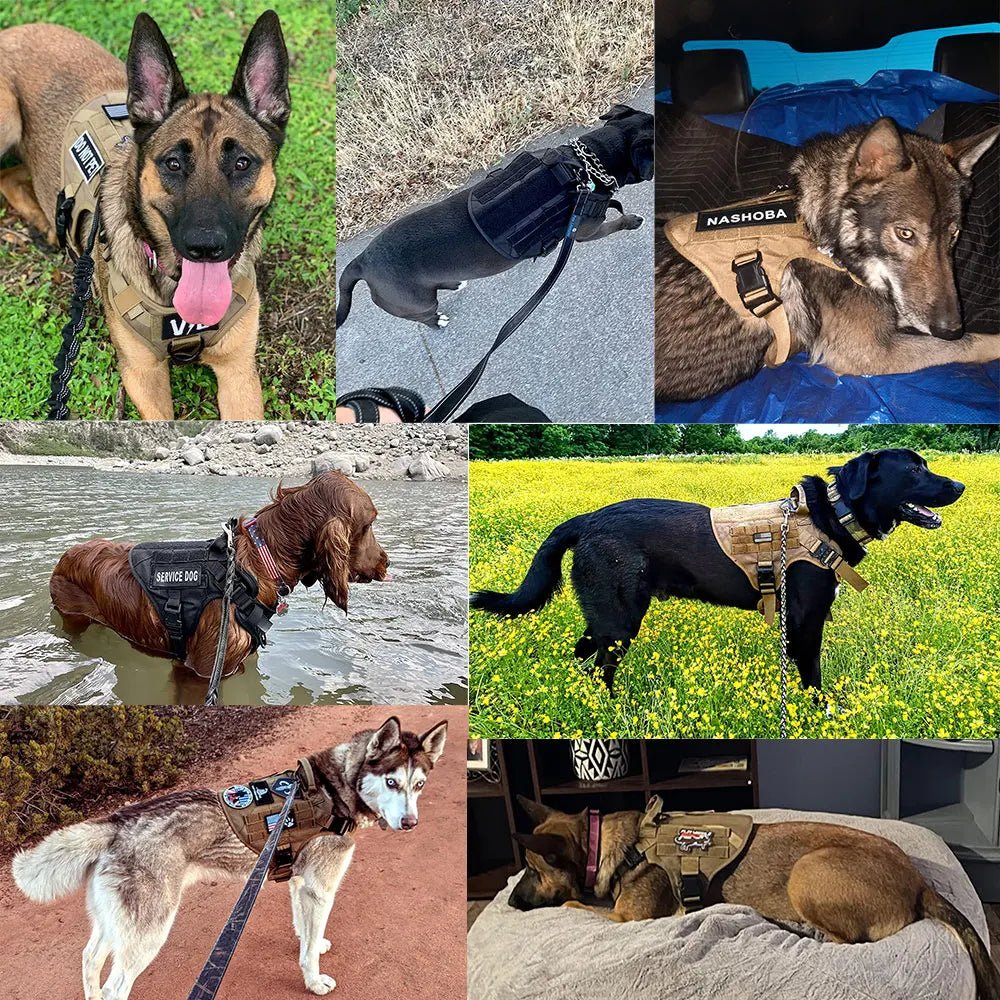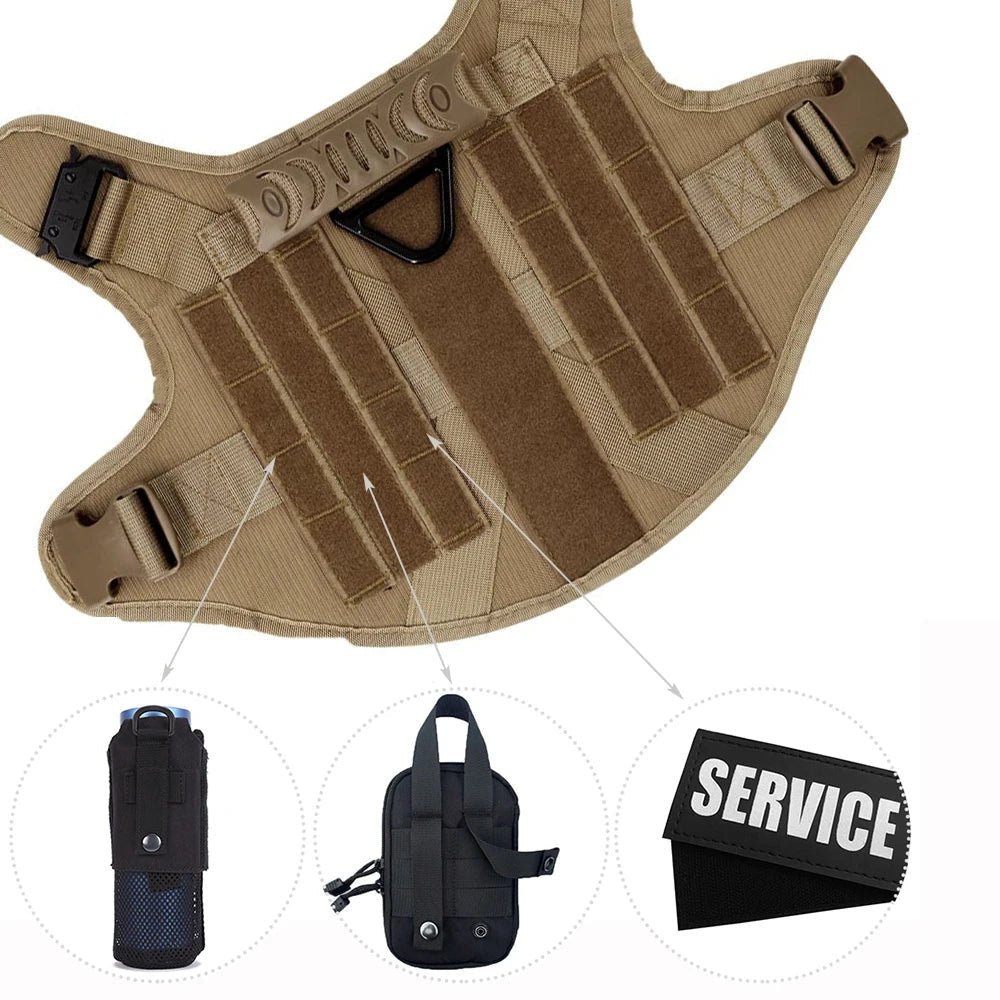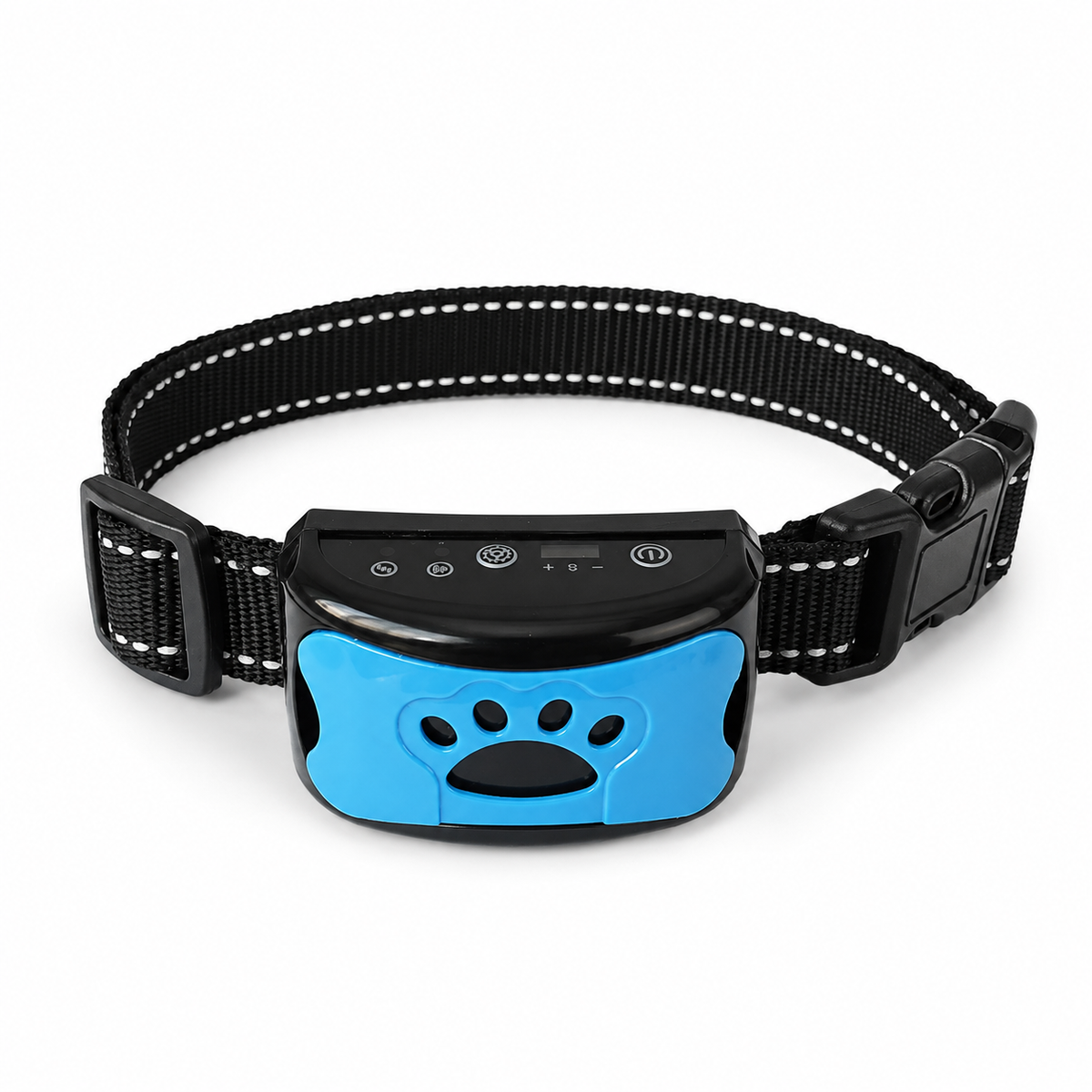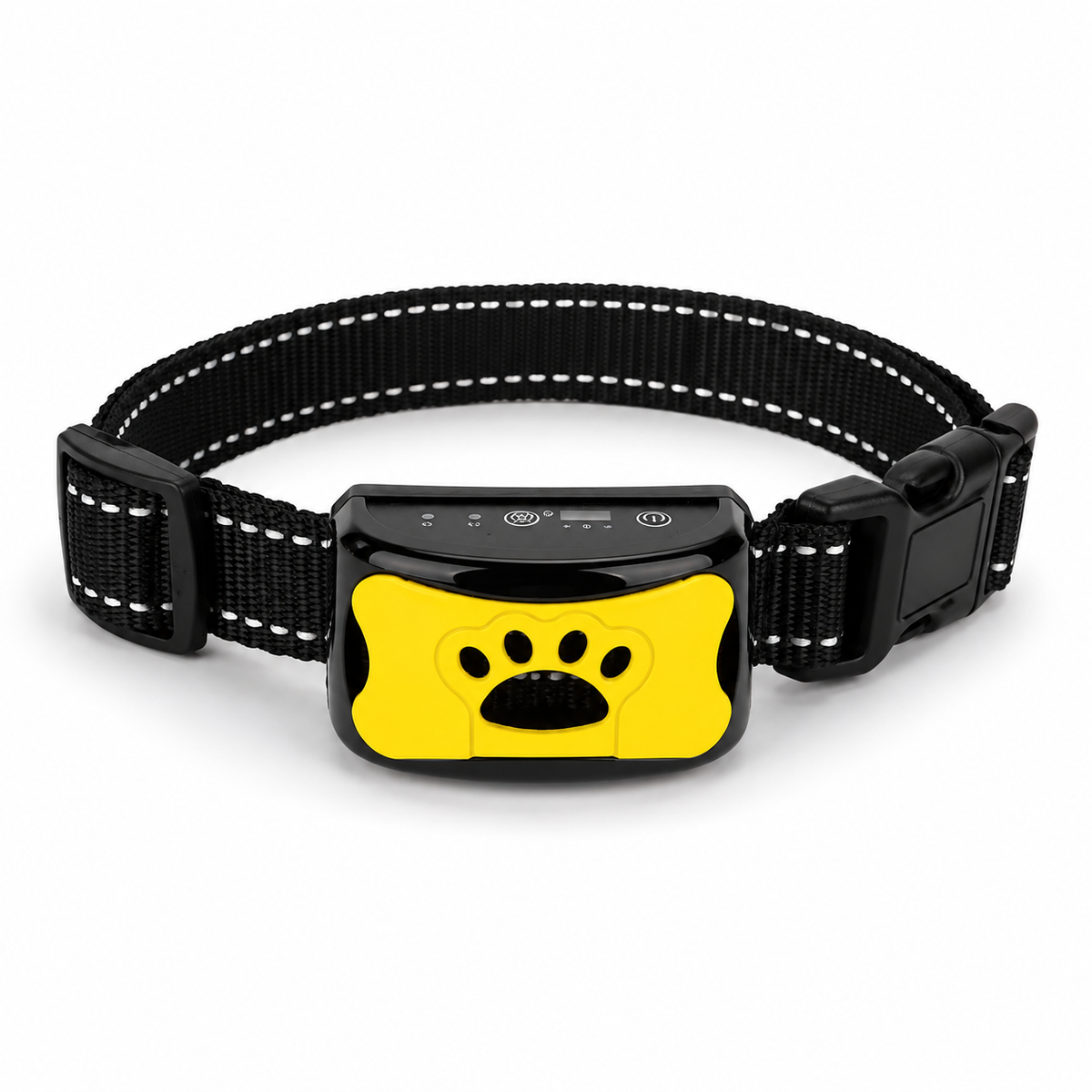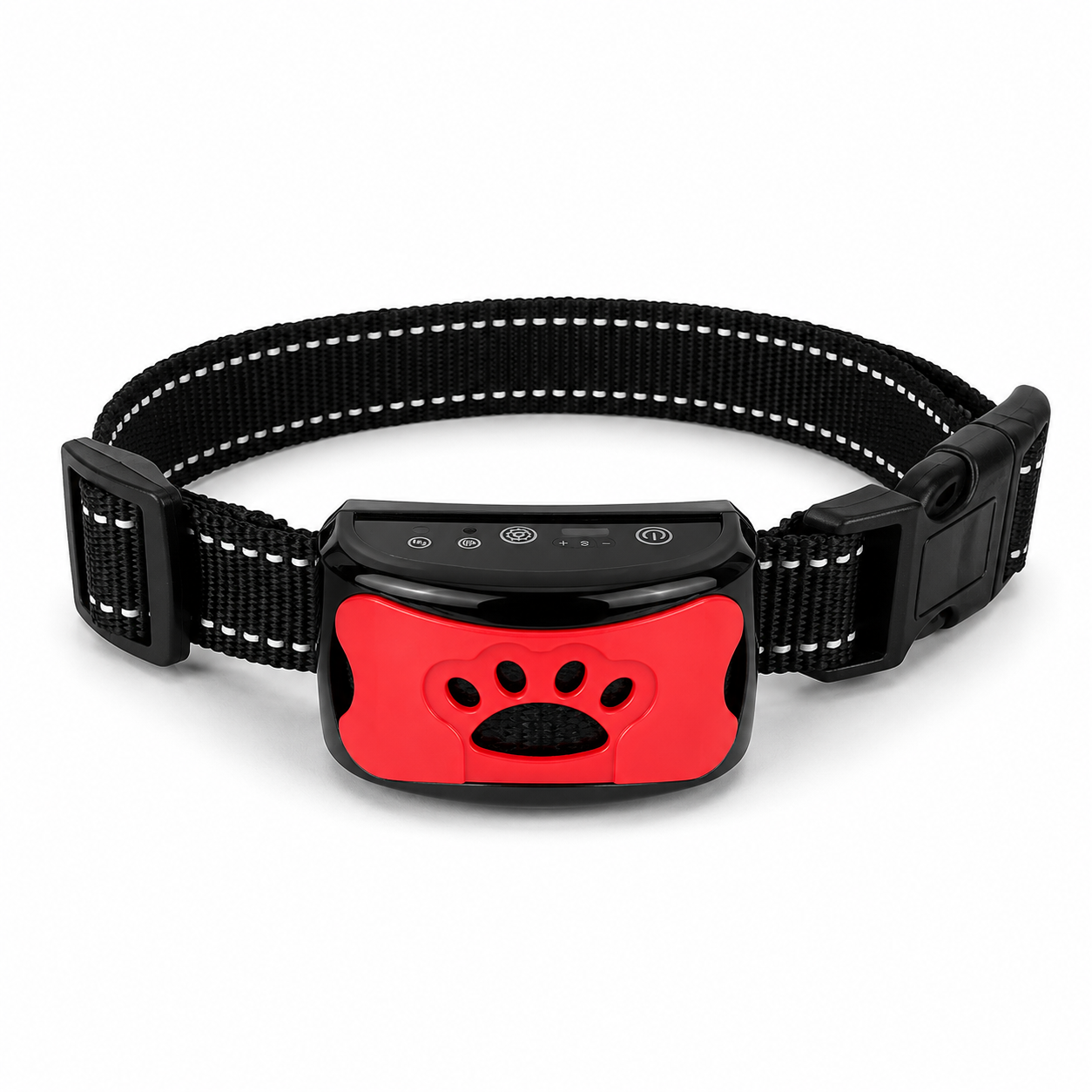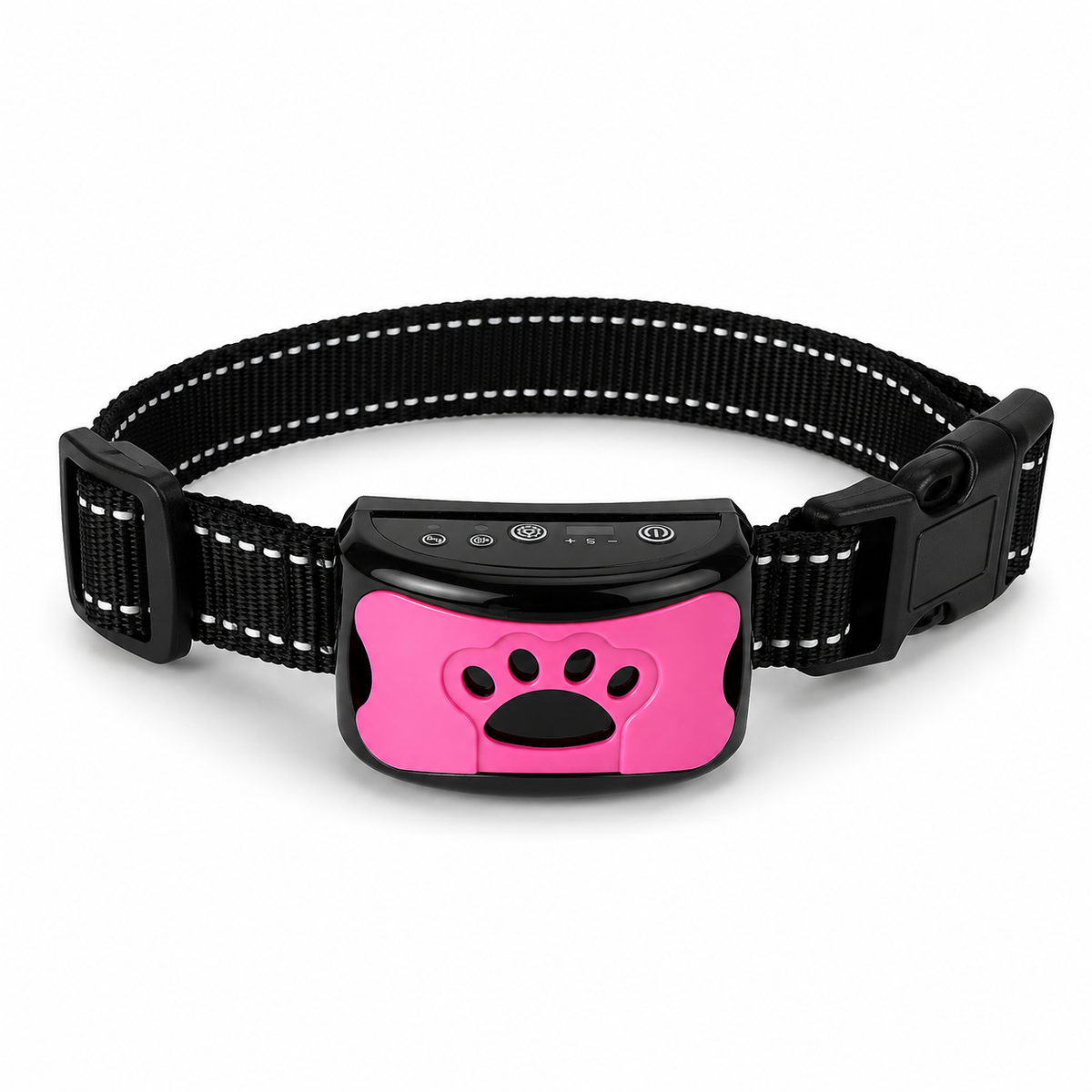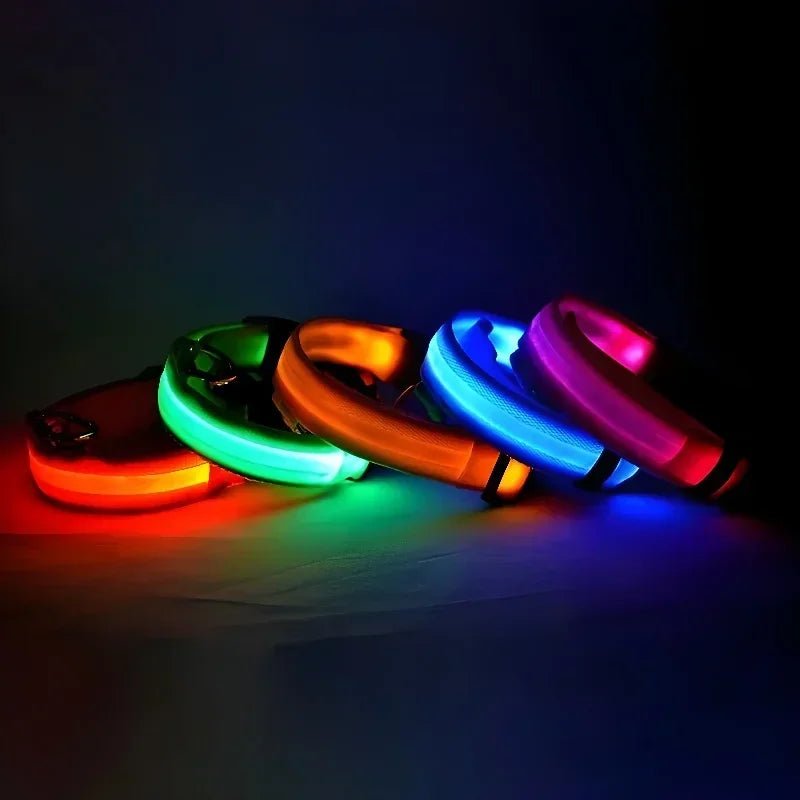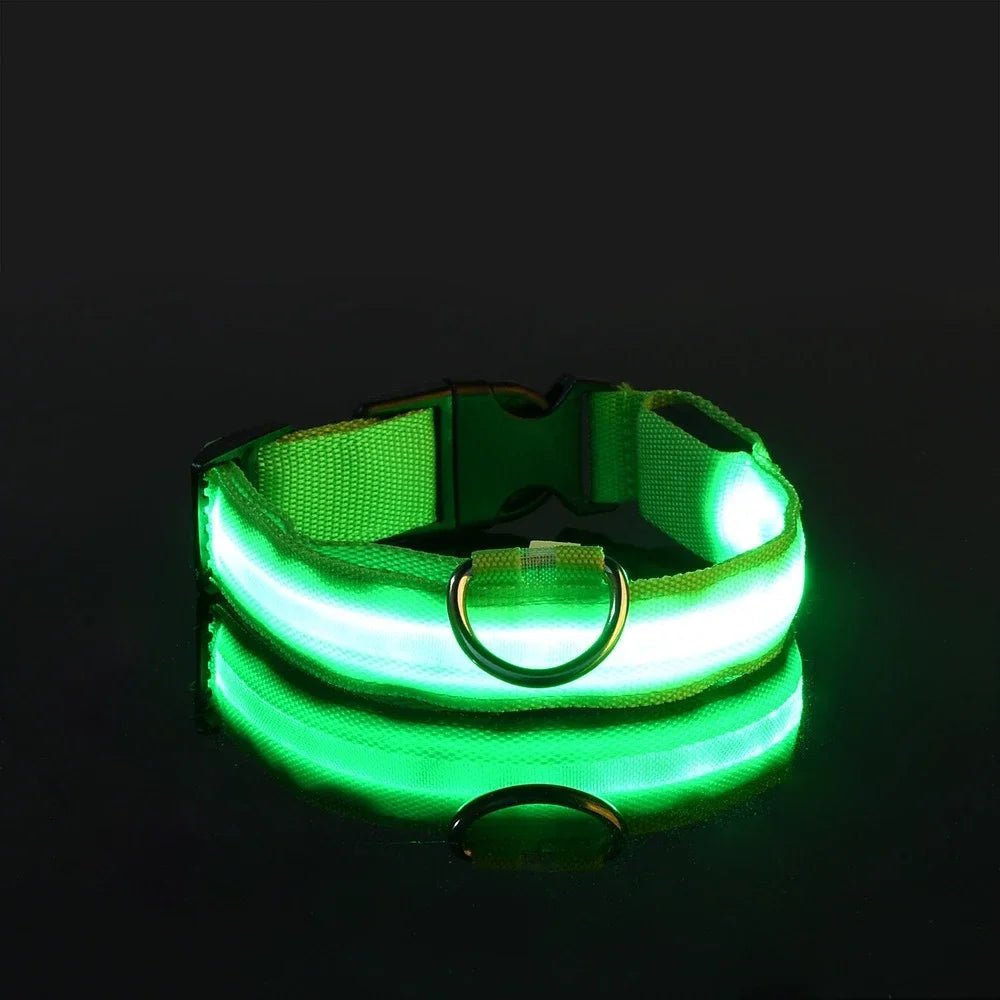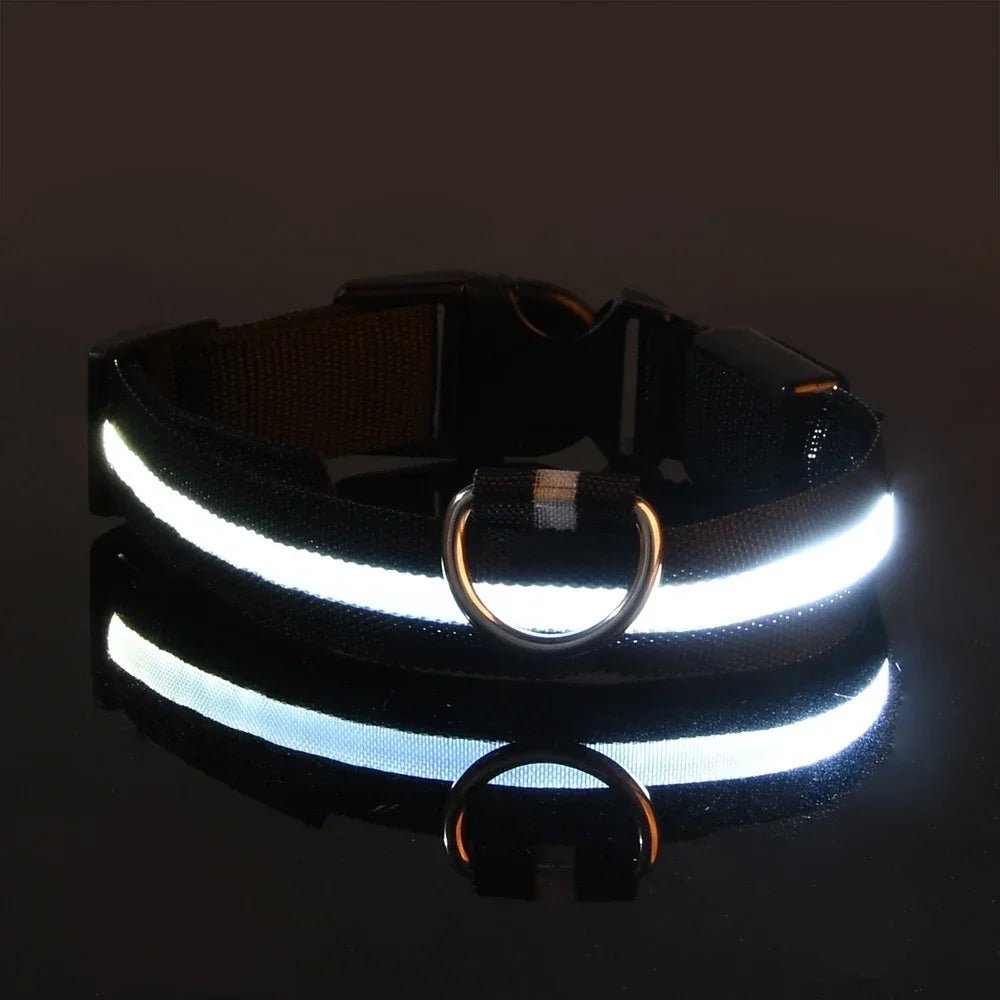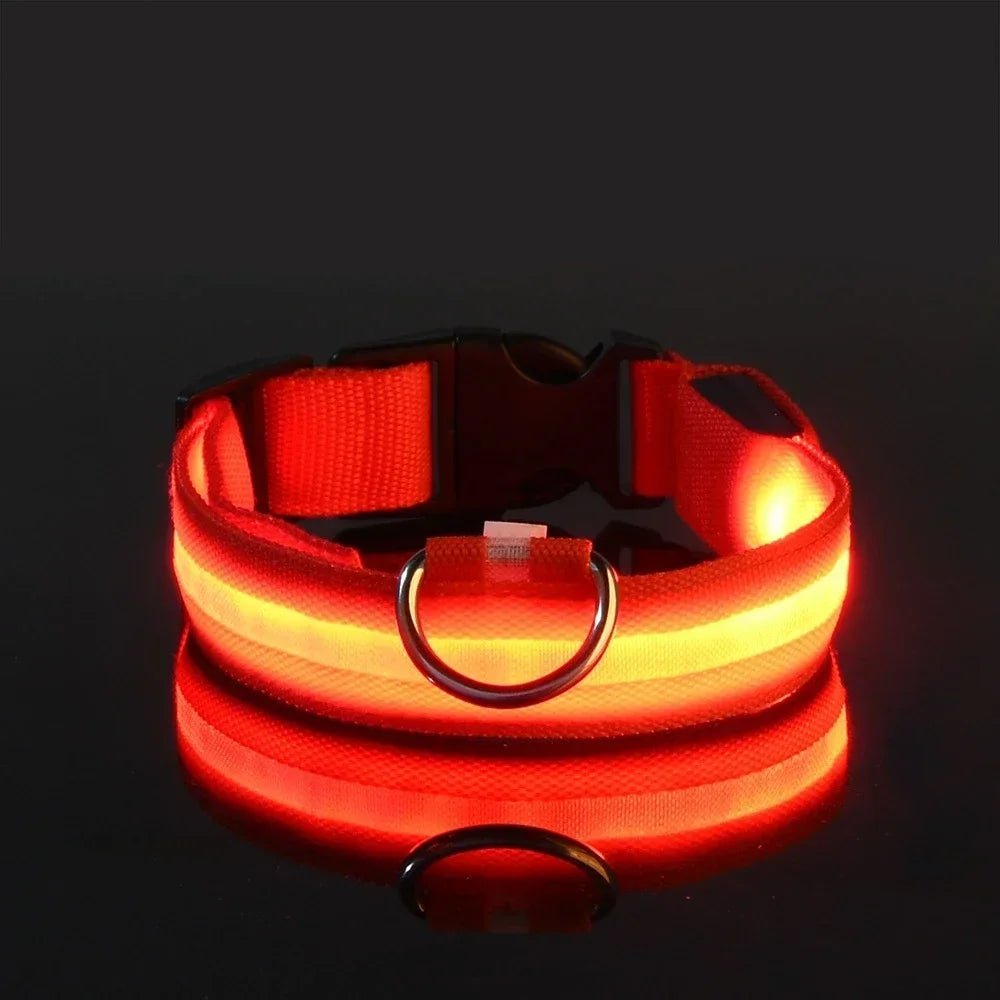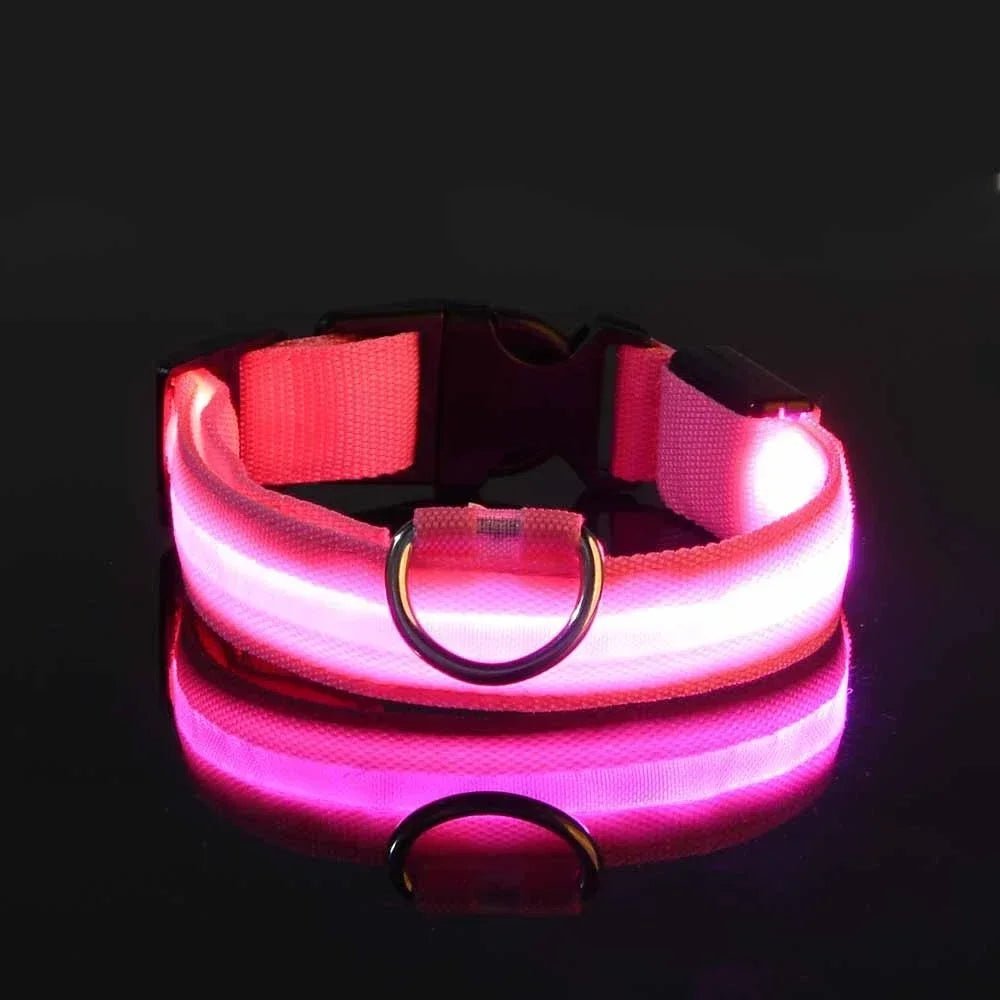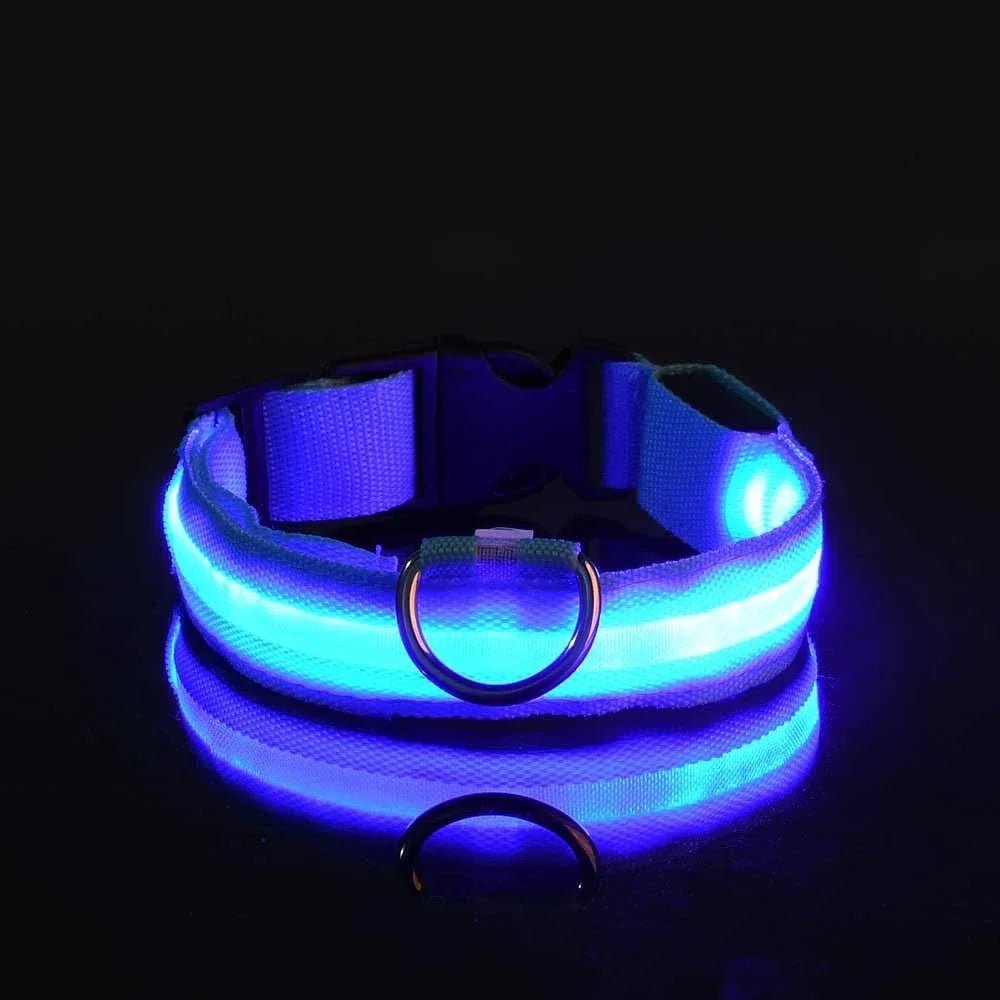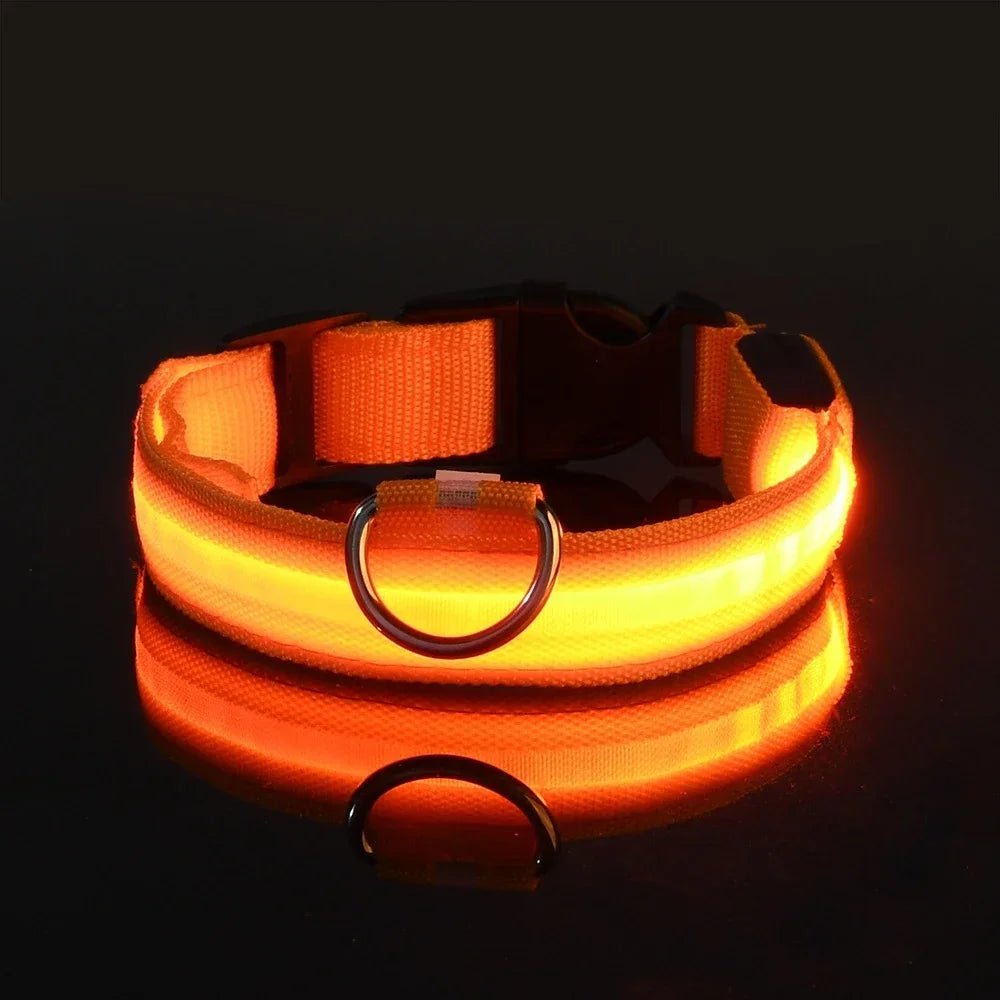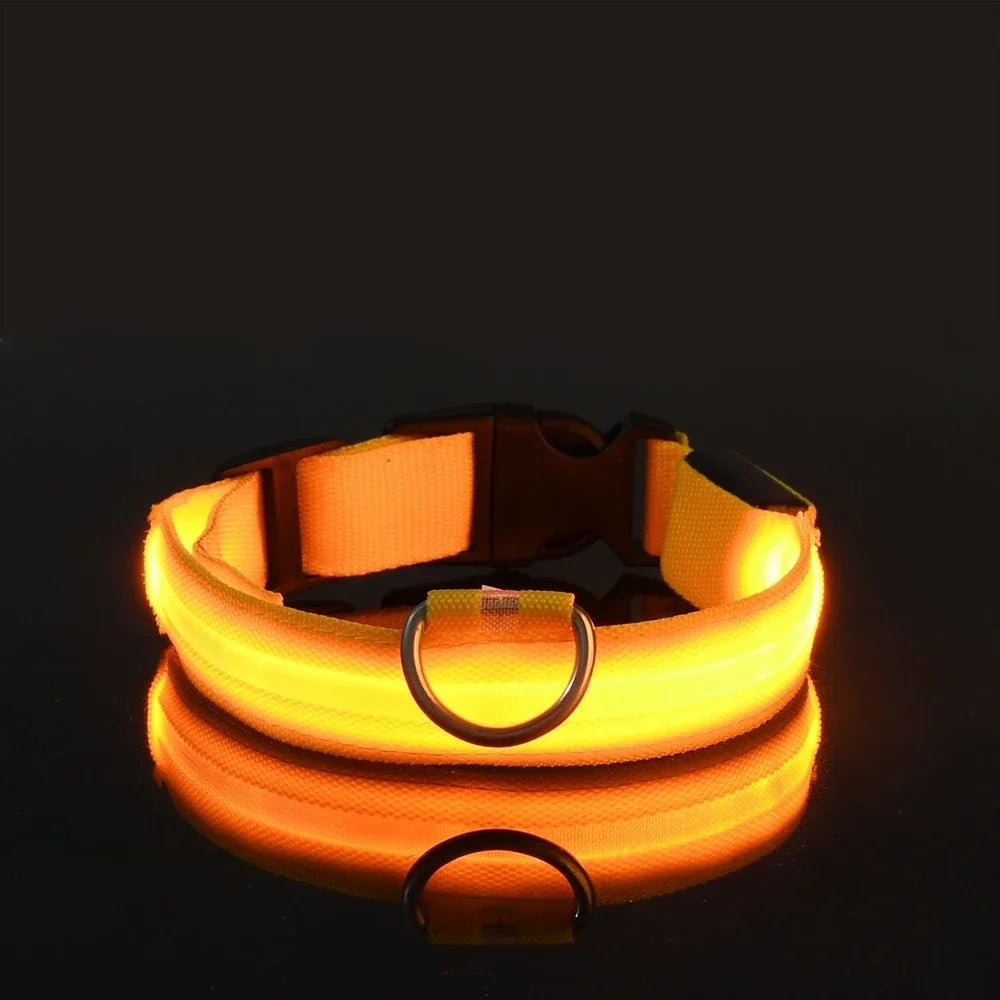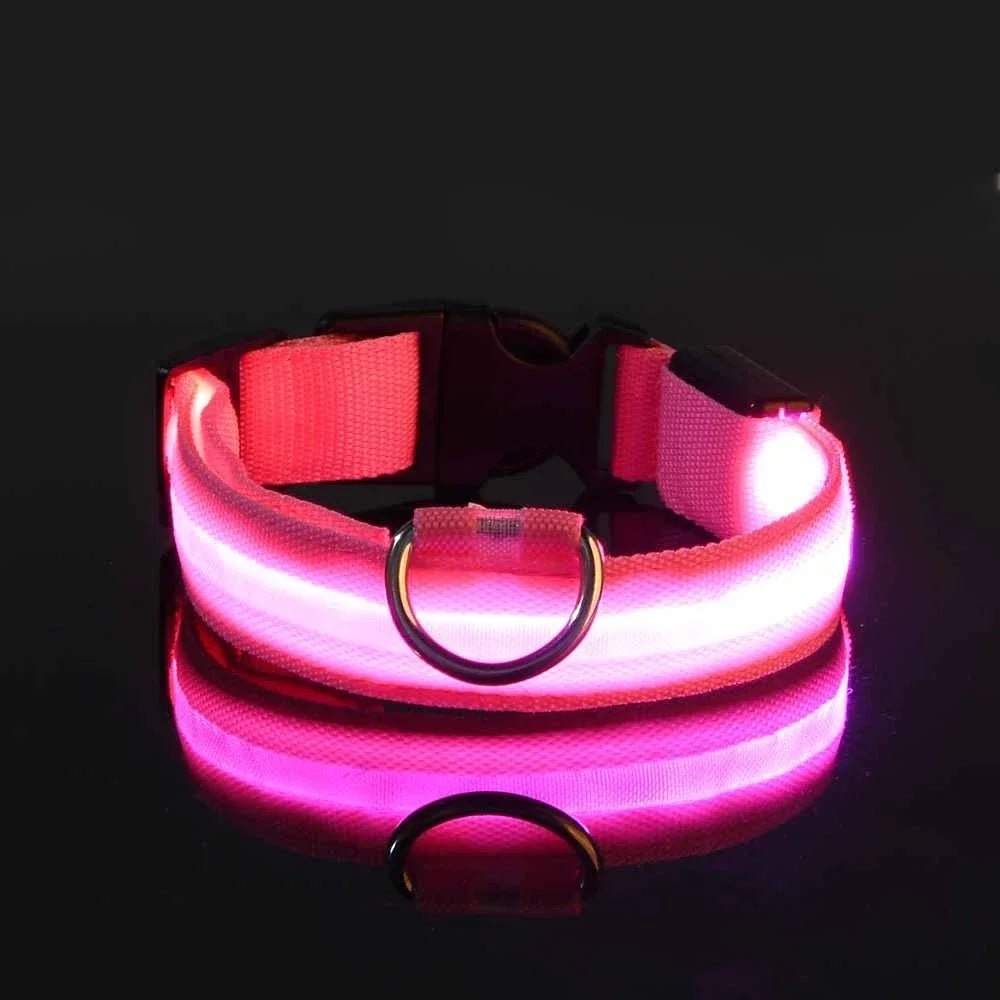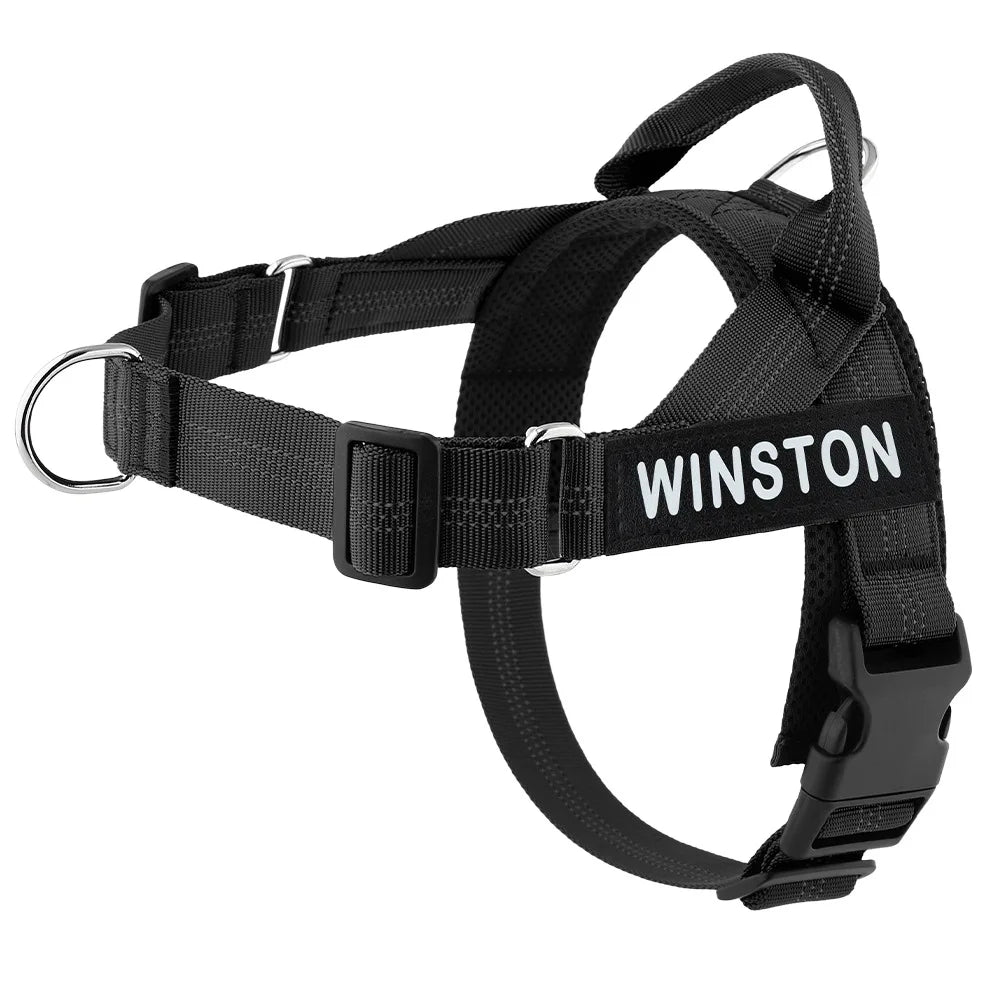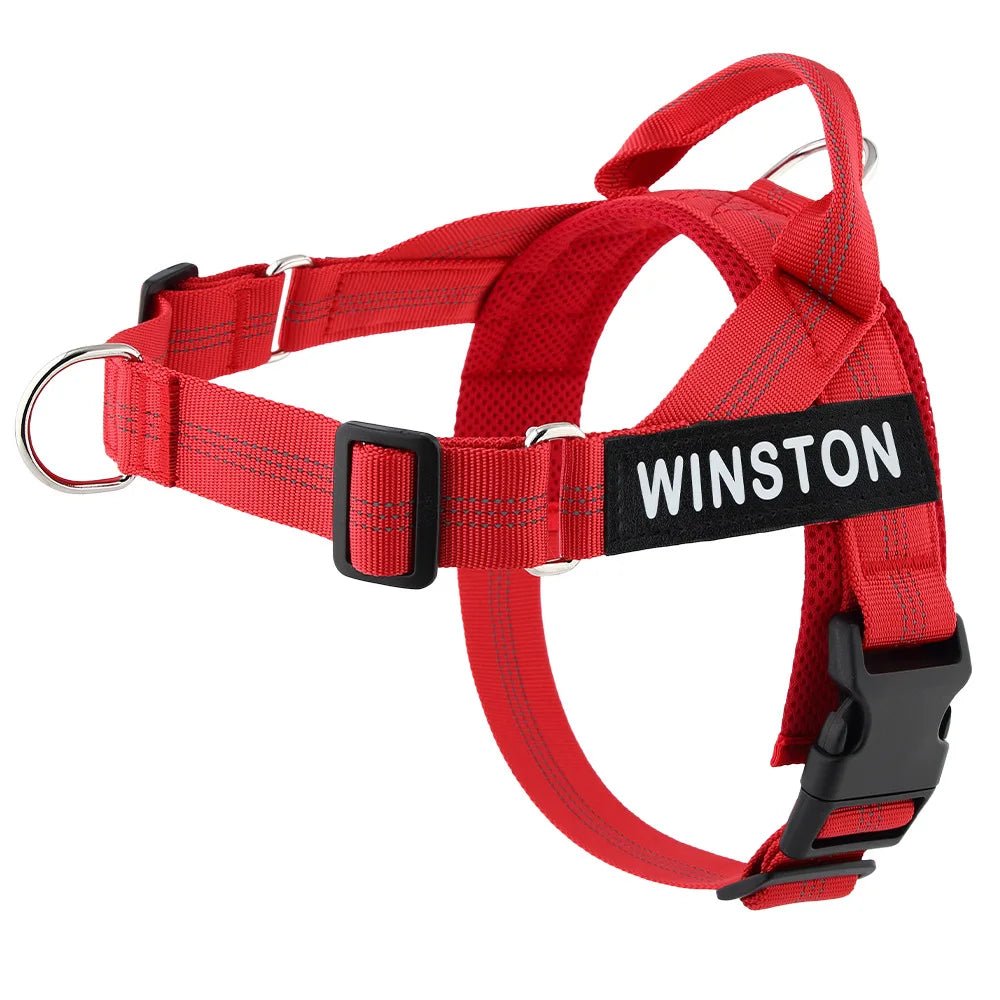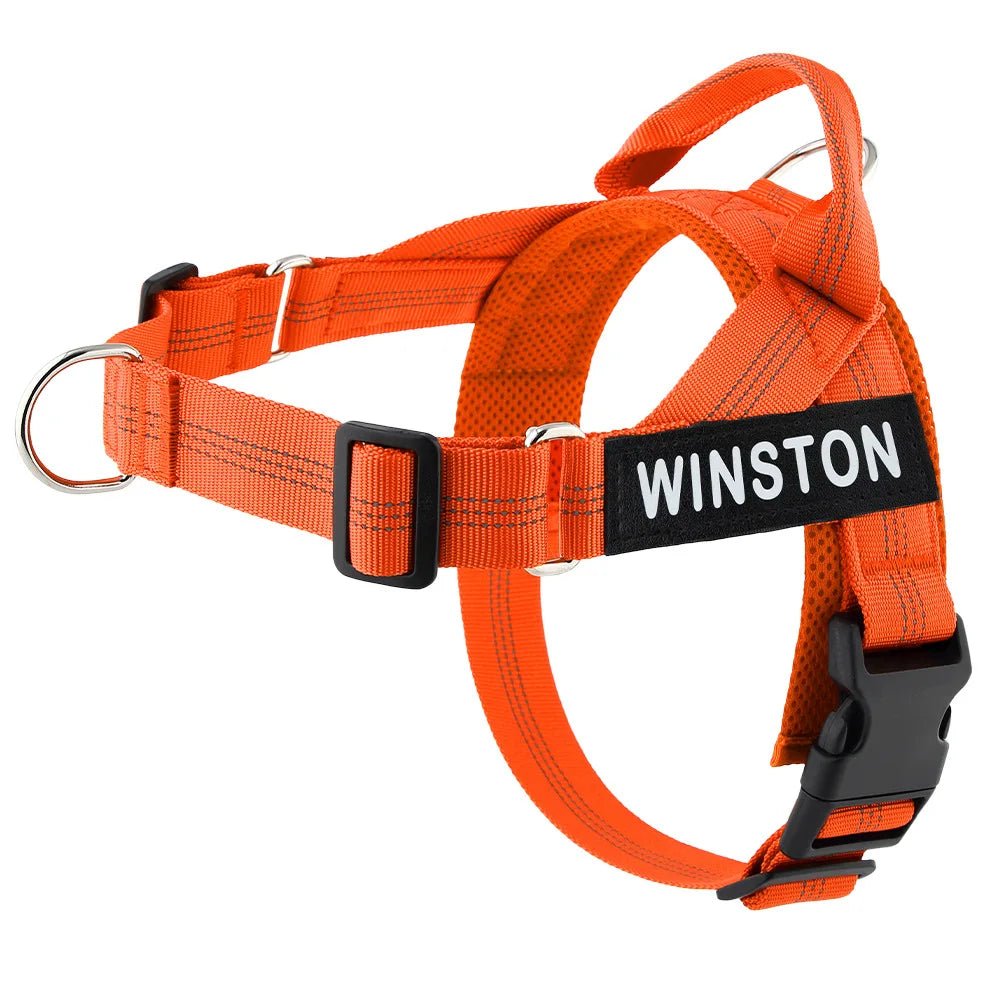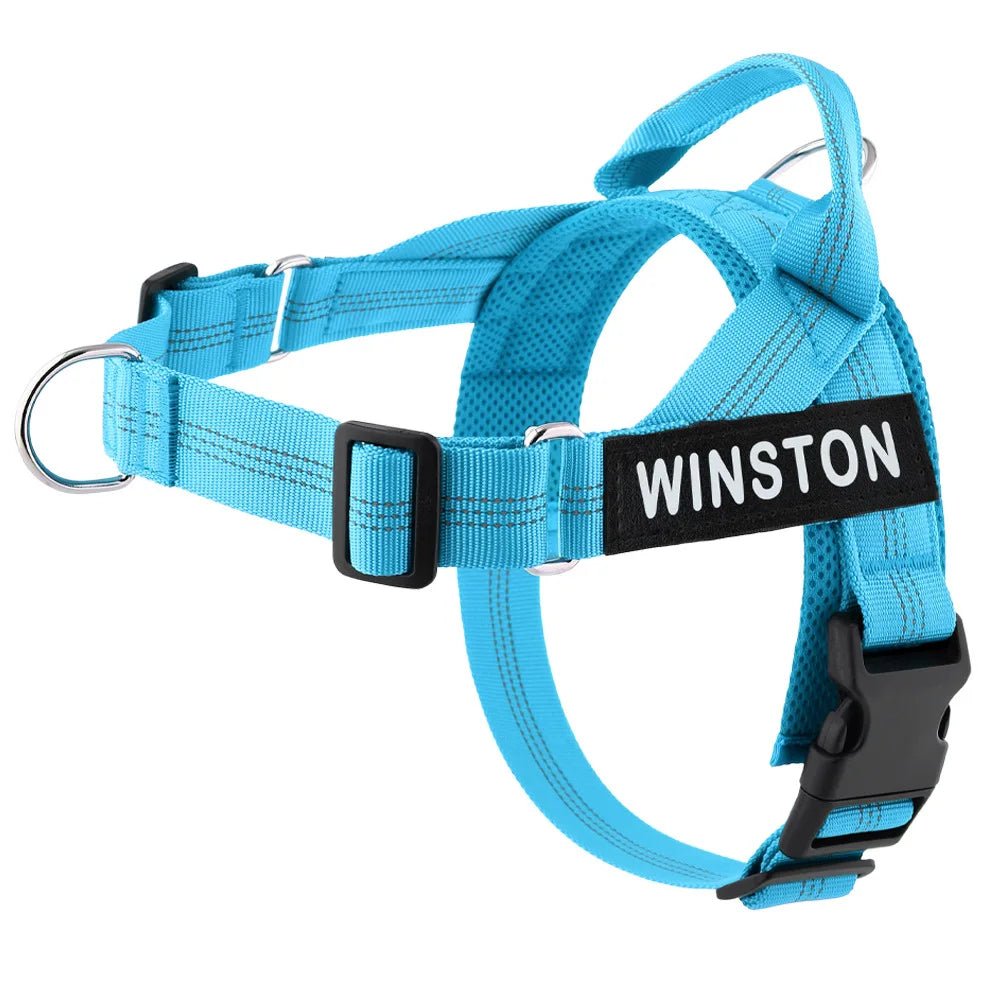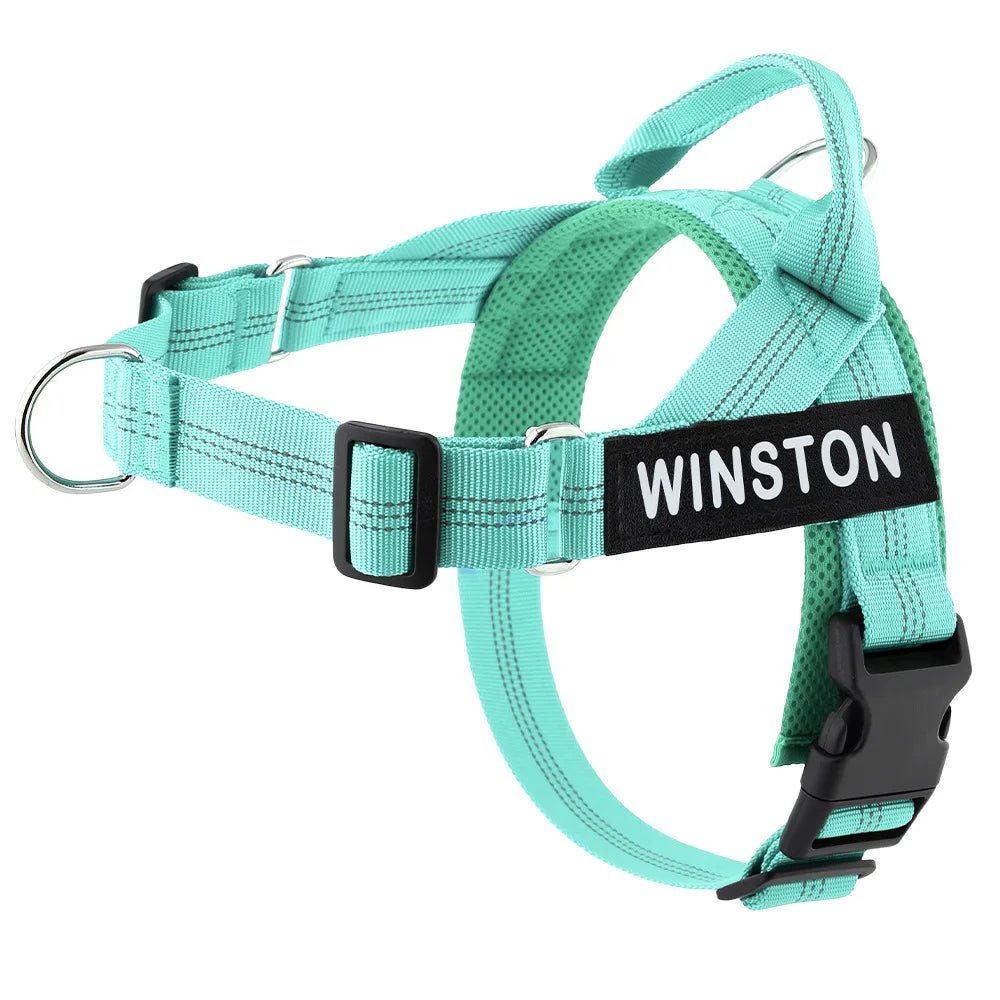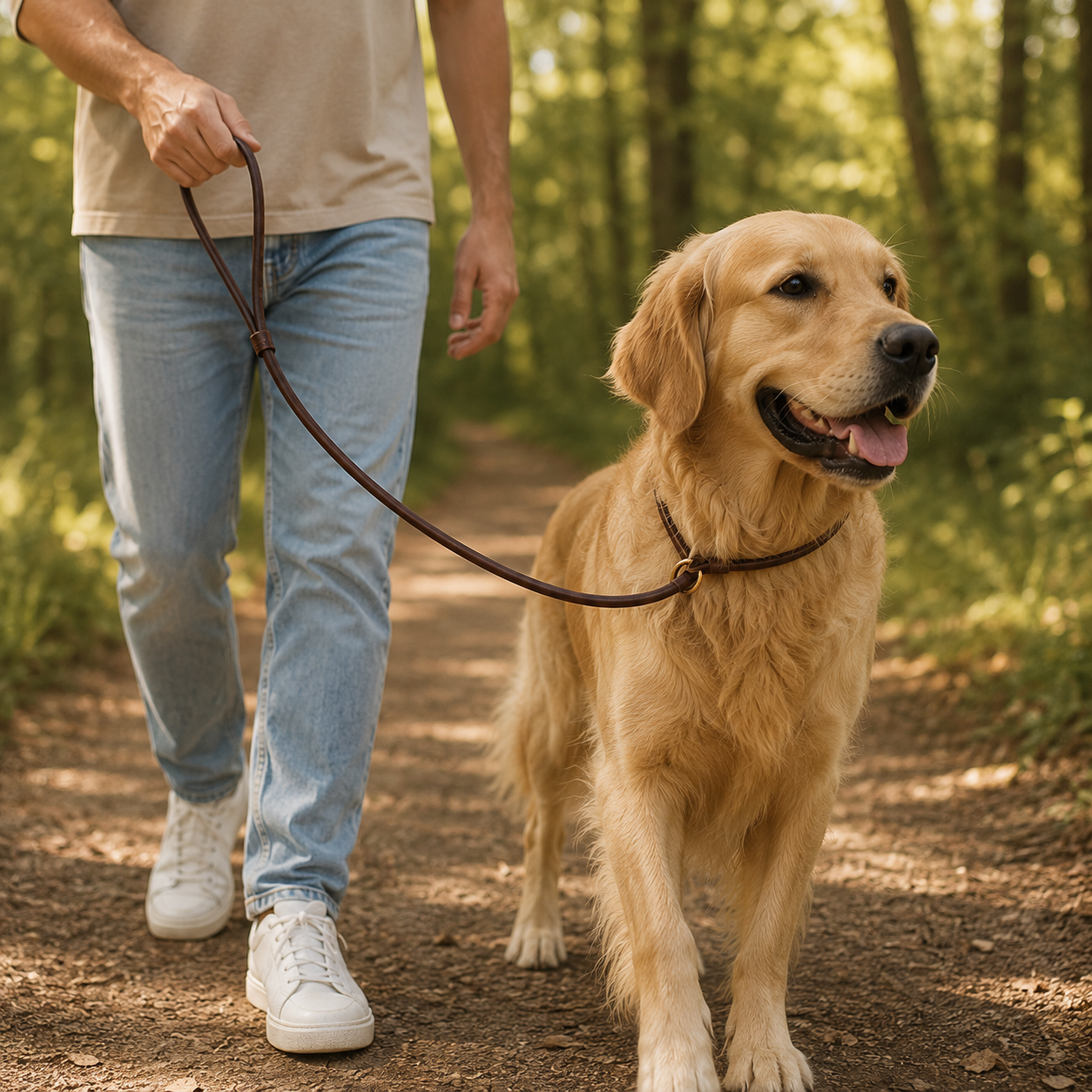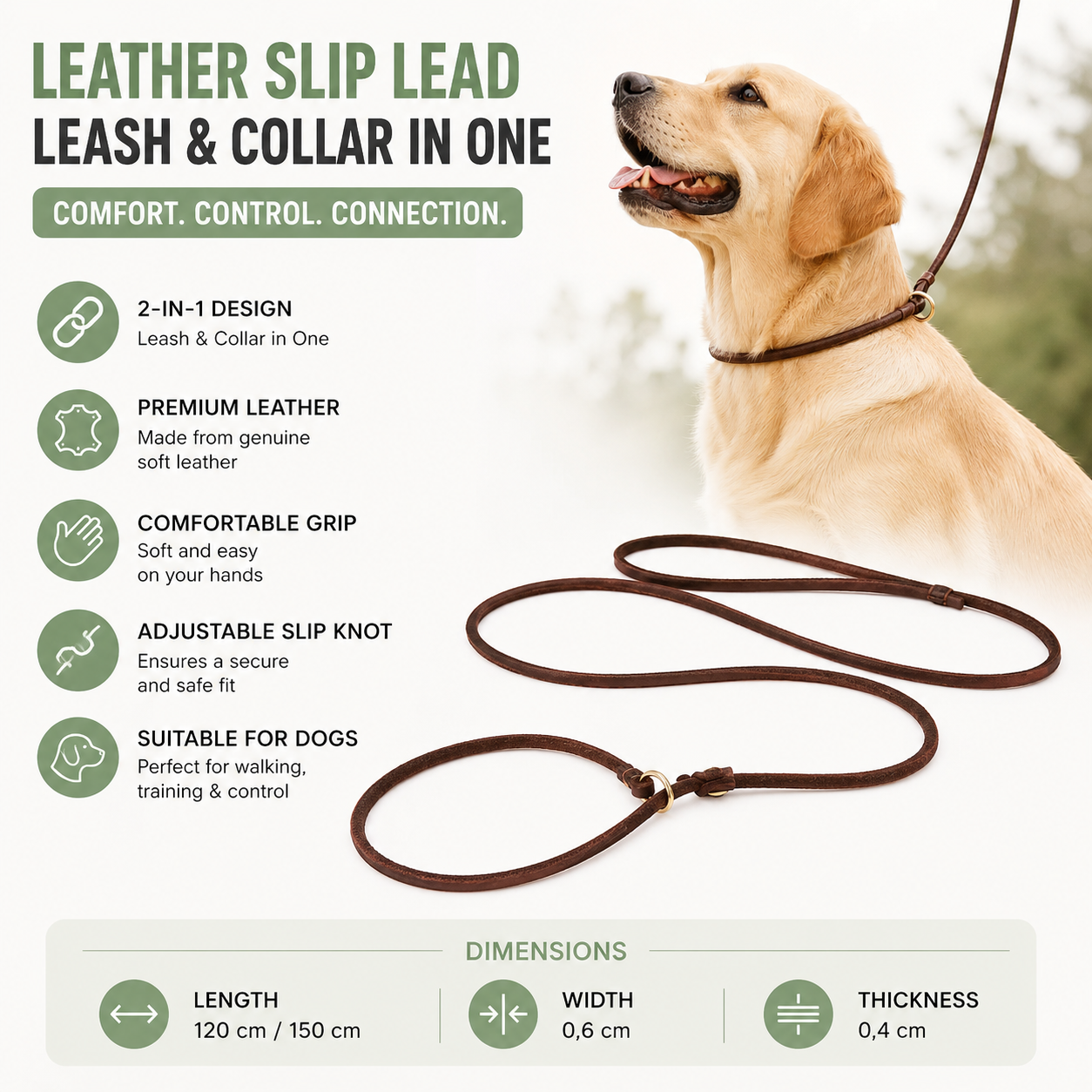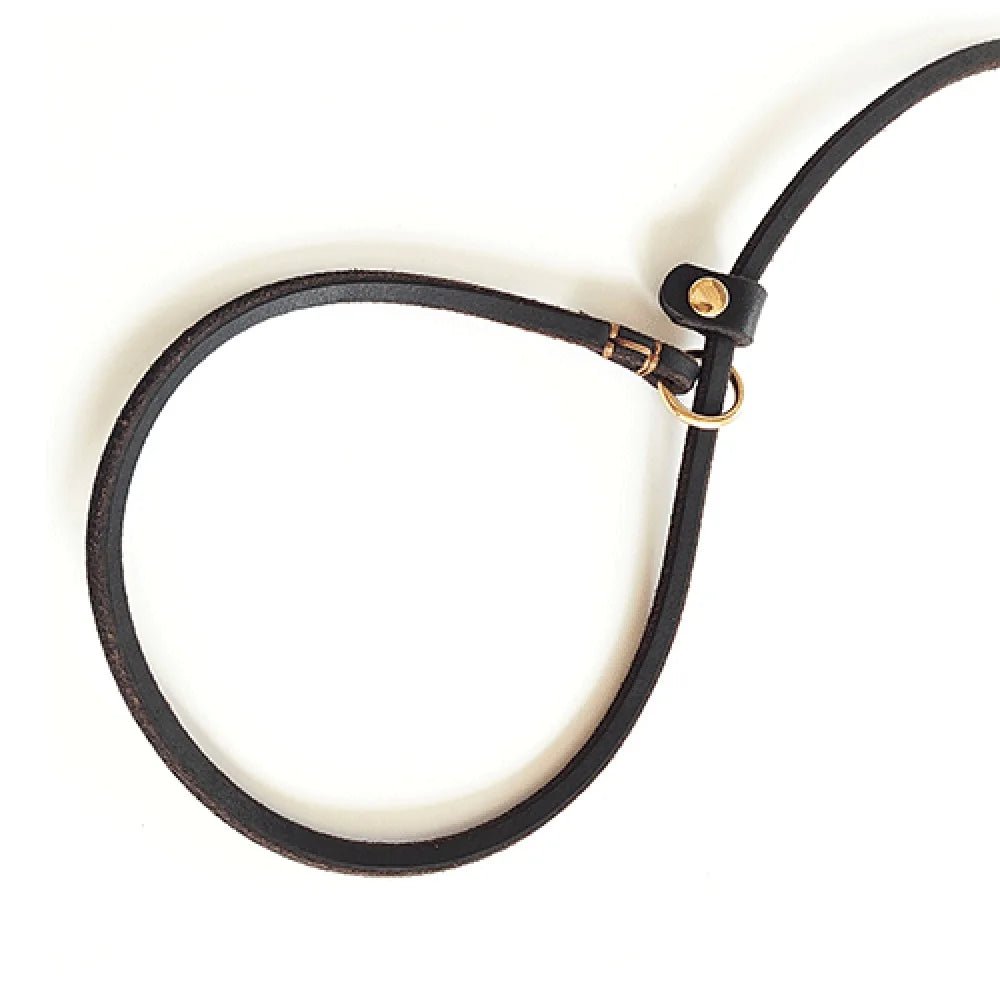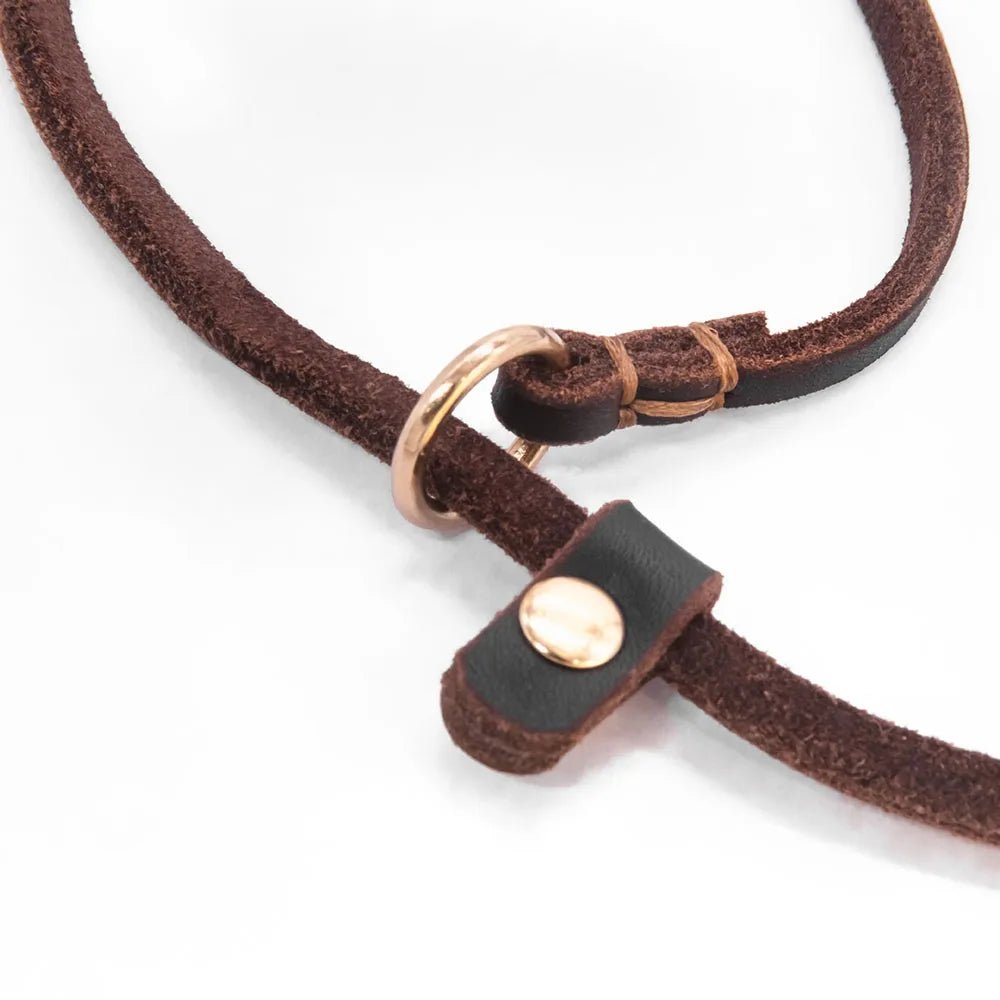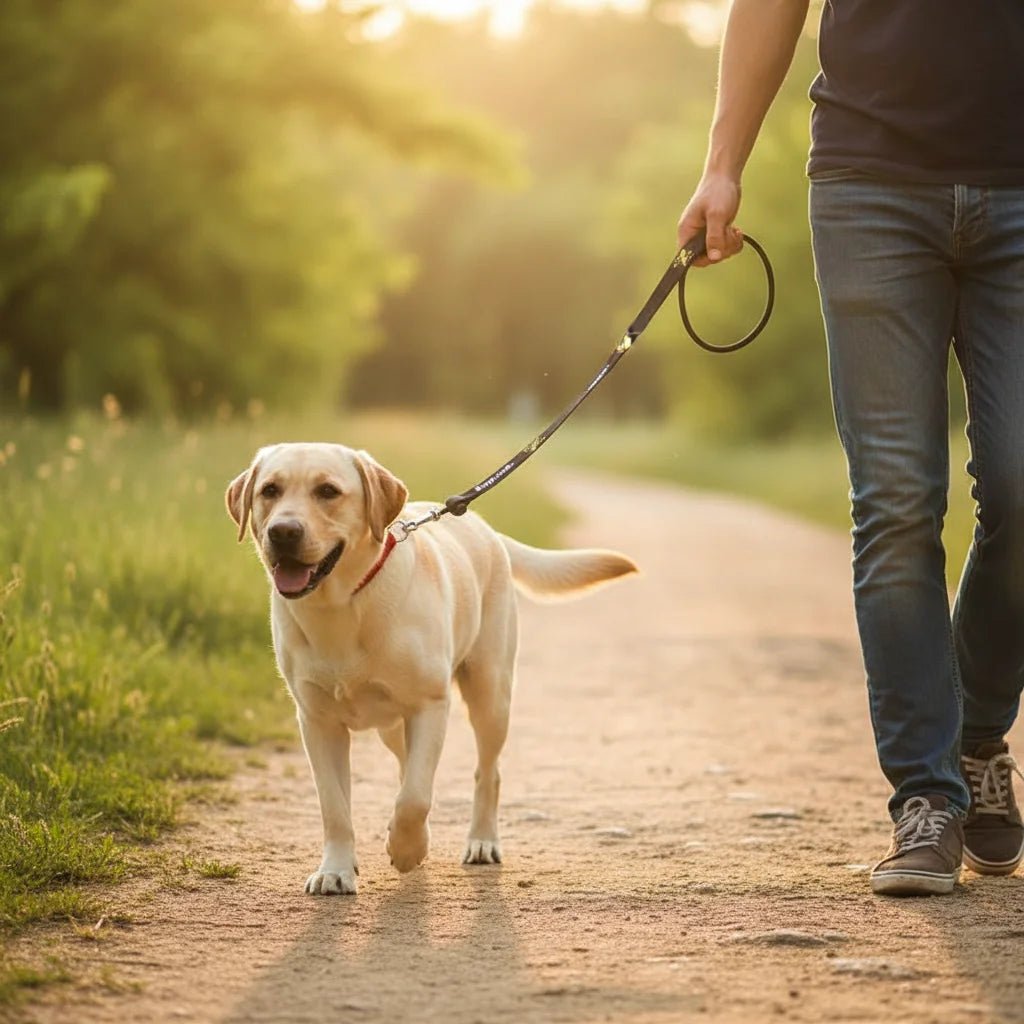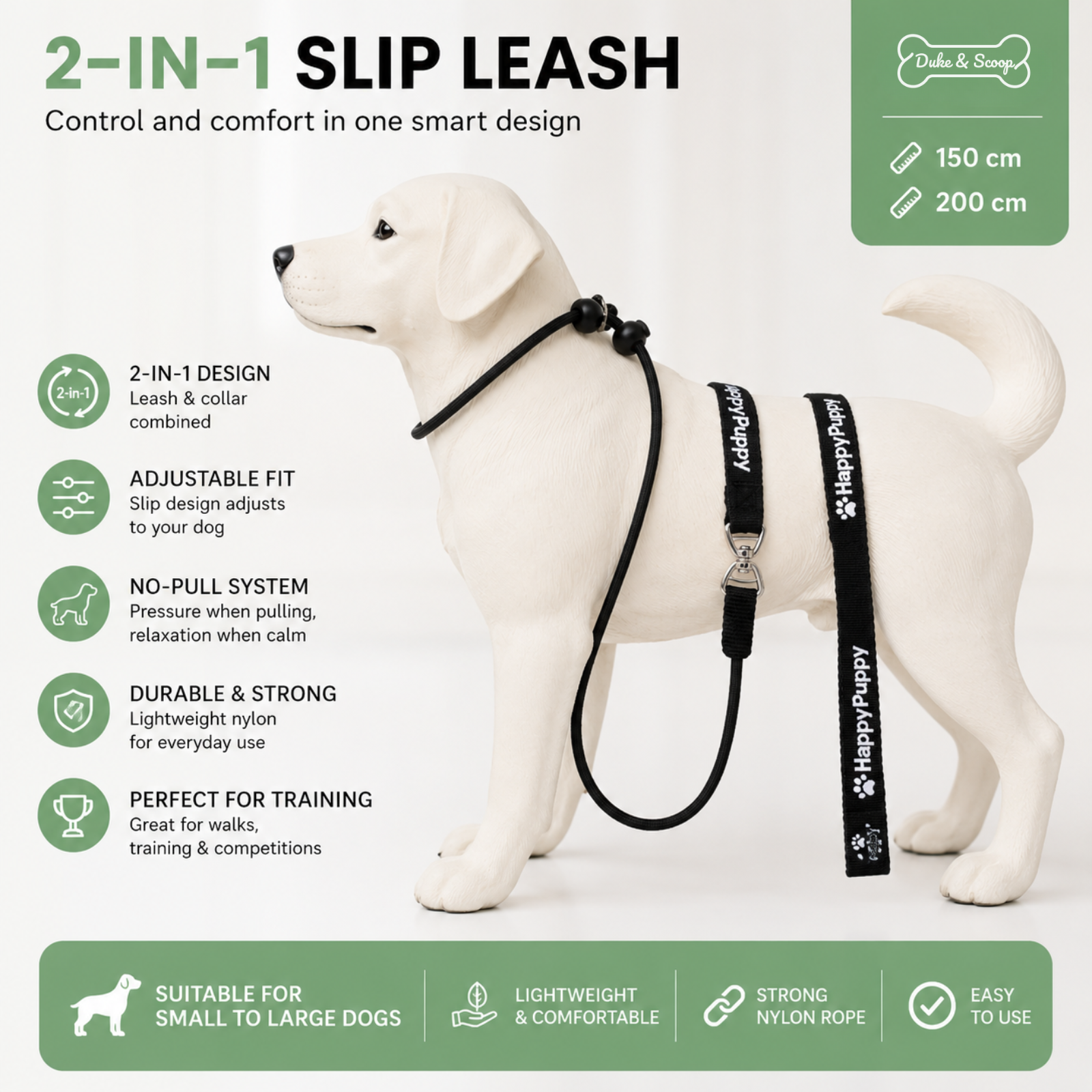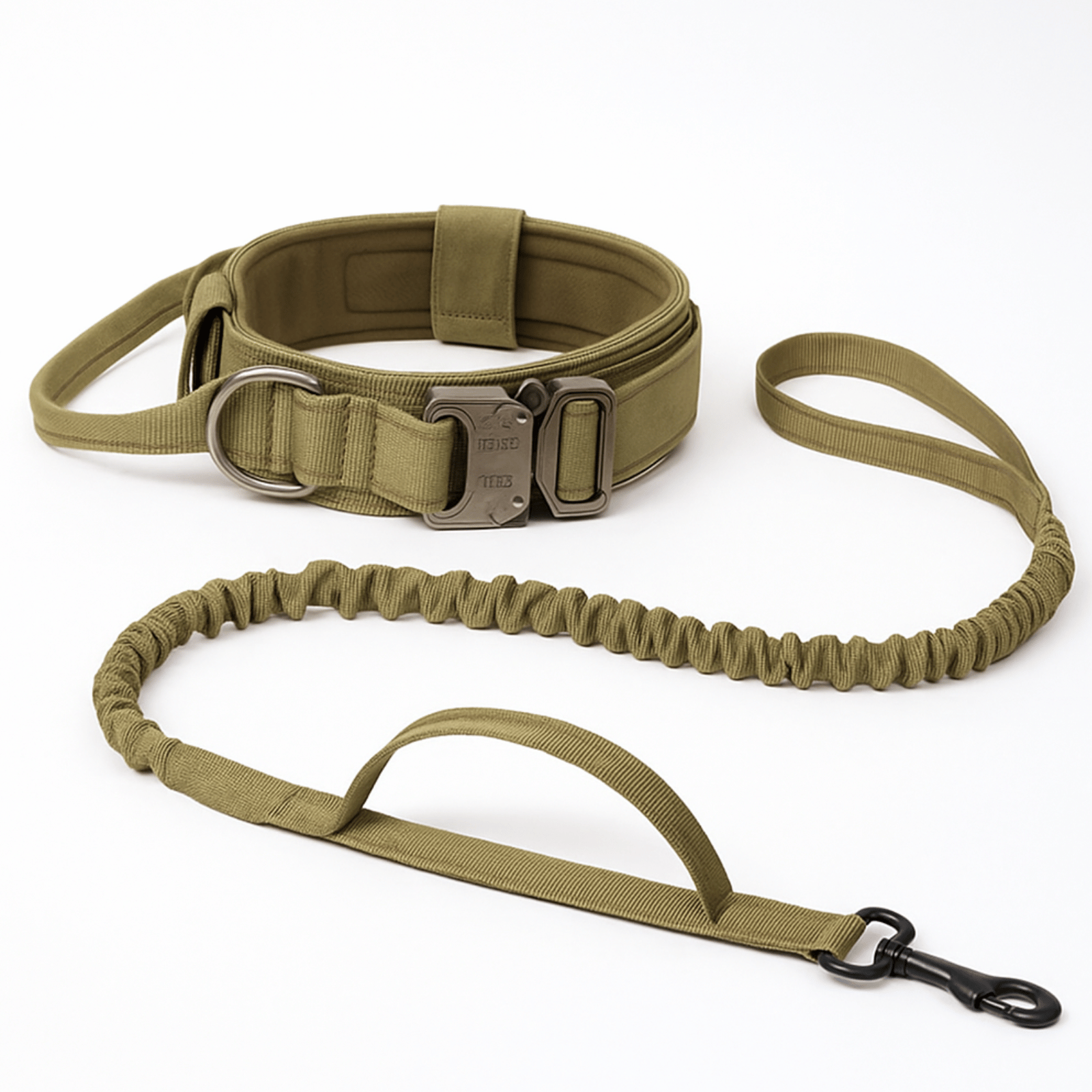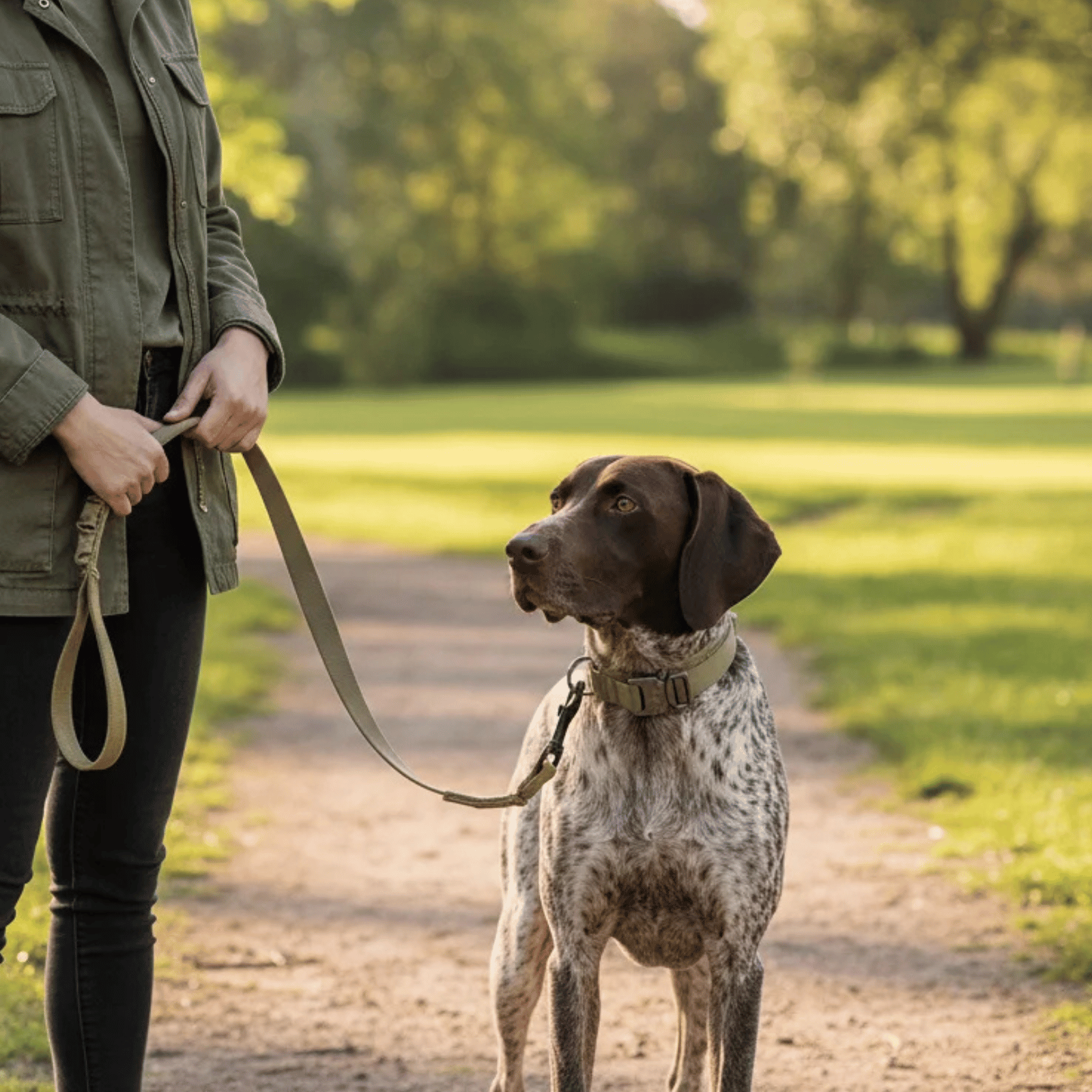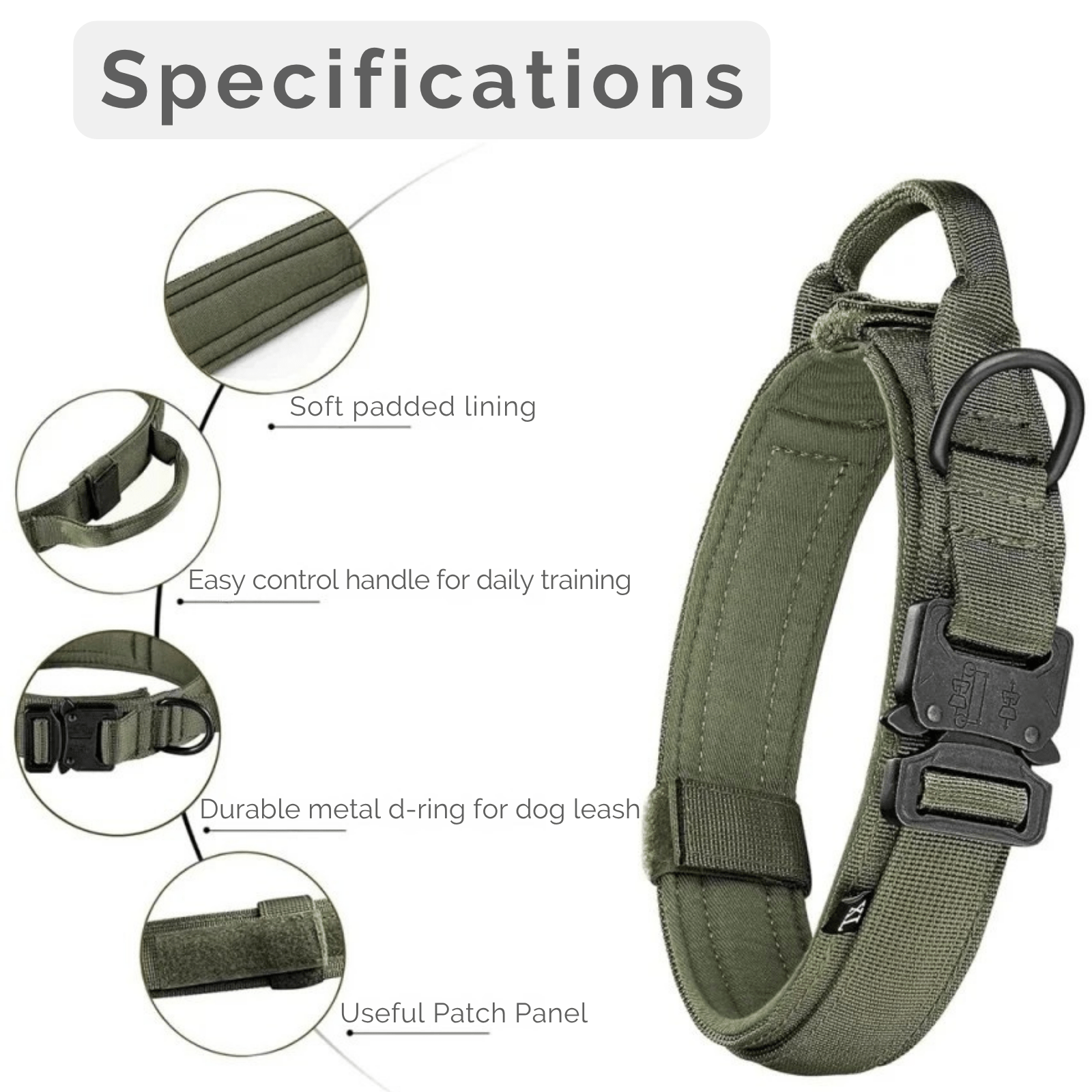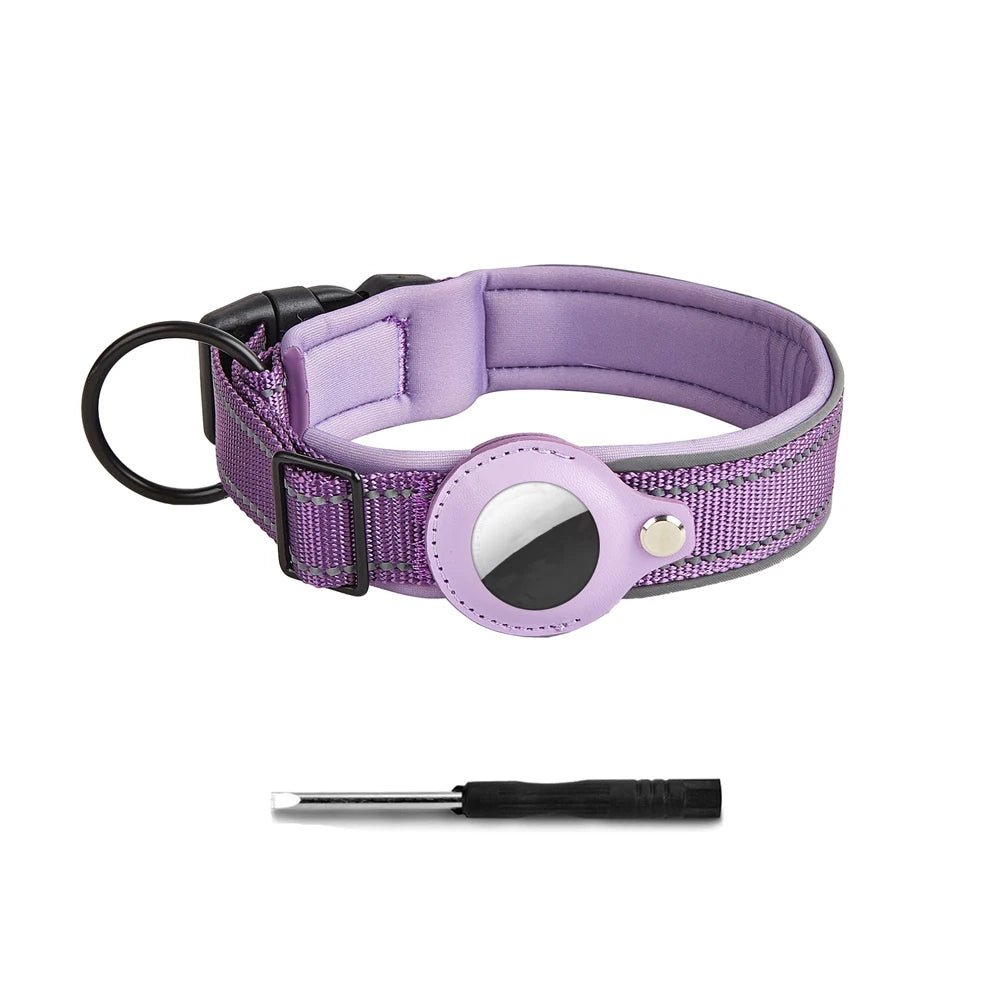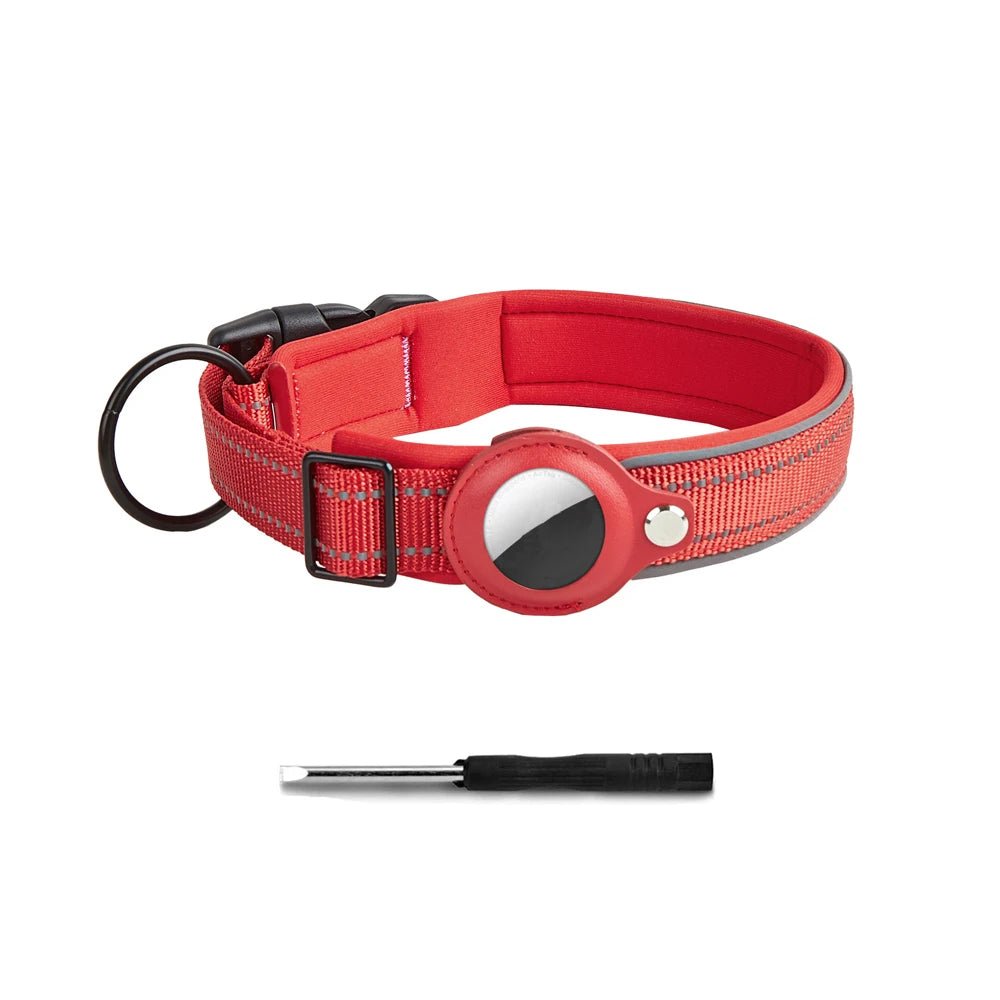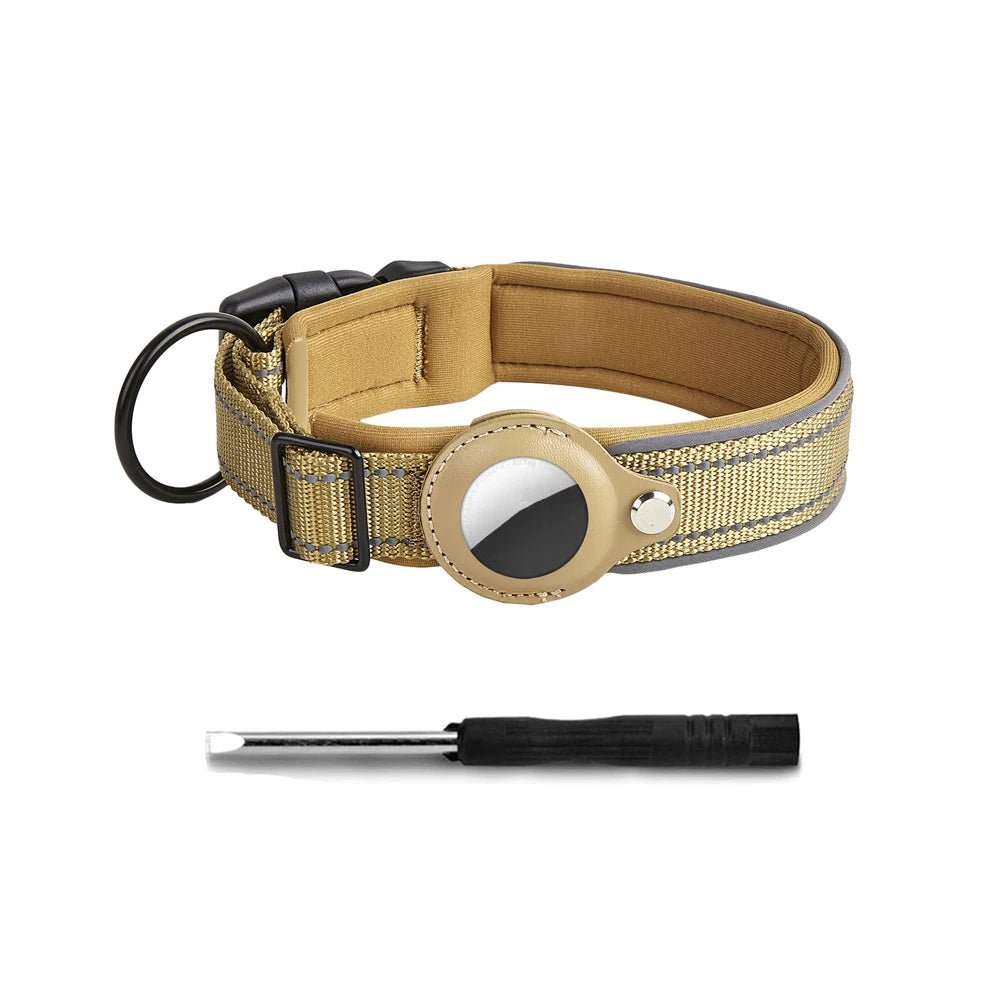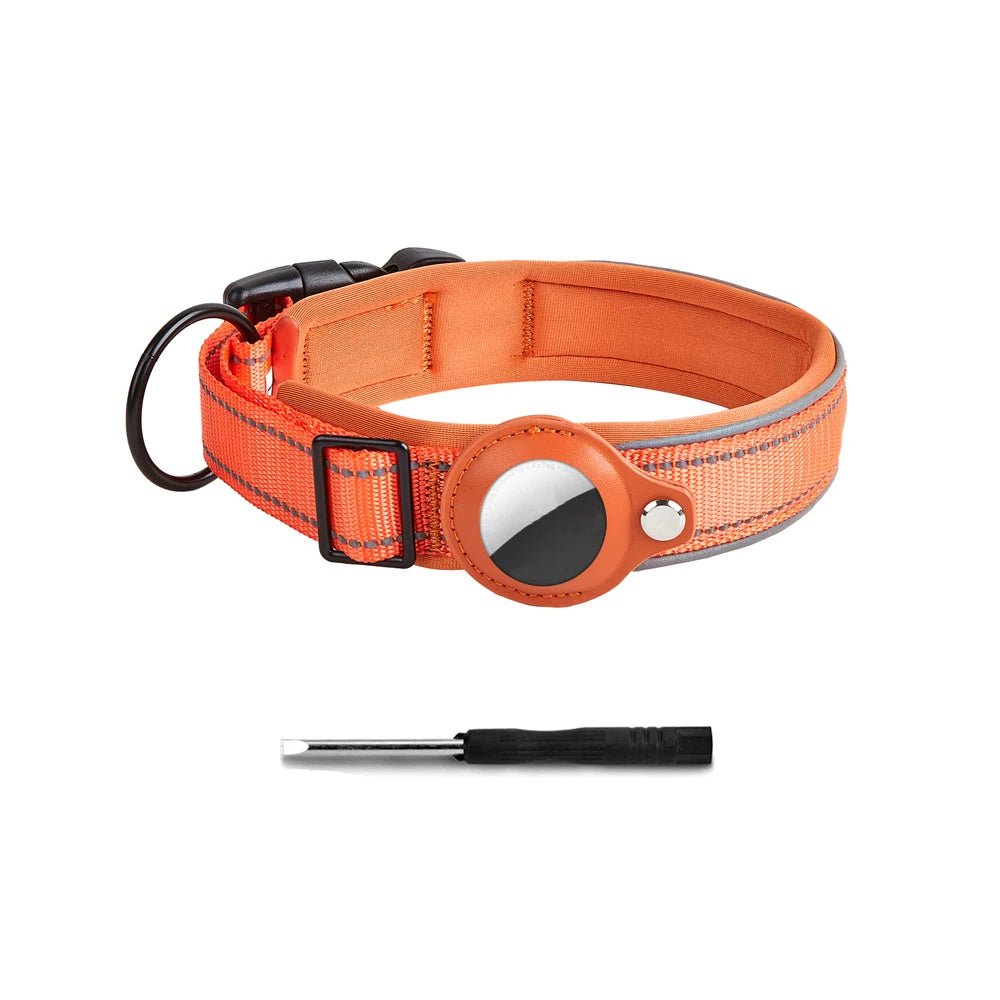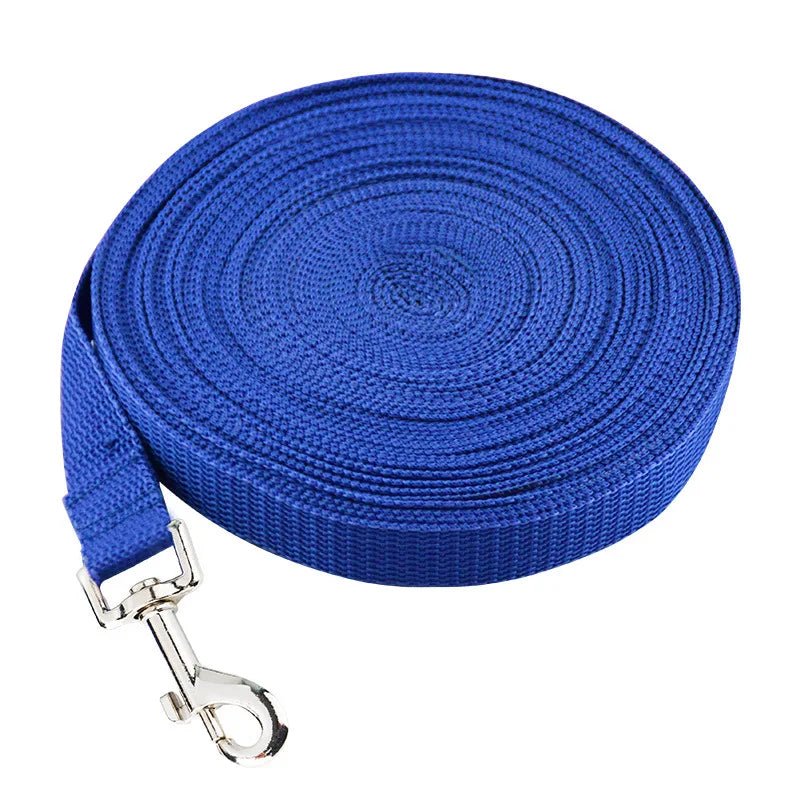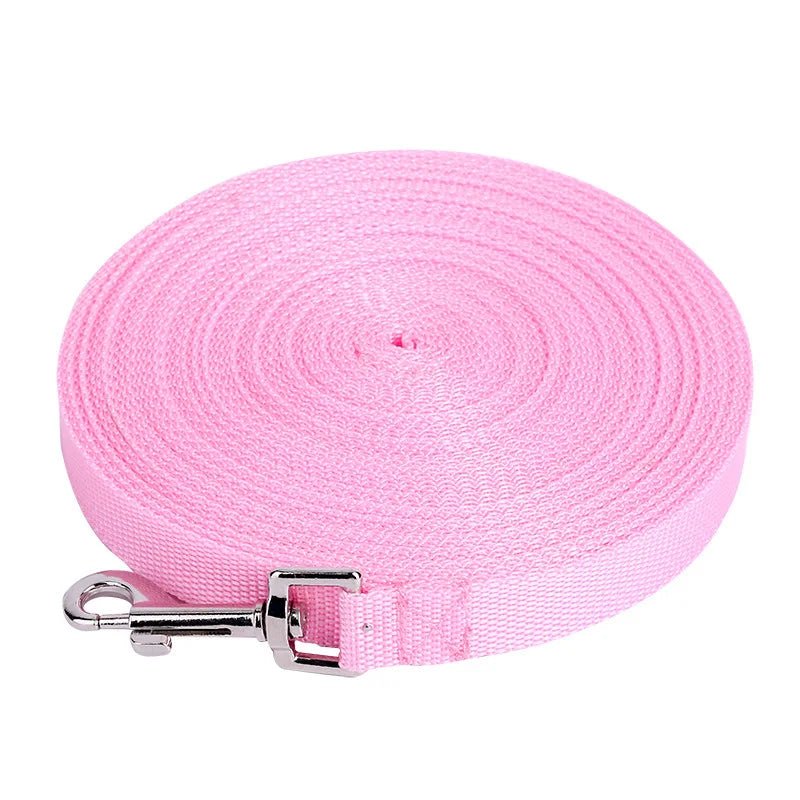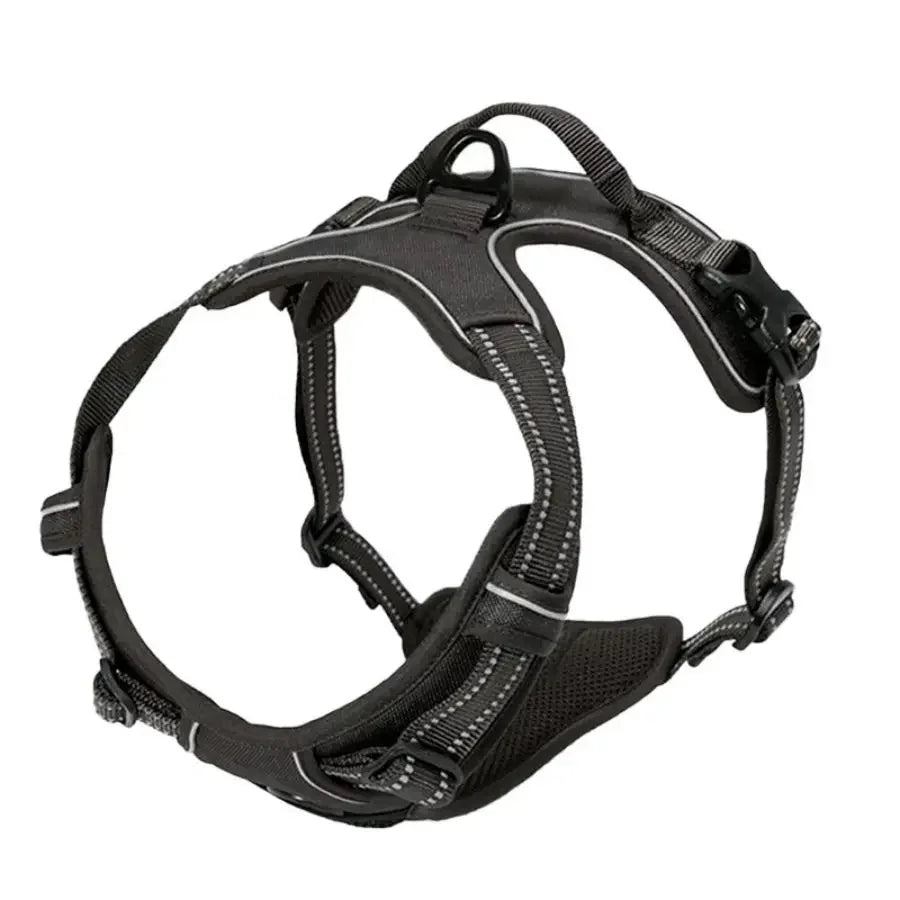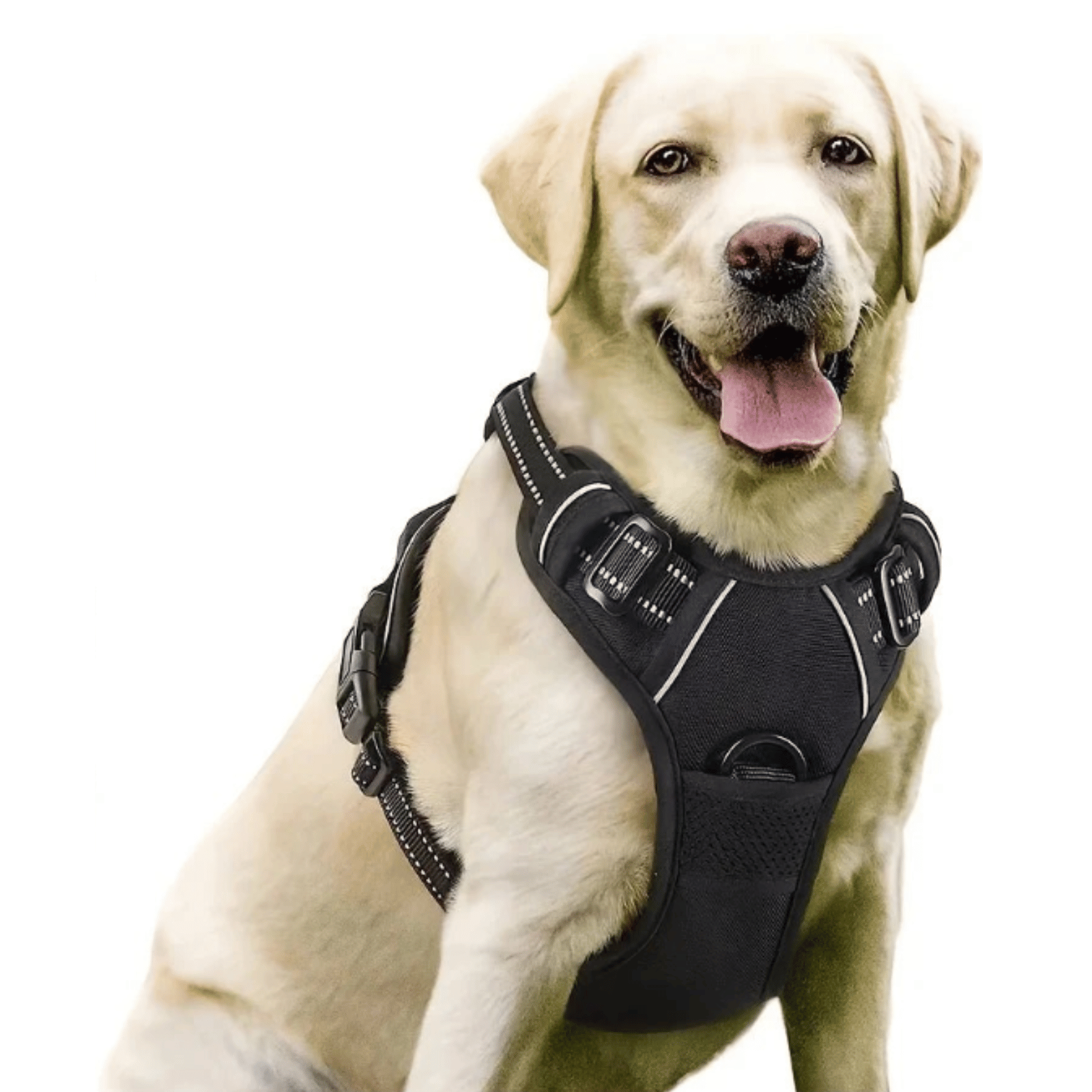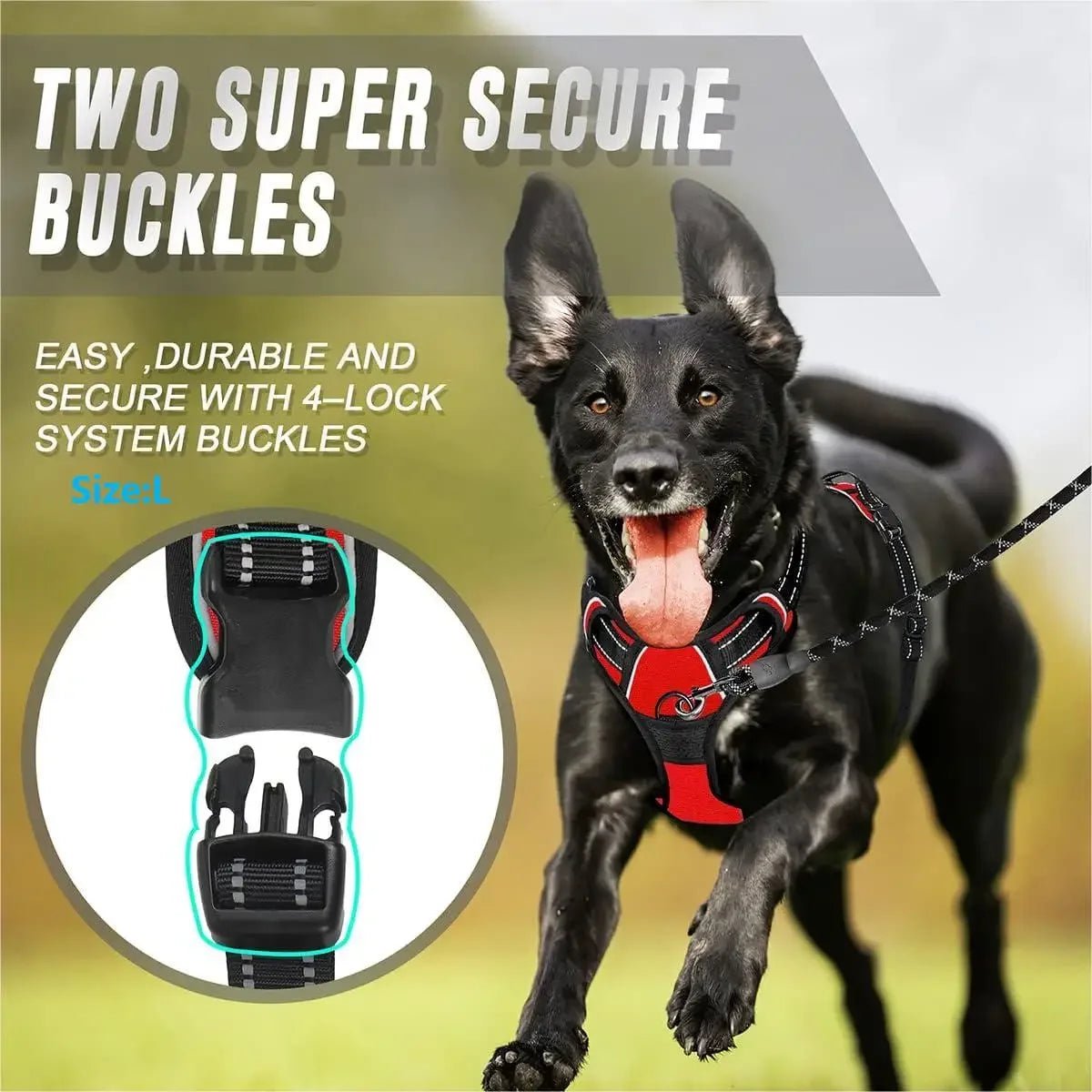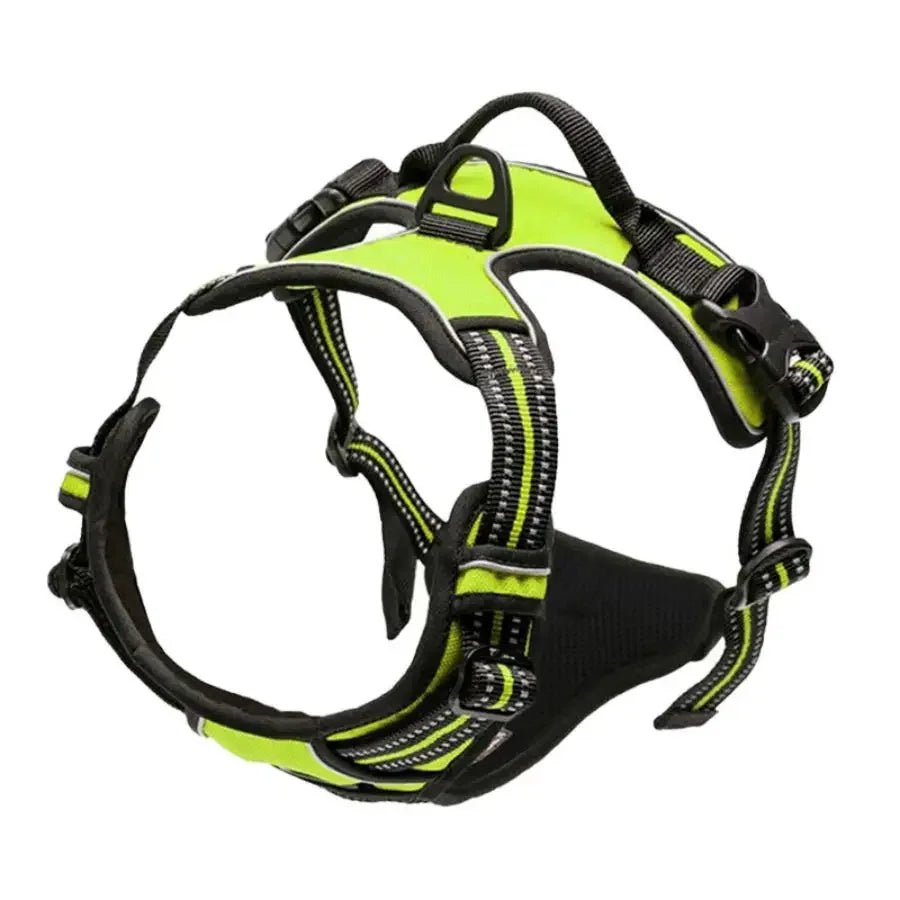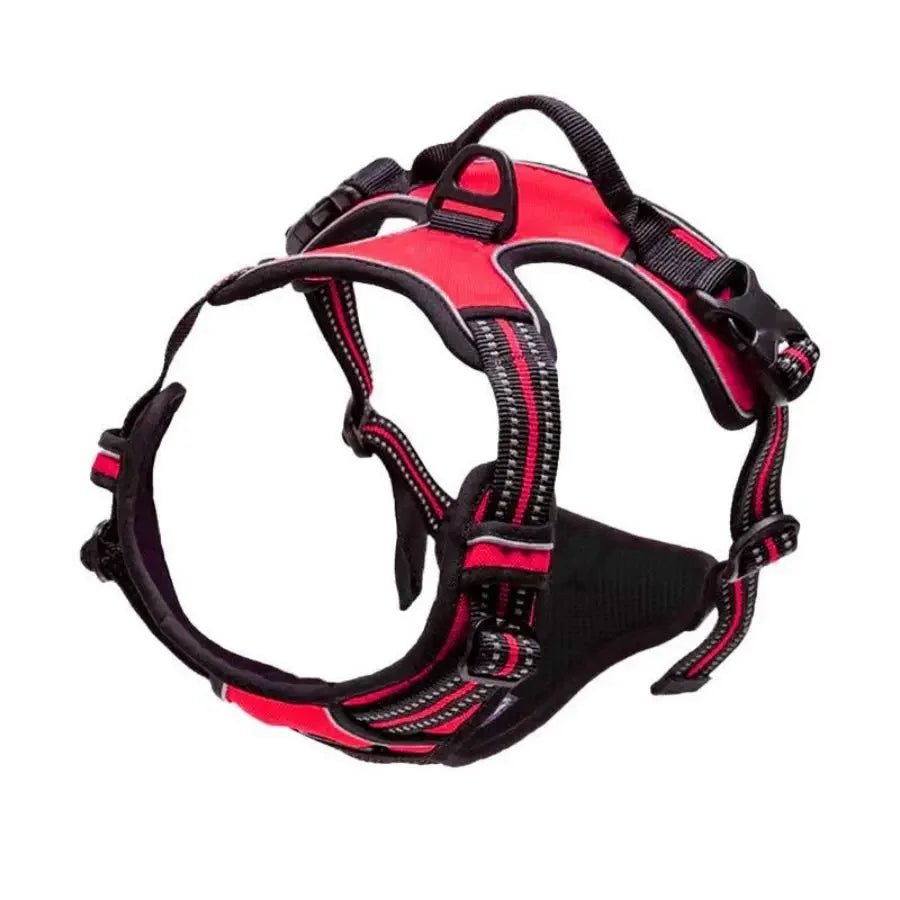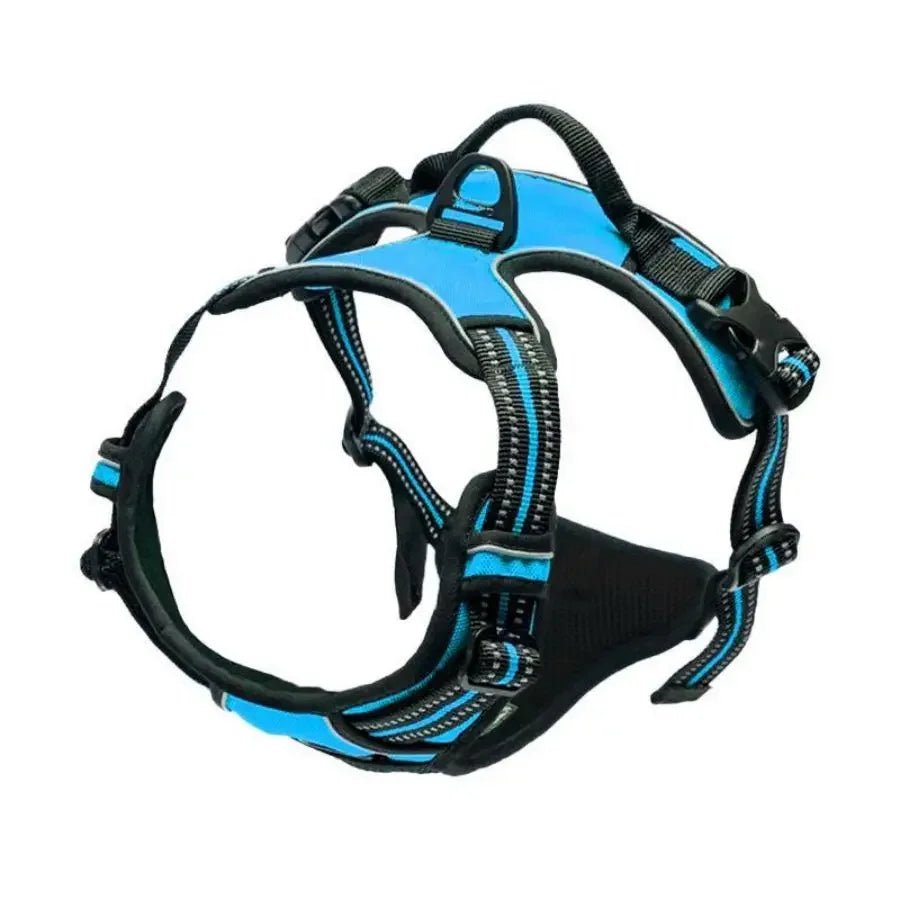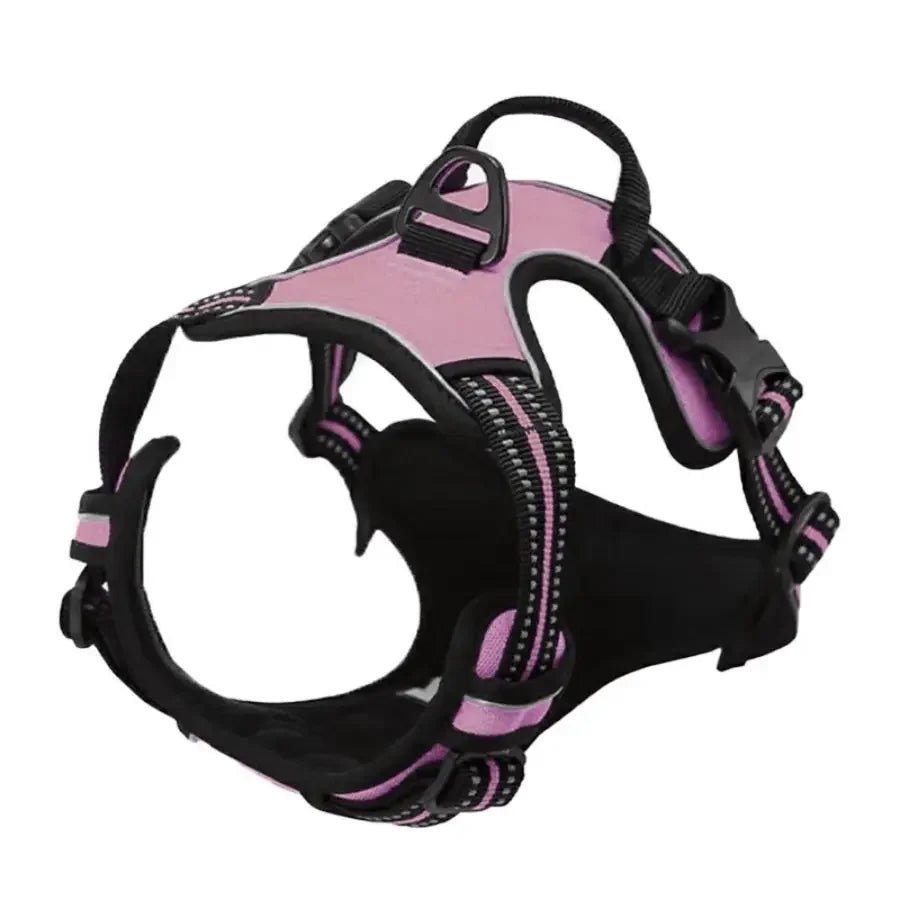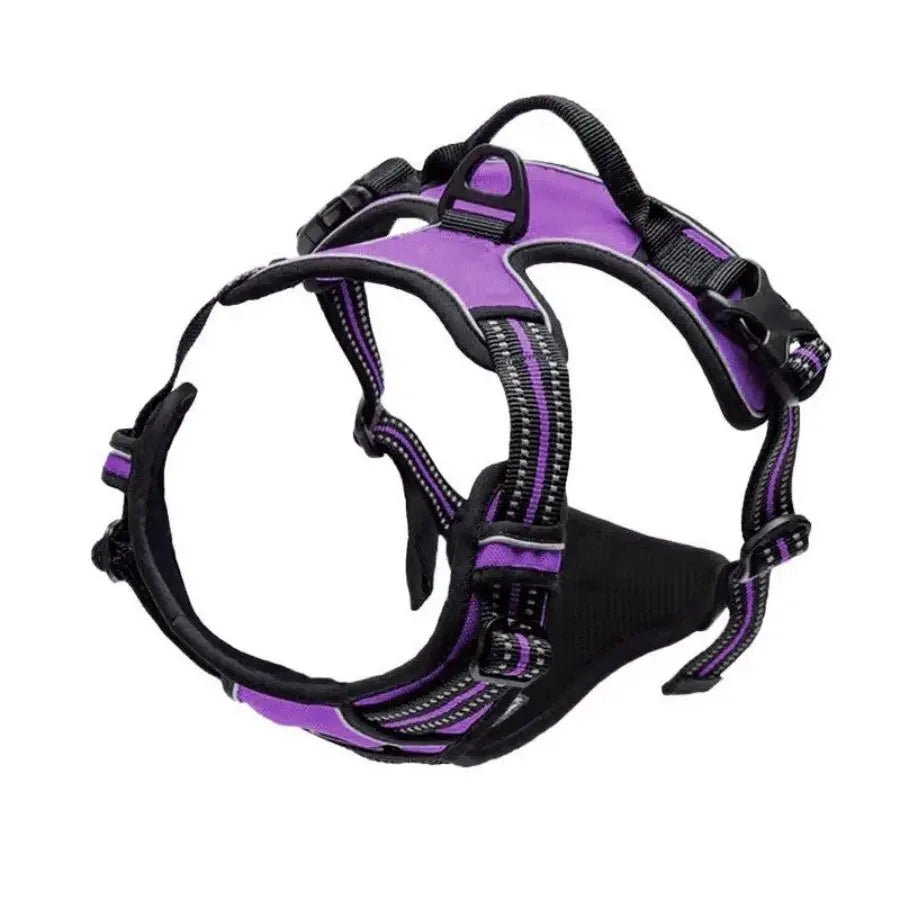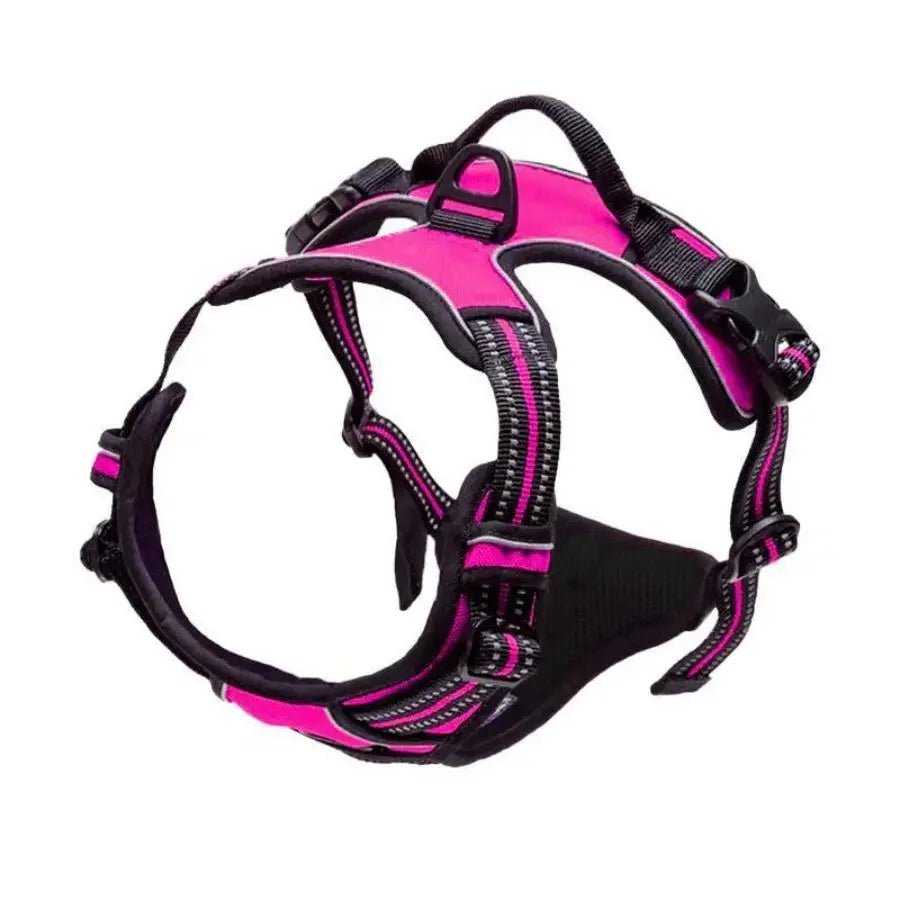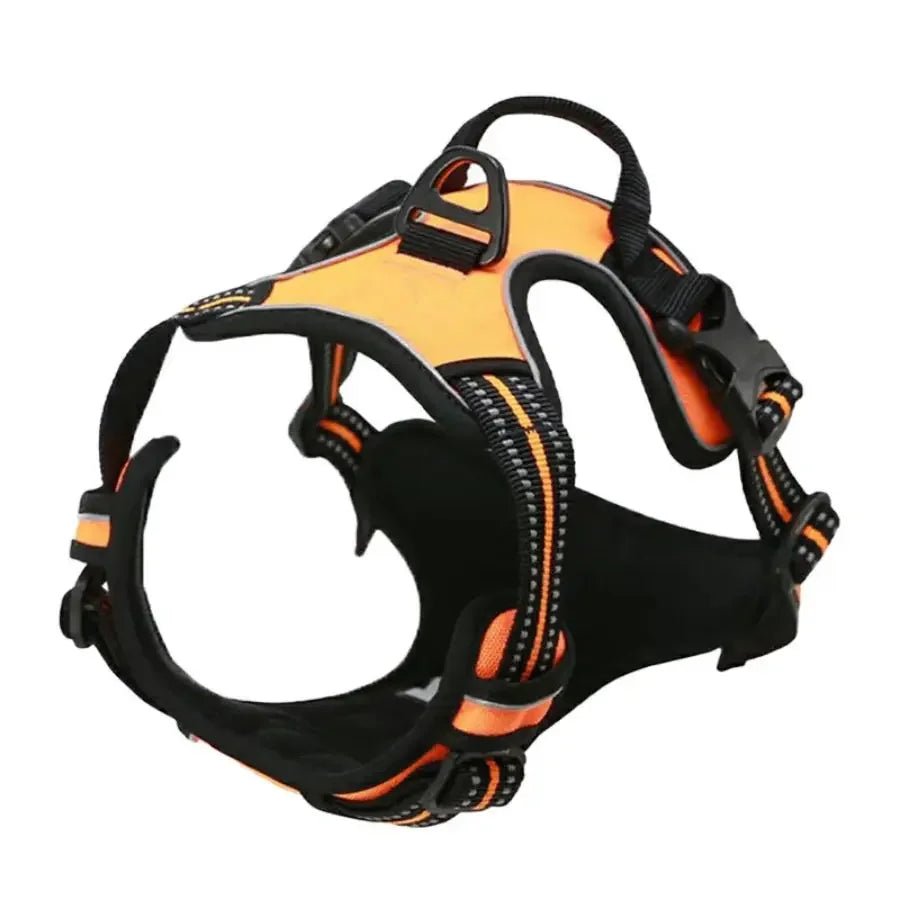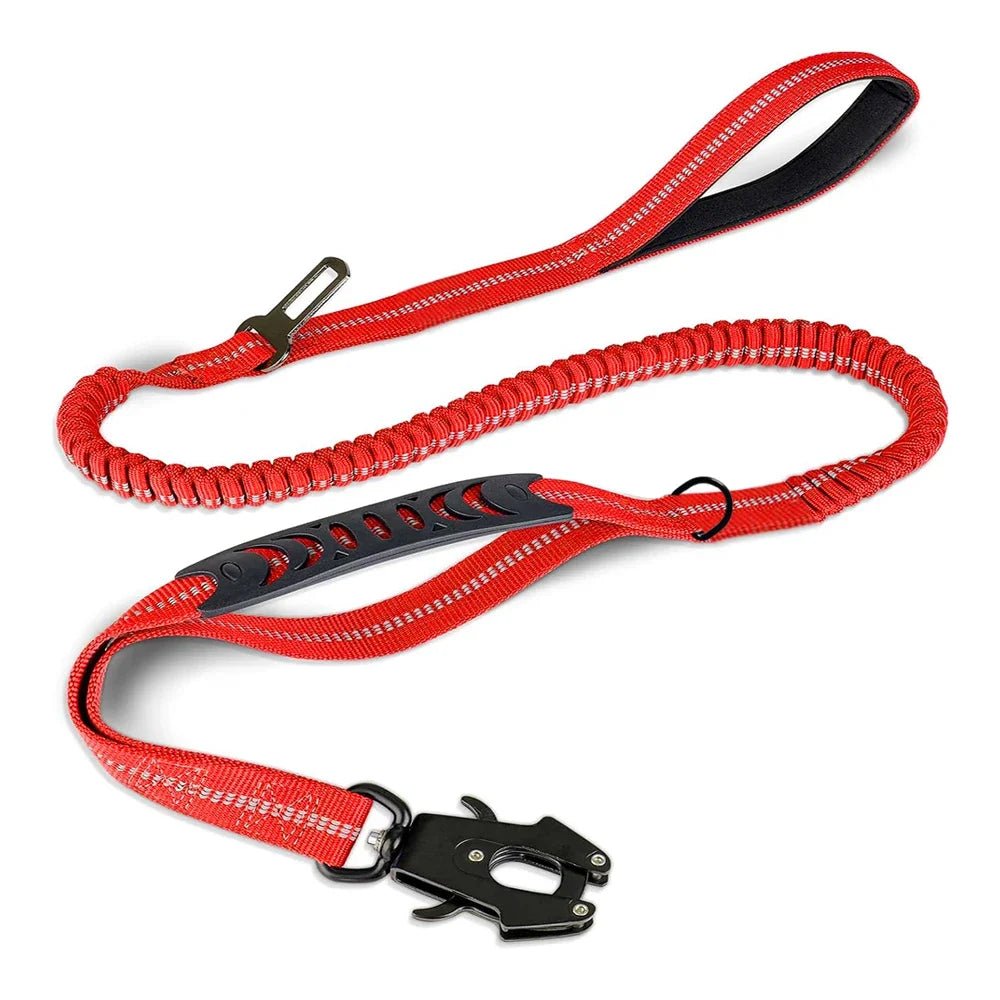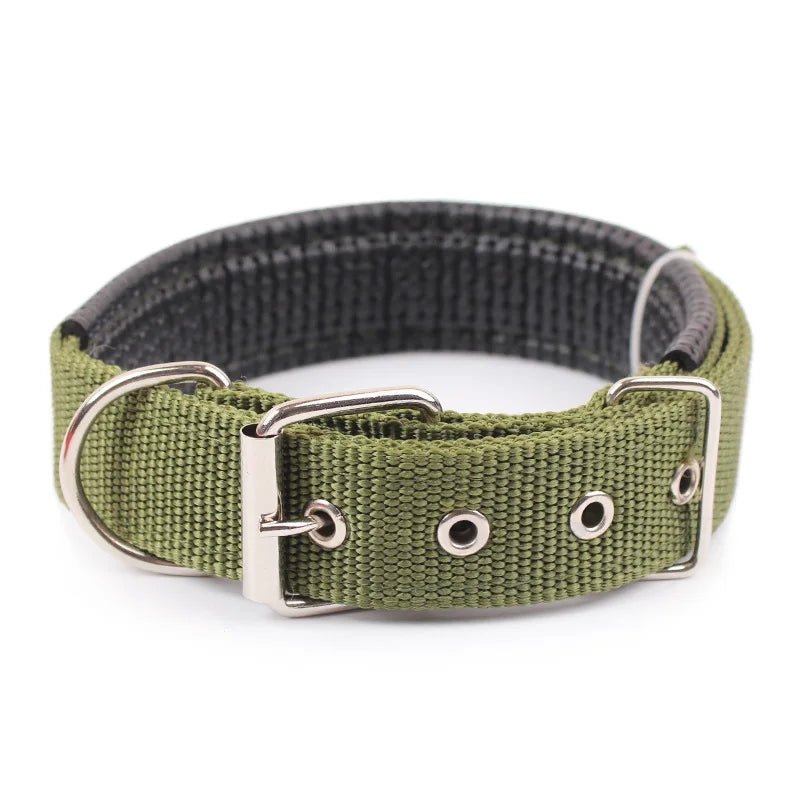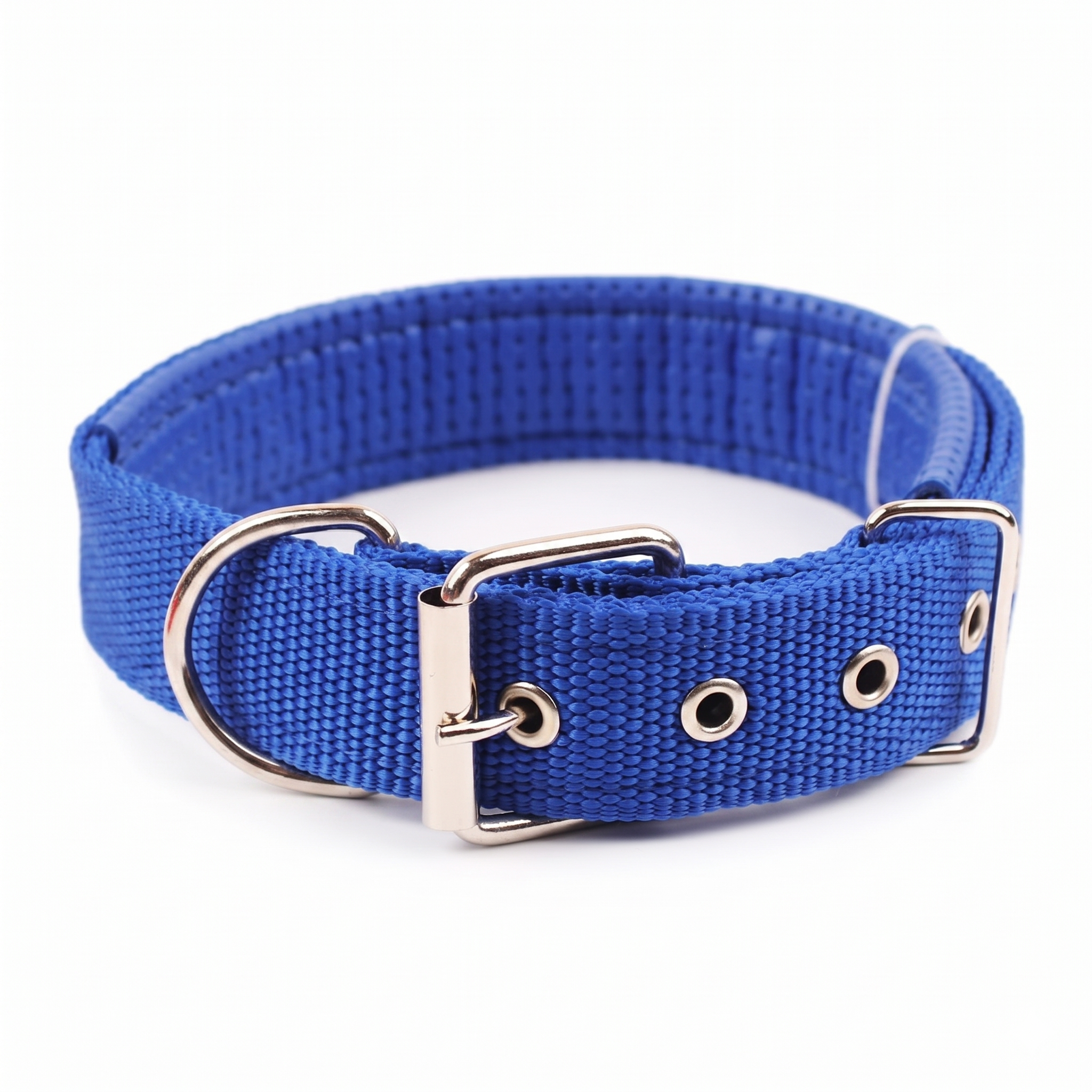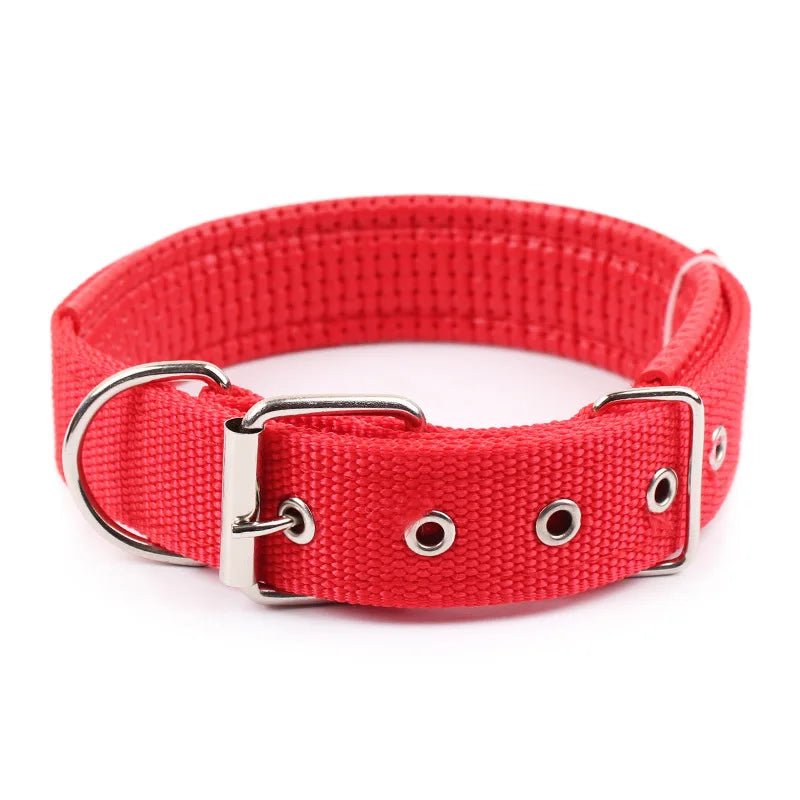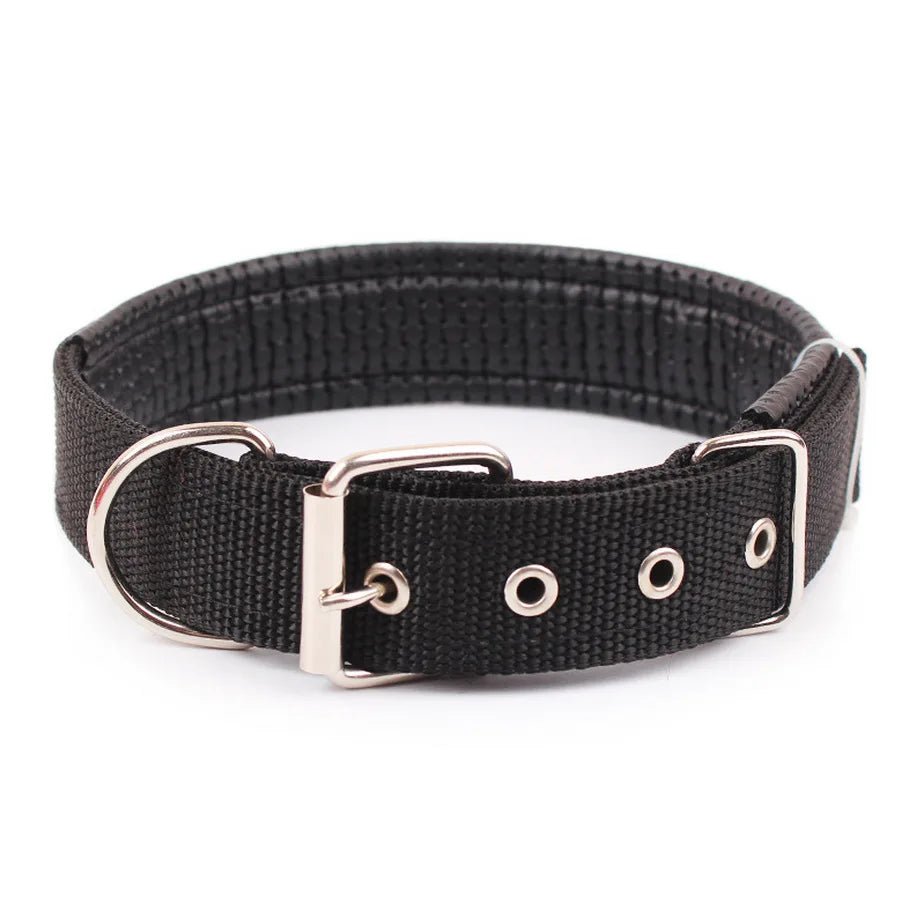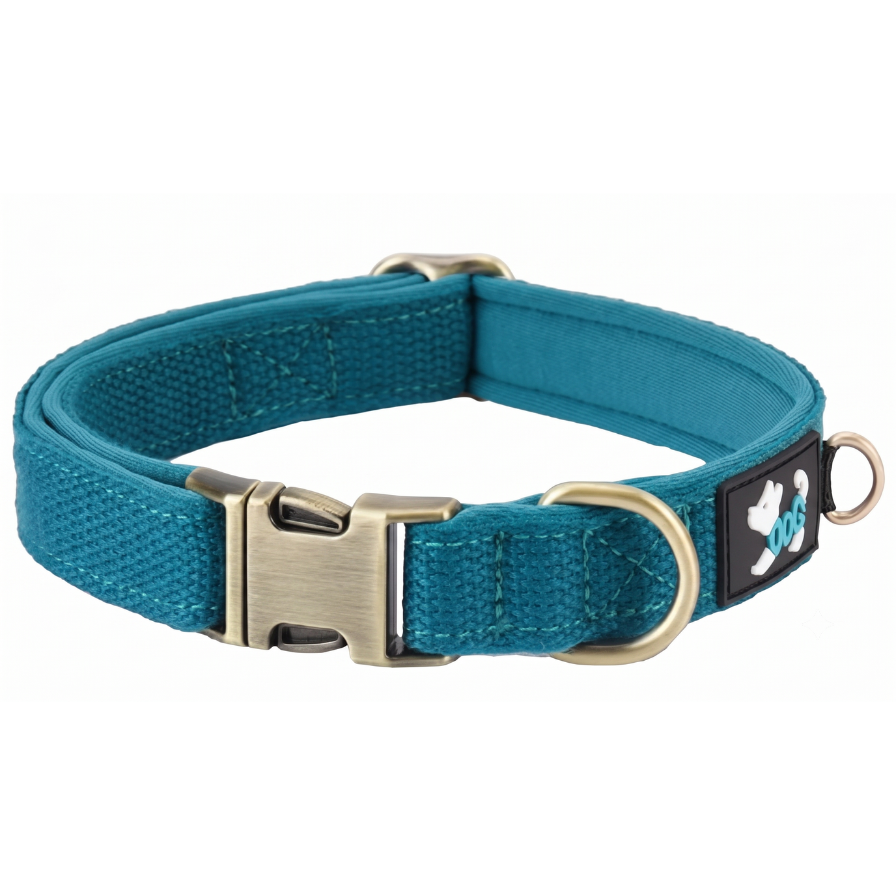

You're standing in the hallway, lead in hand, and your dog is already spinning circles by the front door. Before you clip that lead on, it's worth thinking about what it's actually attached to. A dog harness and a dog collar might look like they do the same job, but they work very differently. And the right choice depends on your dog, not on what everyone else is using.
Here's what you need to know to make the right call.
Pros and Cons of Dog Harnesses vs Dog Collars
Both collars and harnesses have their pros and cons, and neither one is perfect for every dog or every situation. This overview gives you the full picture at a glance.
| Dog Harness | Dog Collar | |
| Pressure distribution | Spreads force across the chest and shoulders | Concentrates pressure on the neck and throat |
| Control on walks | More control, especially with pullers or reactive dogs | Works well for calm, steady walkers on a loose lead |
| Safety | Lower risk of neck, trachea and thyroid strain | Can cause injury if a dog pulls hard or lunges repeatedly |
| Comfort | Comfortable when fitted correctly, but can chafe or restrict shoulder movement if the fit is off | Lightweight and barely noticeable for relaxed walkers |
| Ease of use | Takes a moment to put on, especially at first | Quick to slip on and off |
| Identification | Not ideal for carrying ID tags | The best place for your dog's name tag and your contact details |
| Escape risk | Harder to wriggle out of when fitted properly | Some dogs can back out, especially narrow-headed breeds |
| Best for | Pullers, small breeds, puppies on walks, training | Calm walkers, ID at all times, quick garden trips |
Neither option wins across the board. It comes down to your dog, your situation and, often, using the right one at the right time.
When is a Dog Harness the Better Option?
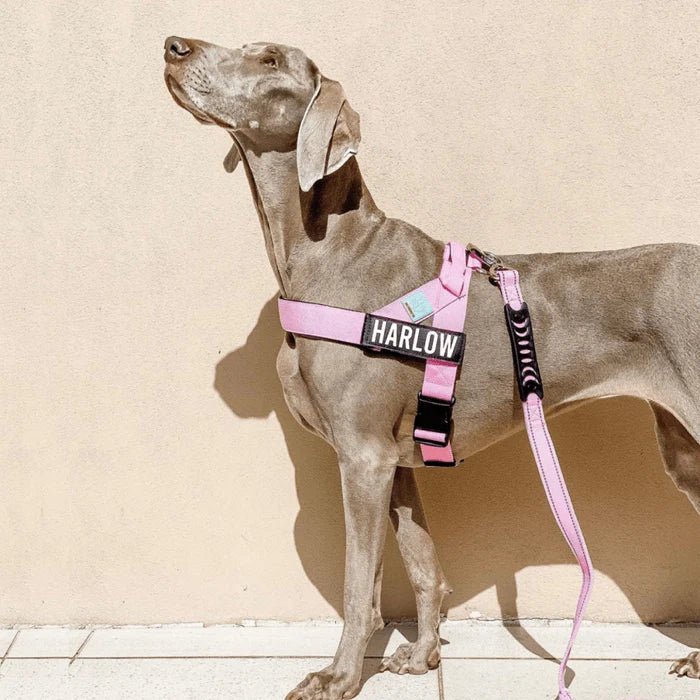
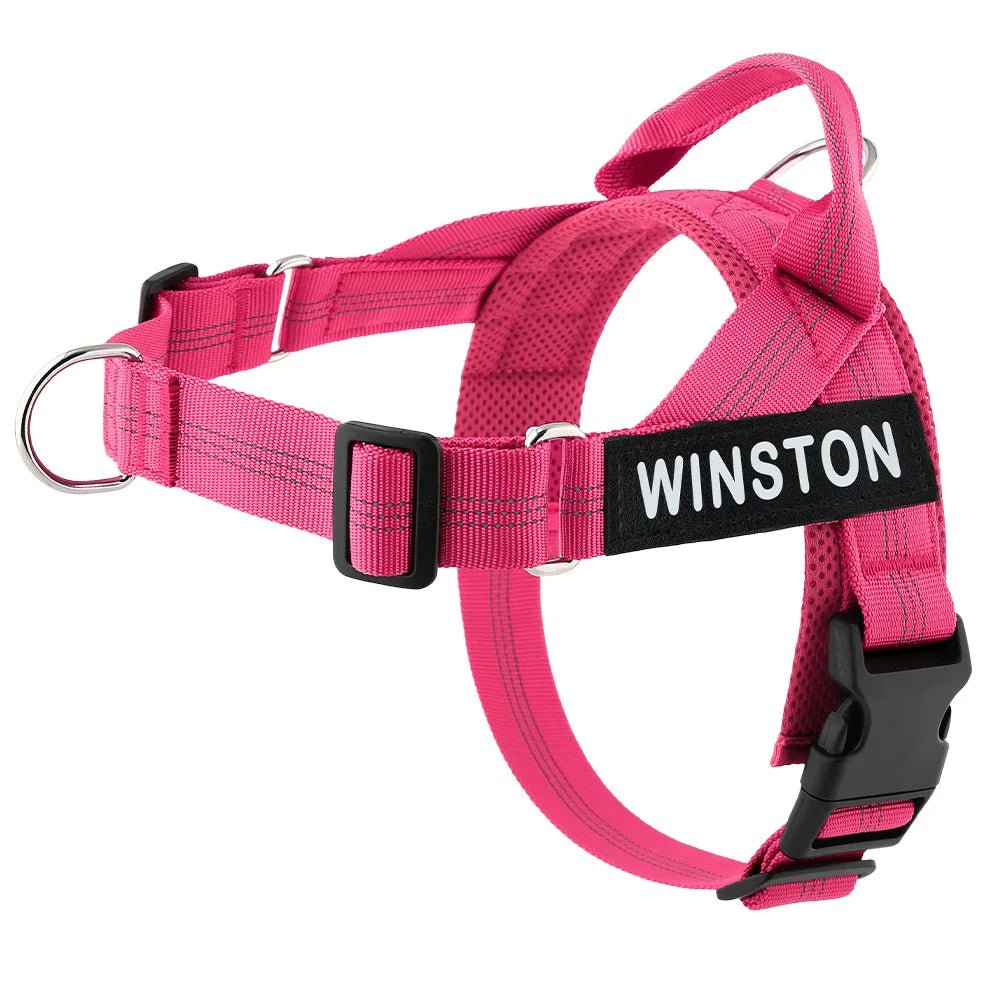
You know that feeling when your dog spots a squirrel and suddenly you're being dragged down the pavement? That's the moment a dog harness becomes the better option. When a dog pulls against a collar, all that force goes straight to the neck. A harness spreads it across the chest and shoulders instead, which makes a real difference for dogs that pull regularly.
Harnesses are especially important for smaller breeds and flat-faced dogs like Pugs, French Bulldogs and Shih Tzus. These dogs already have narrower airways, and any pressure on the throat can make breathing genuinely difficult. A harness removes that risk entirely.
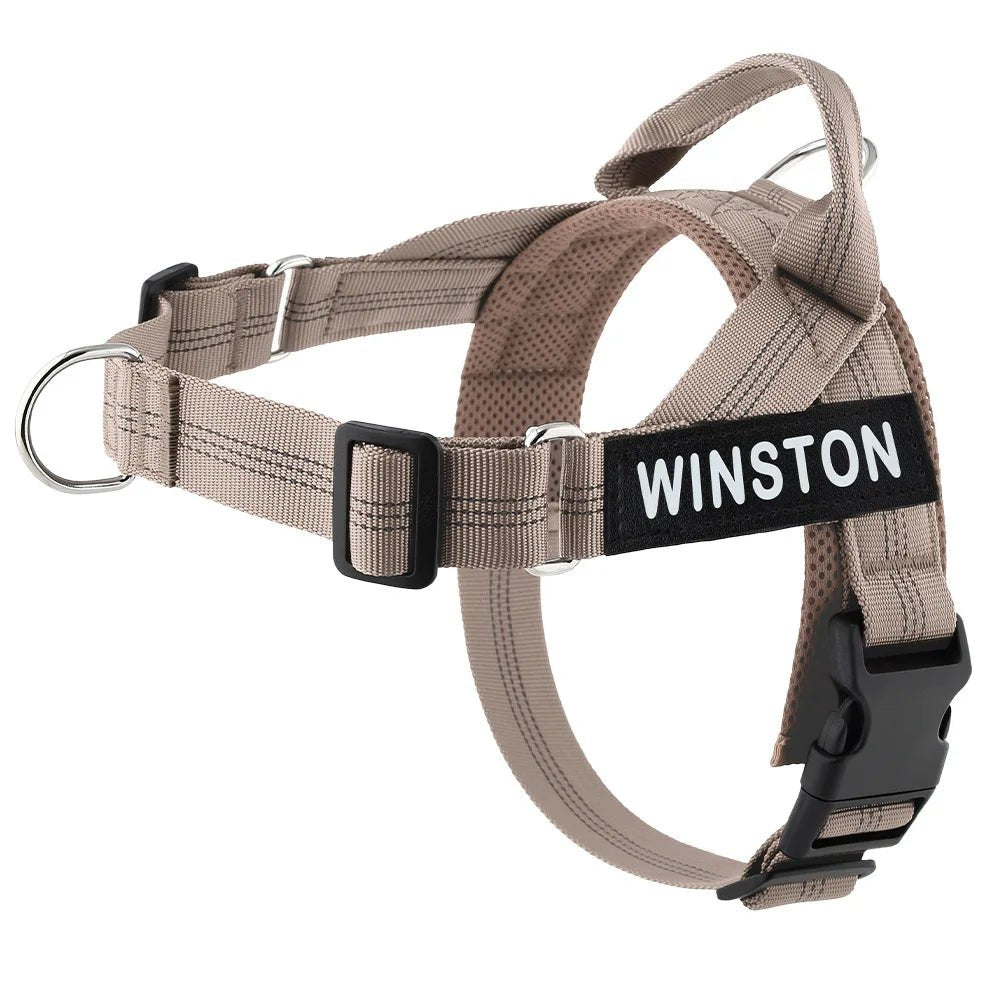
If your dog tends to react to other dogs, cyclists or anything that moves, a front-clip harness gives you noticeably more control. When your dog pulls forward, the front attachment point gently redirects them back towards you. No yanking needed, just a natural correction that keeps the walk manageable for both of you.
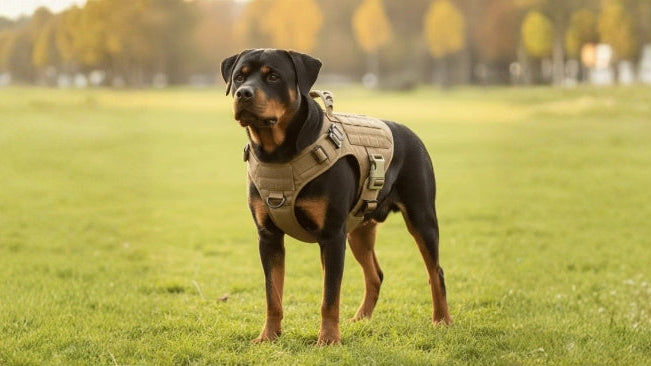
One thing worth knowing: a poorly fitted harness can cause problems of its own. If the straps sit too tight or in the wrong position, they can chafe under the front legs or restrict your dog's natural shoulder movement. The harness itself isn't the issue, the fit is. We'll cover how to get that right further down.
And if your dog has ever had neck or back issues, it's always worth checking with your vet. Many vets actively recommend harnesses for dogs with tracheal sensitivity or spinal concerns.
When a Dog Collar is the Better Choice
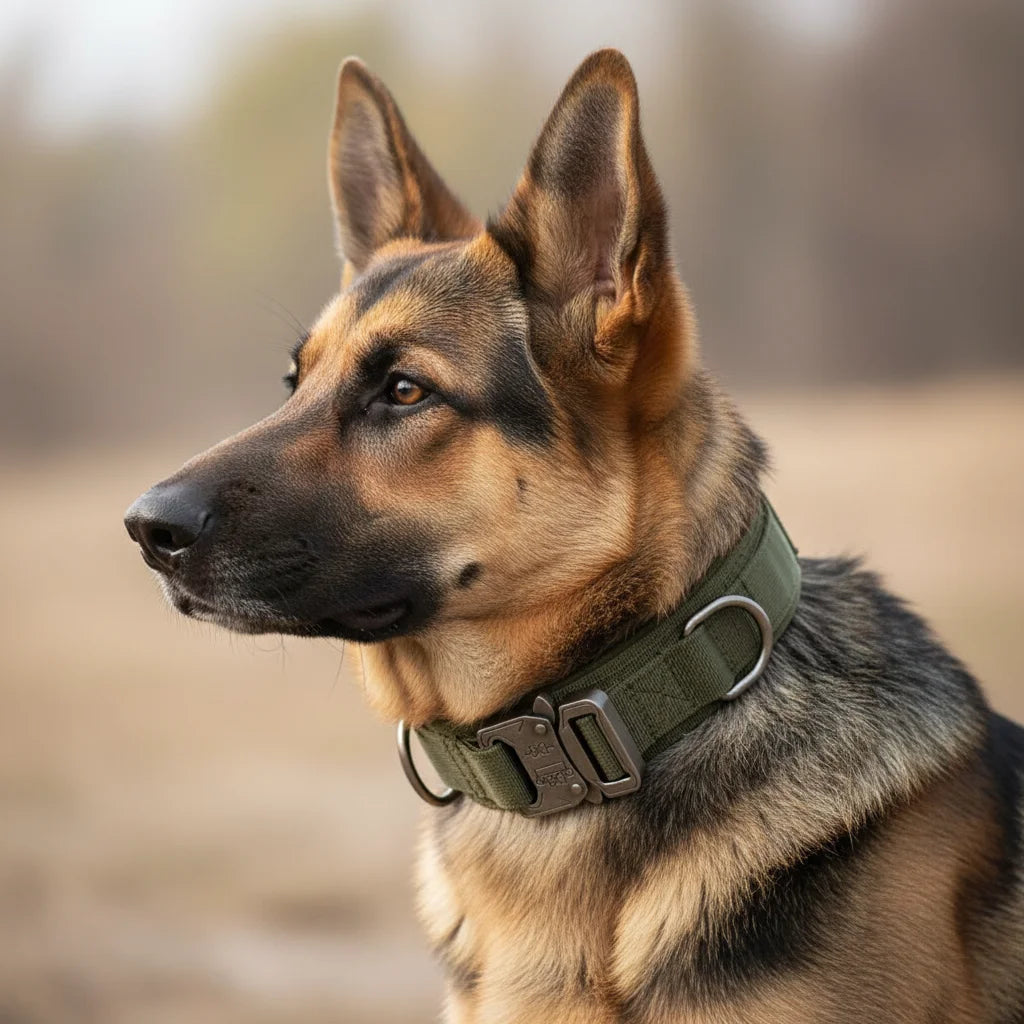
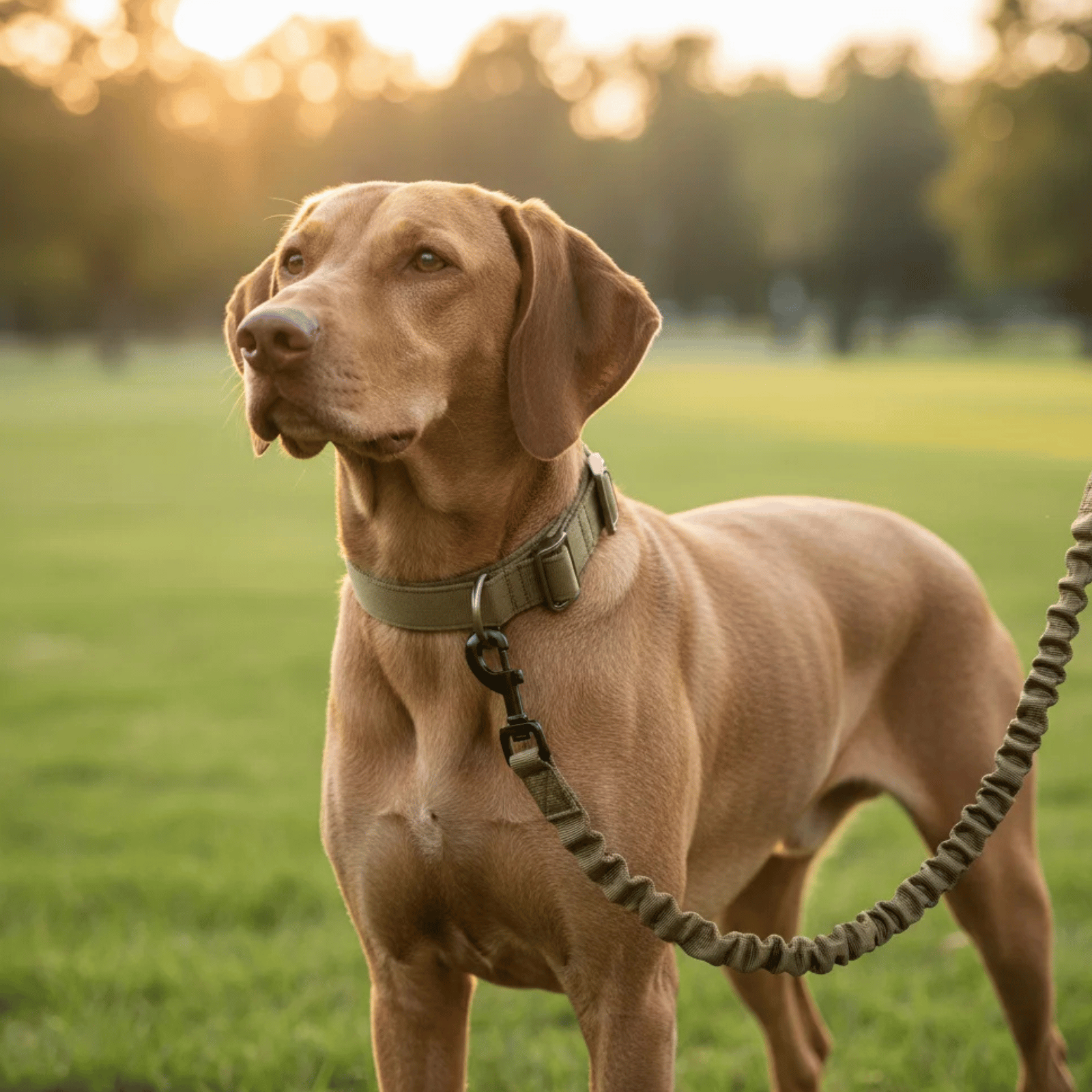
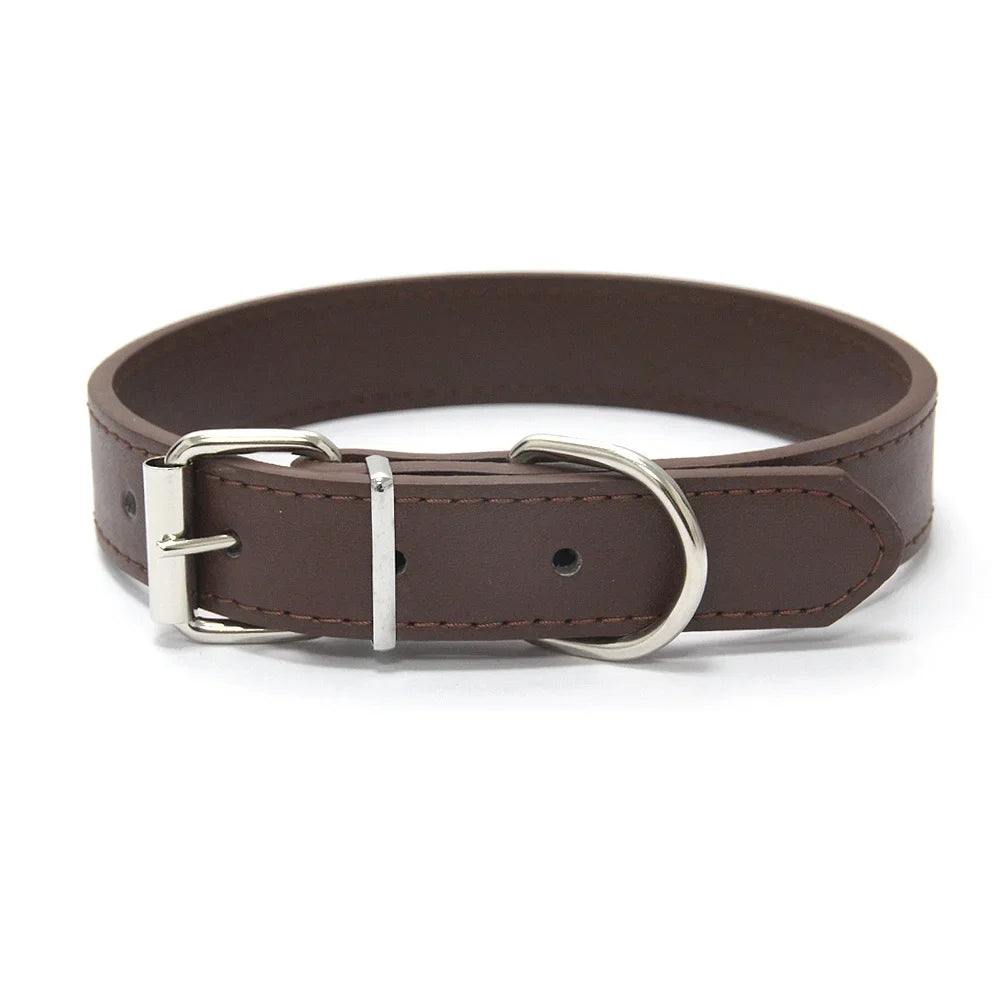
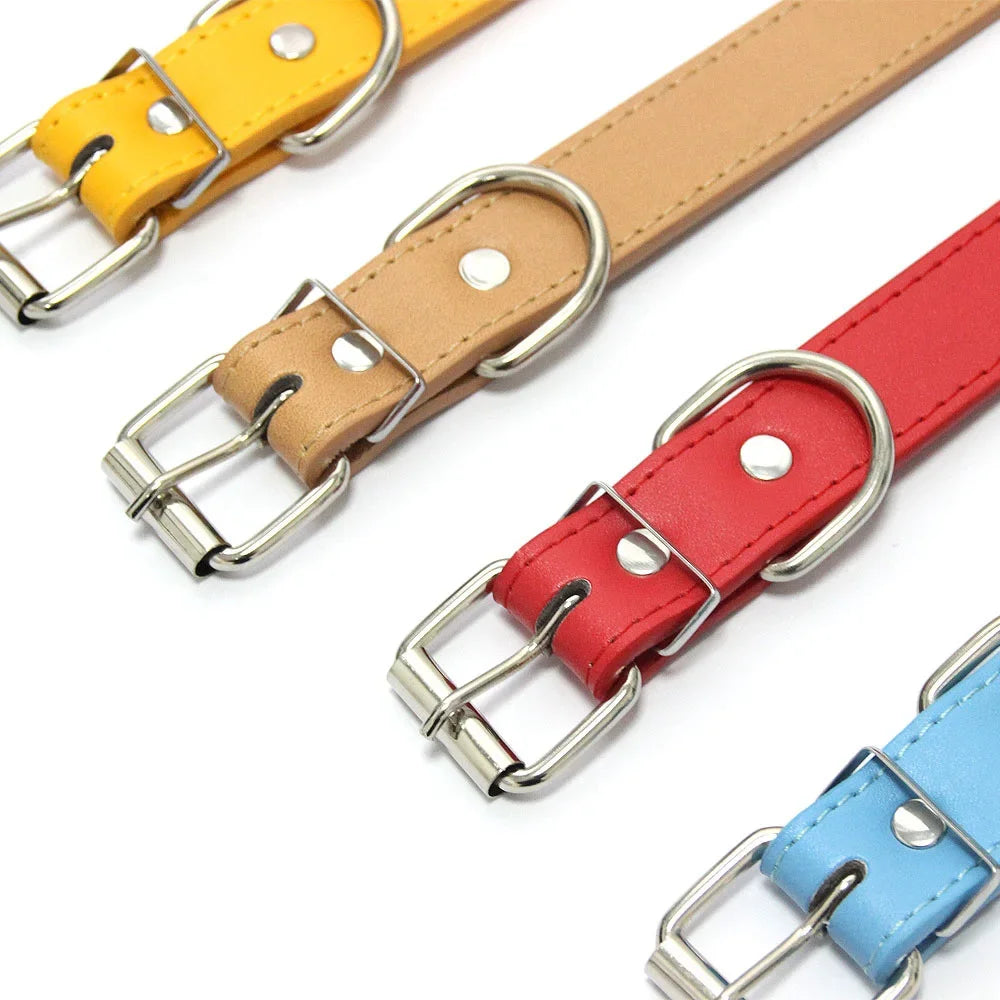
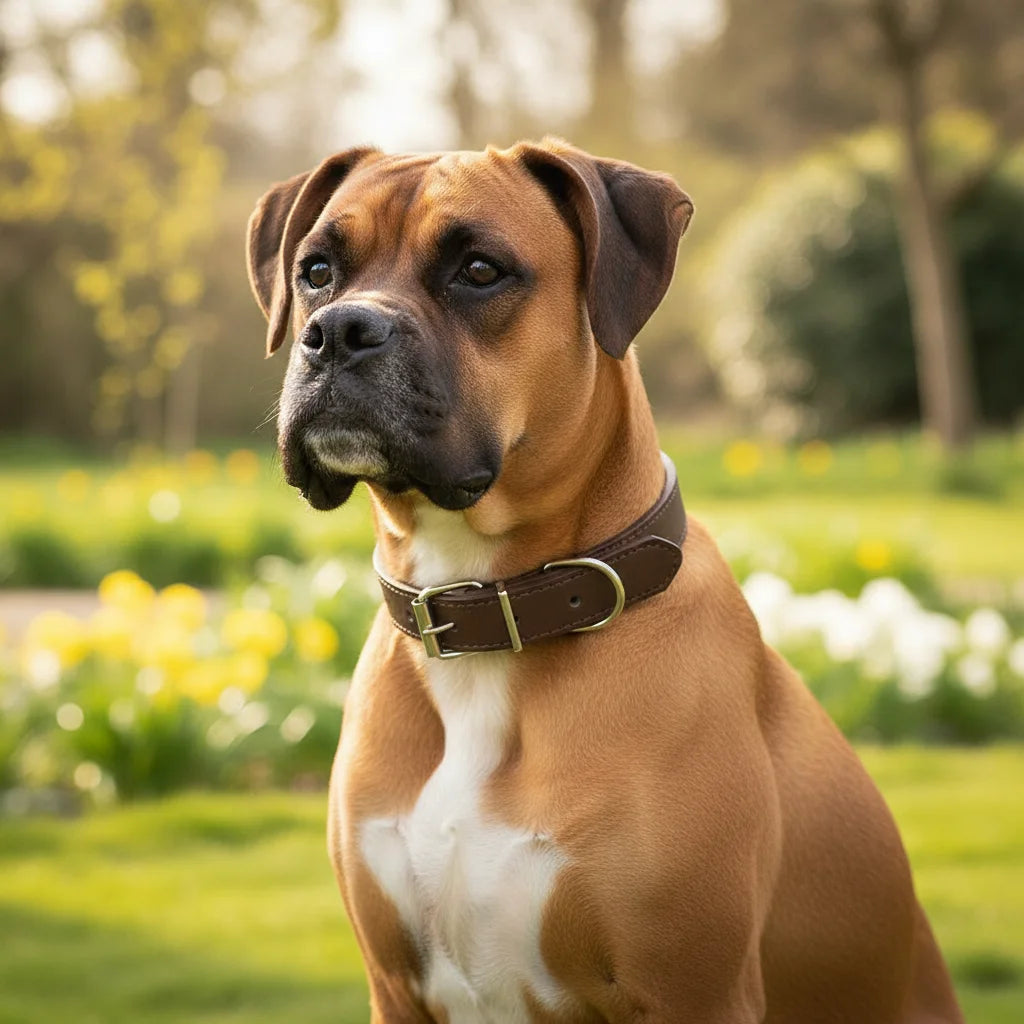
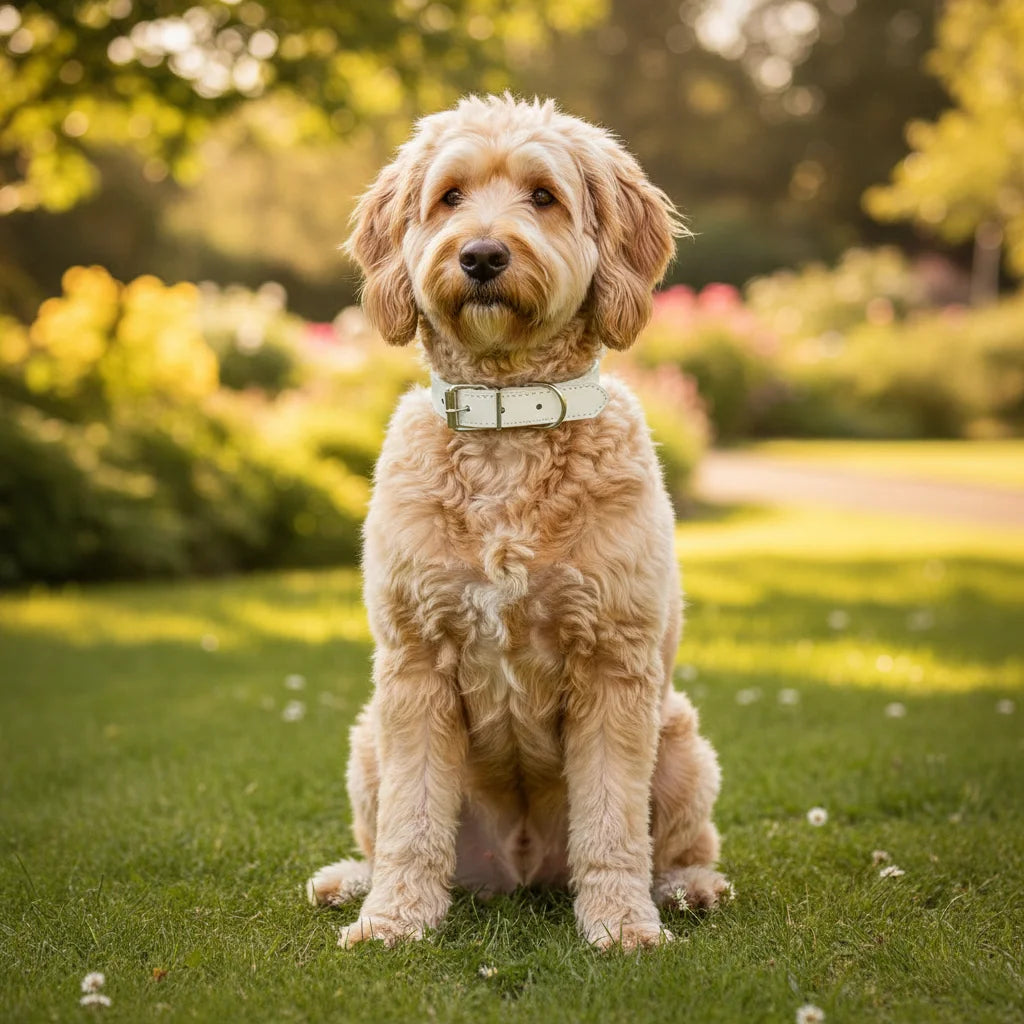
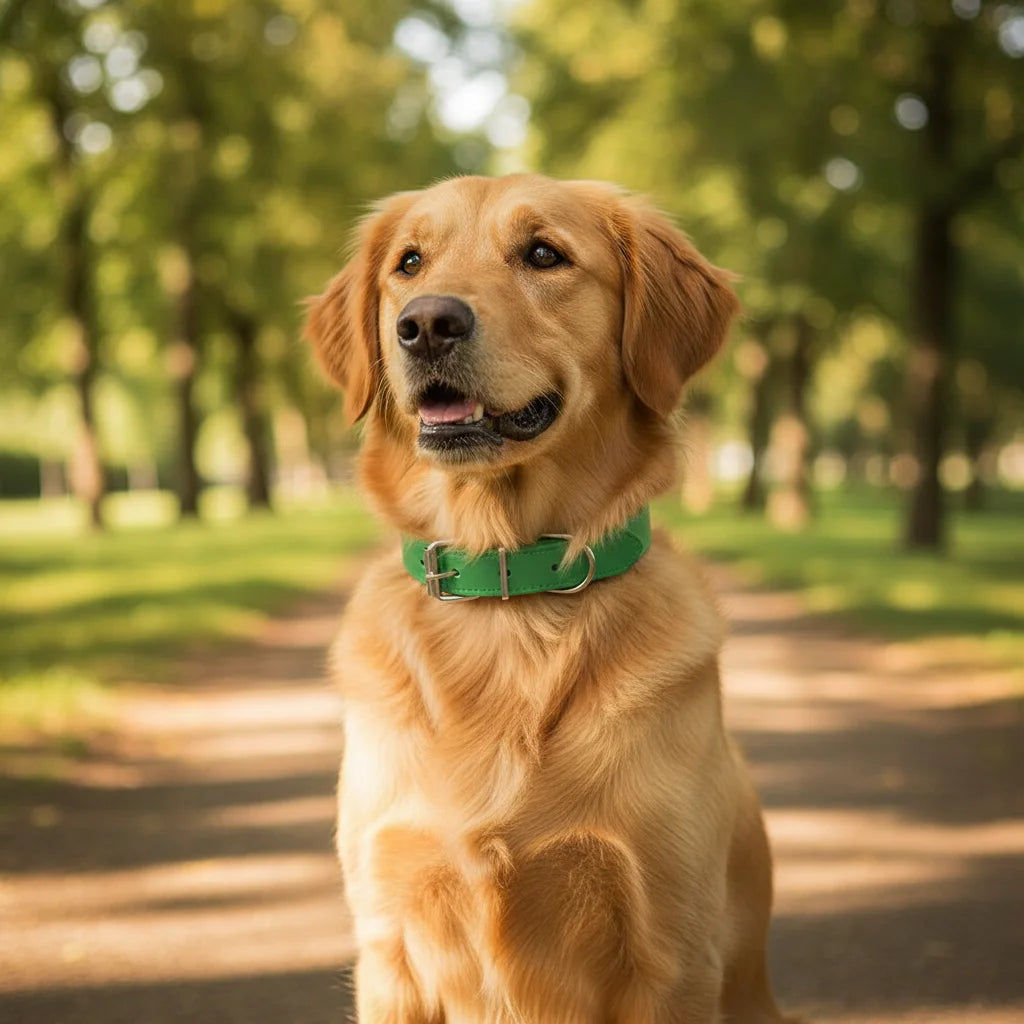
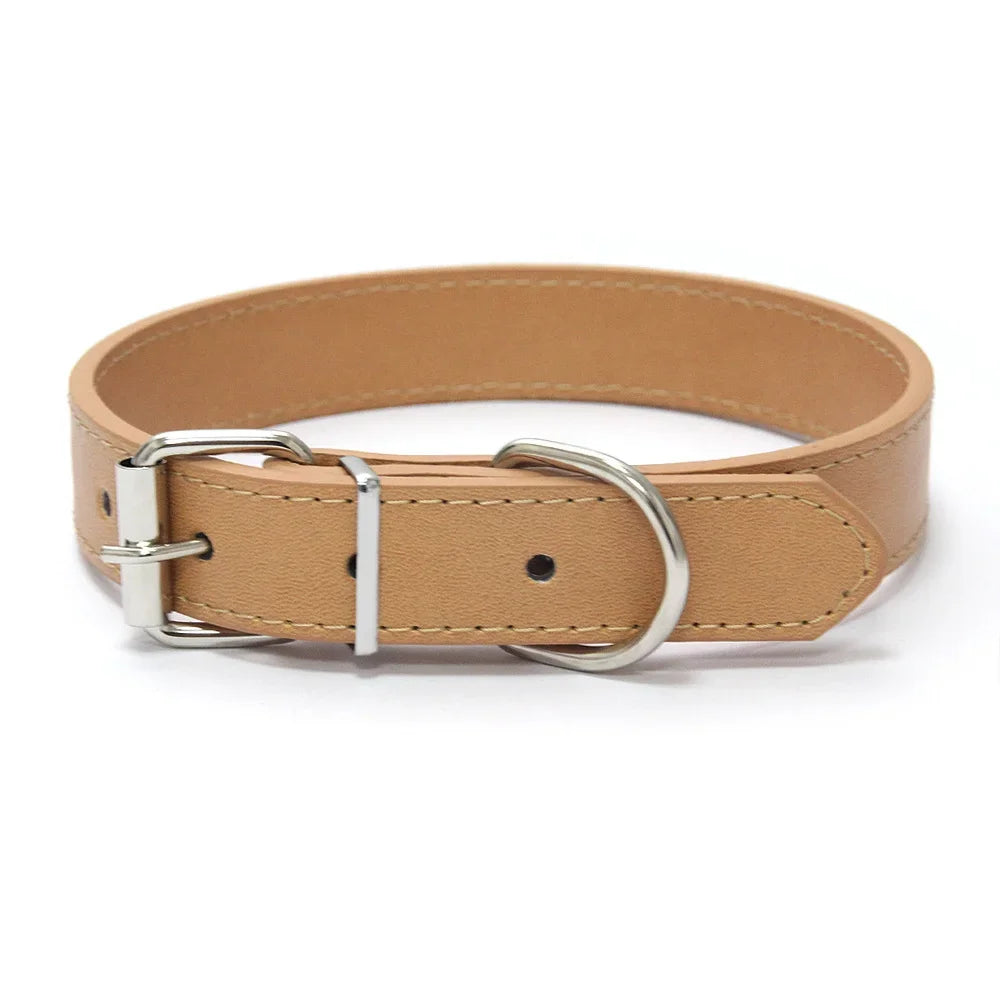
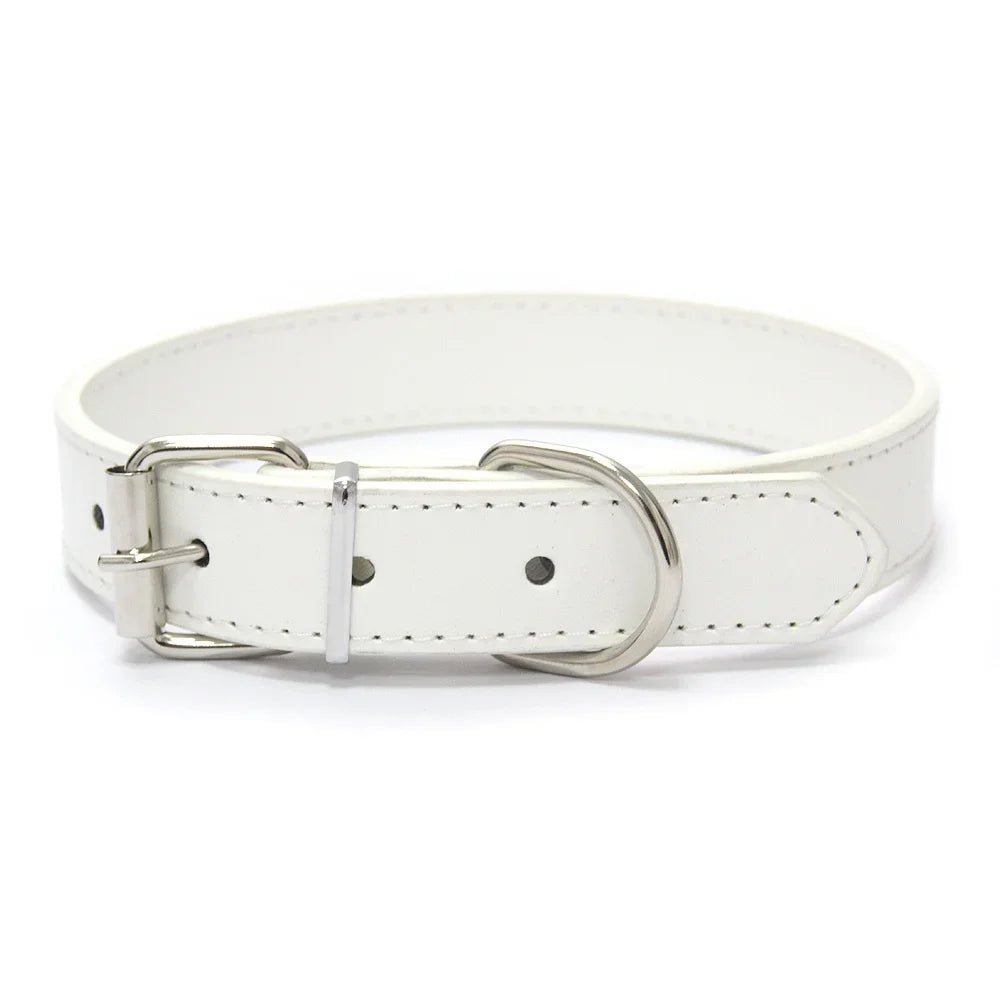
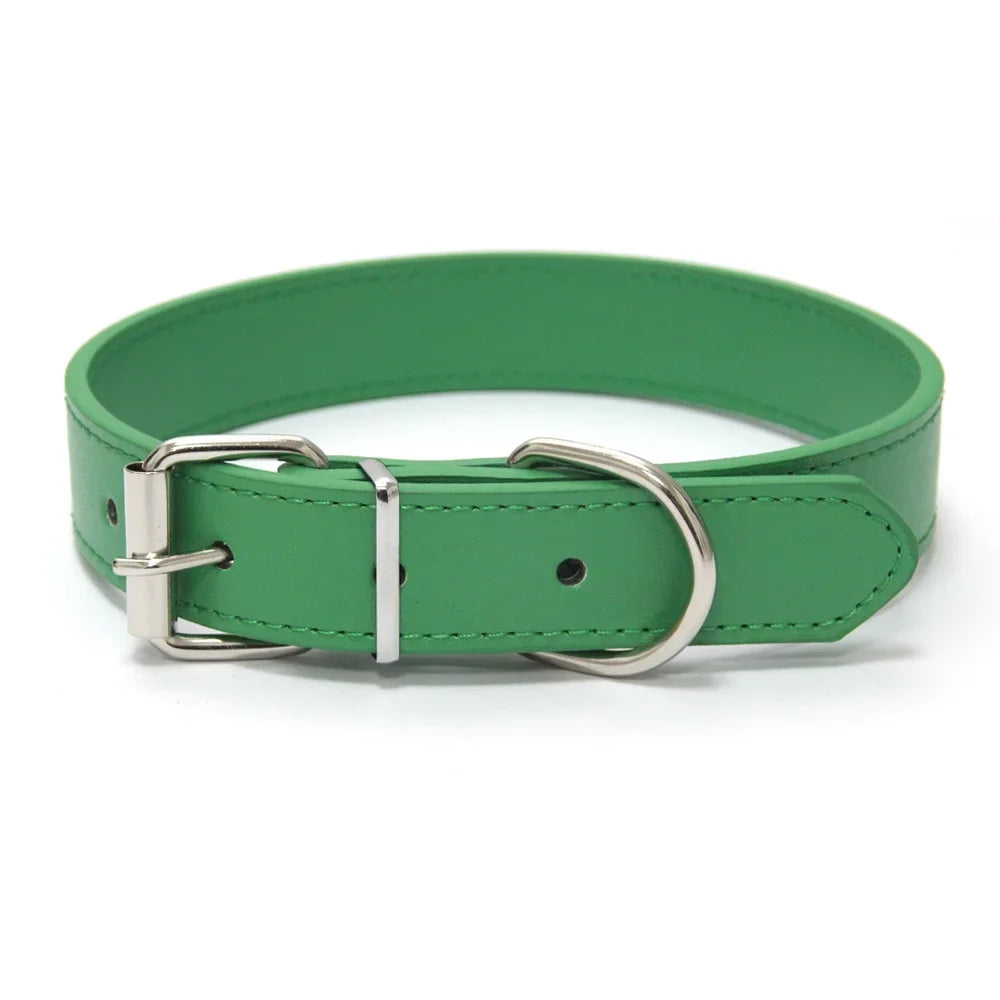
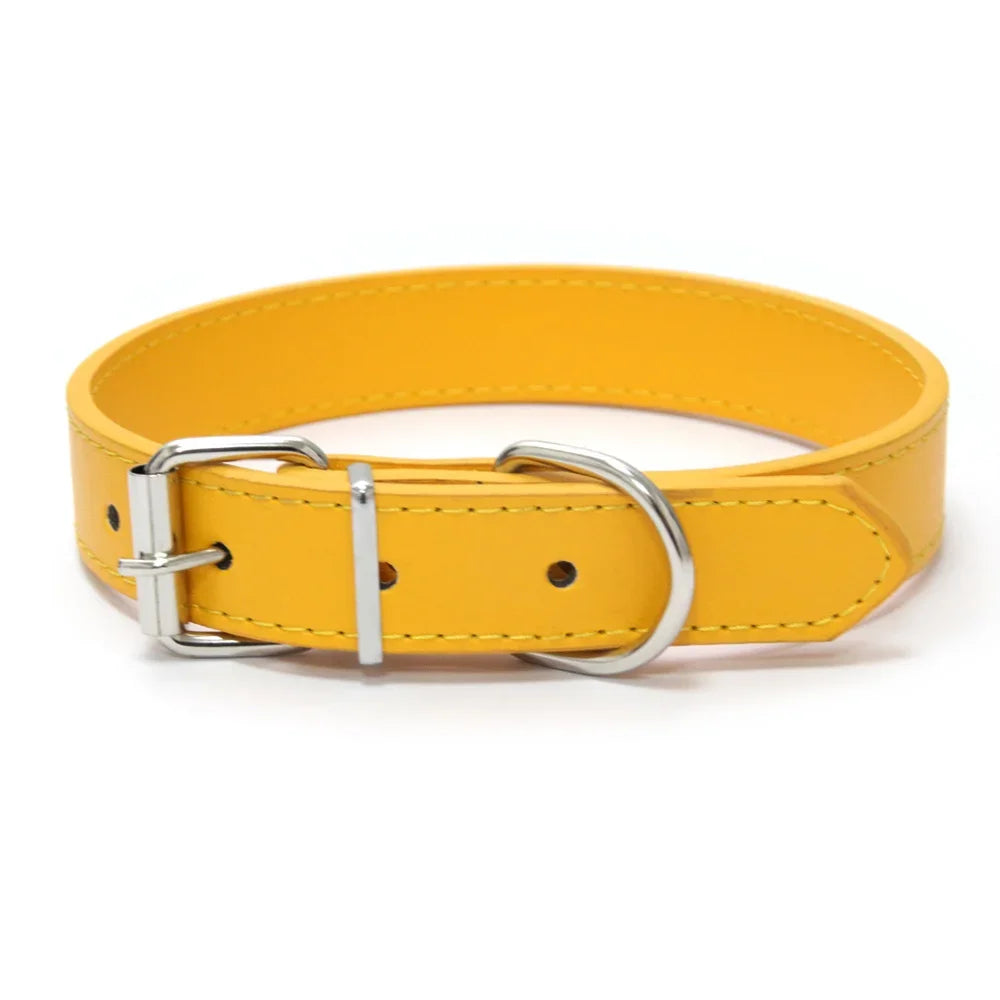
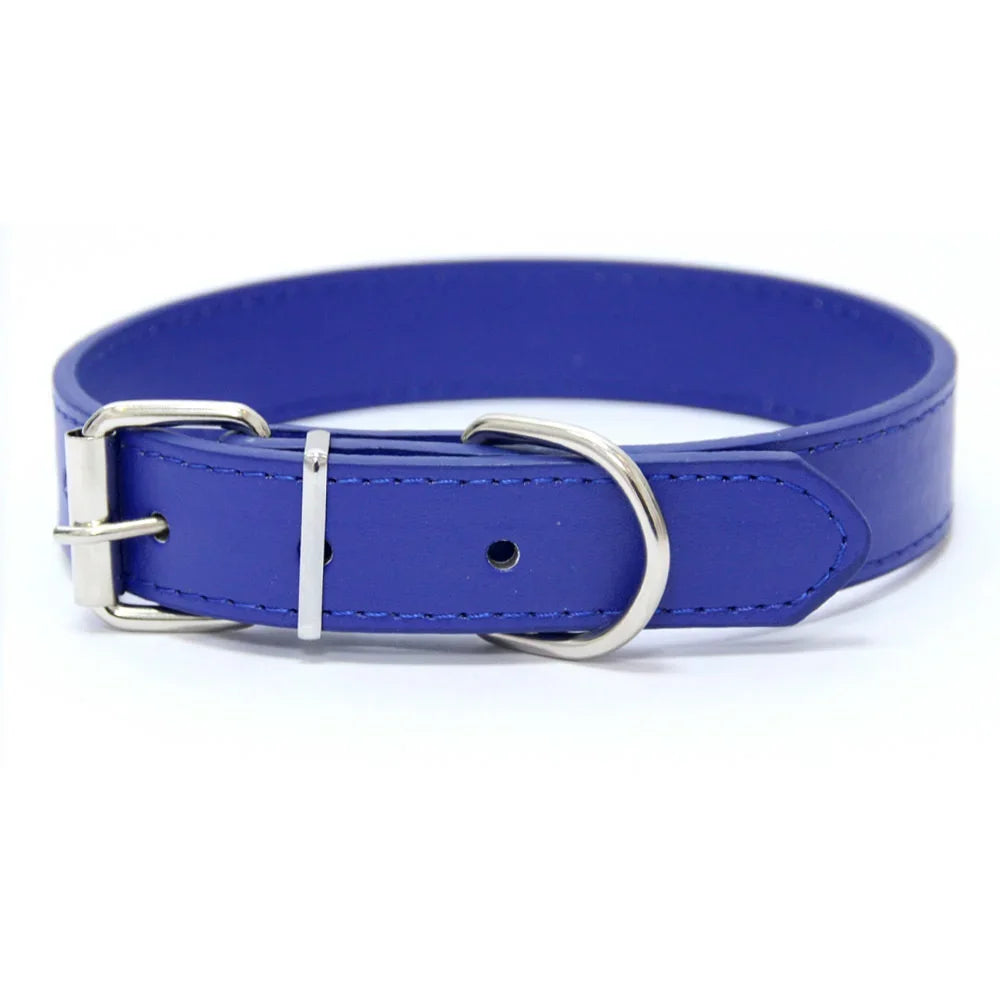
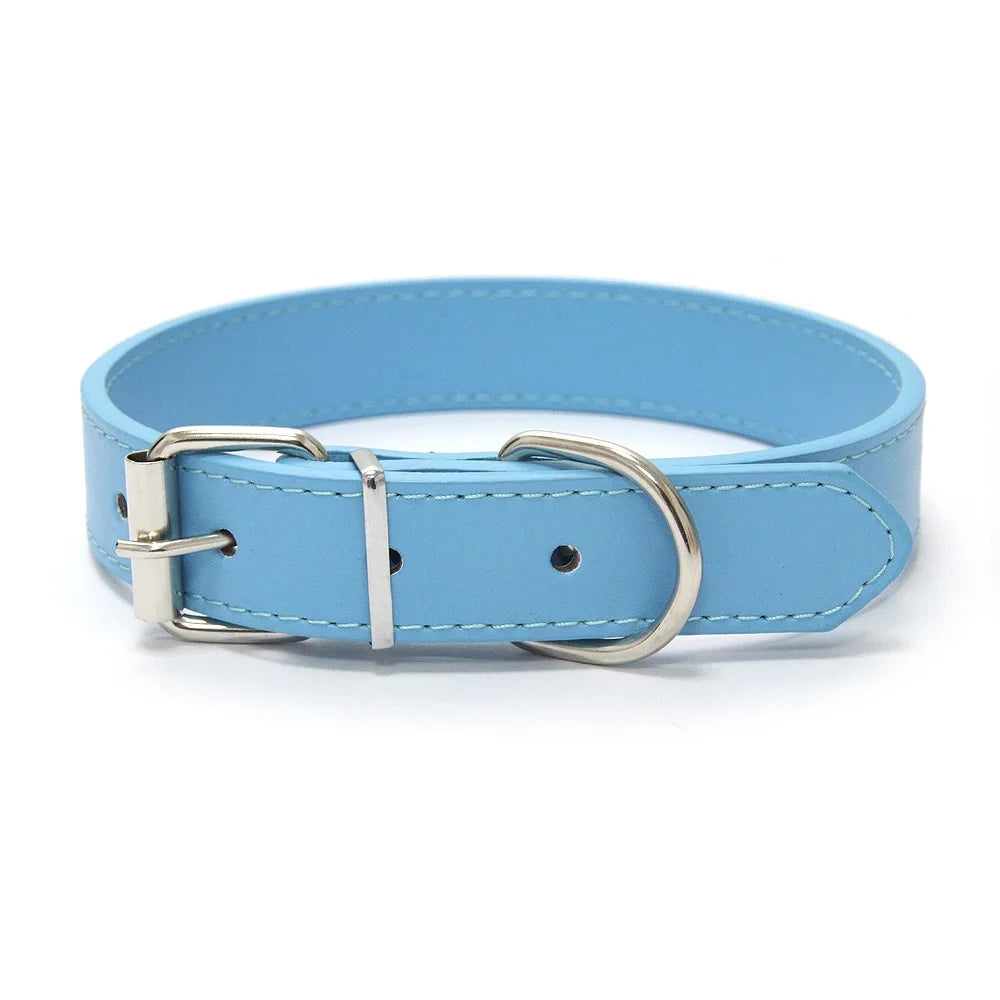
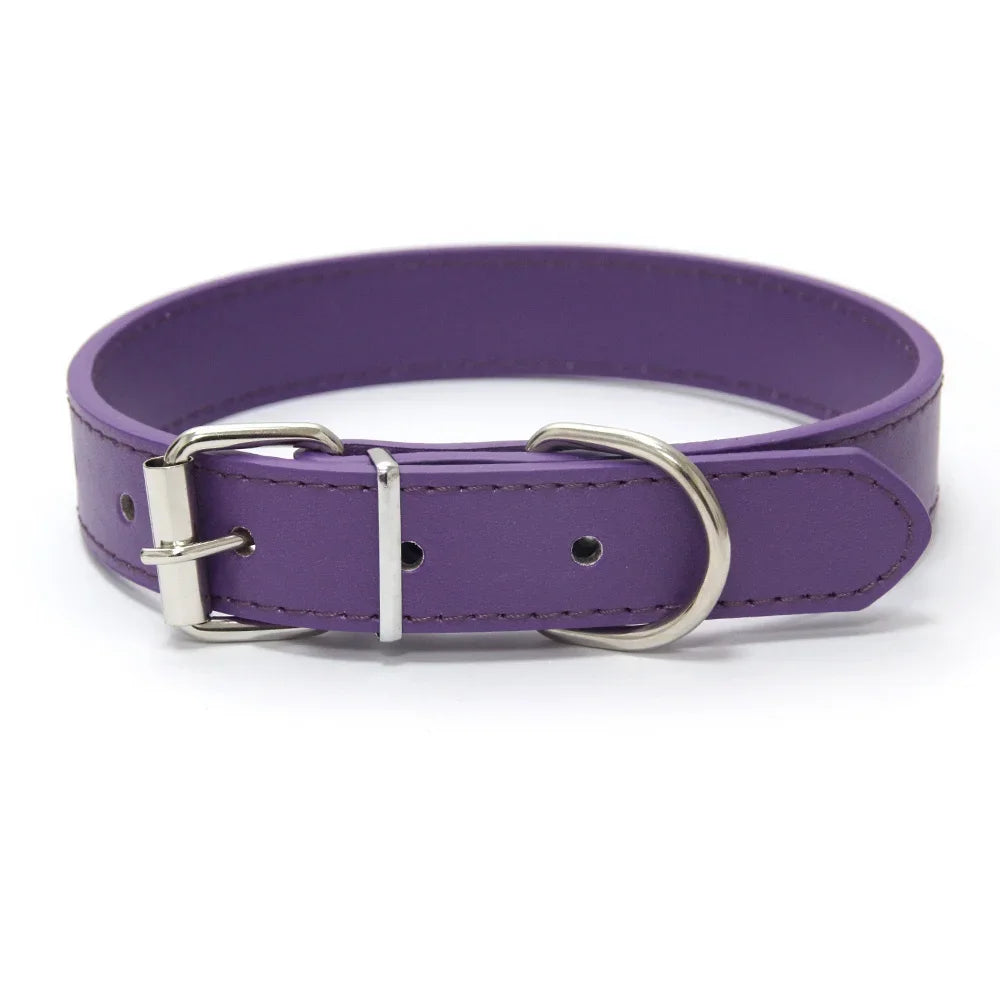
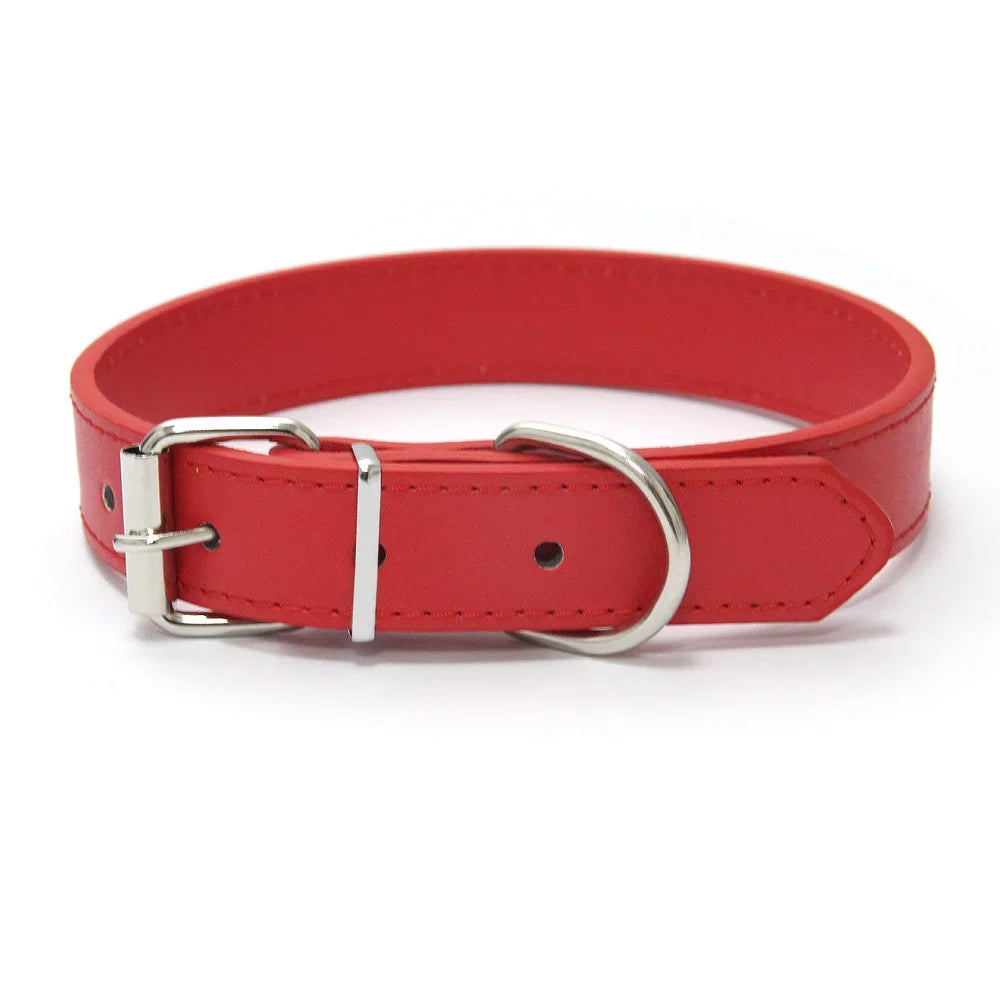
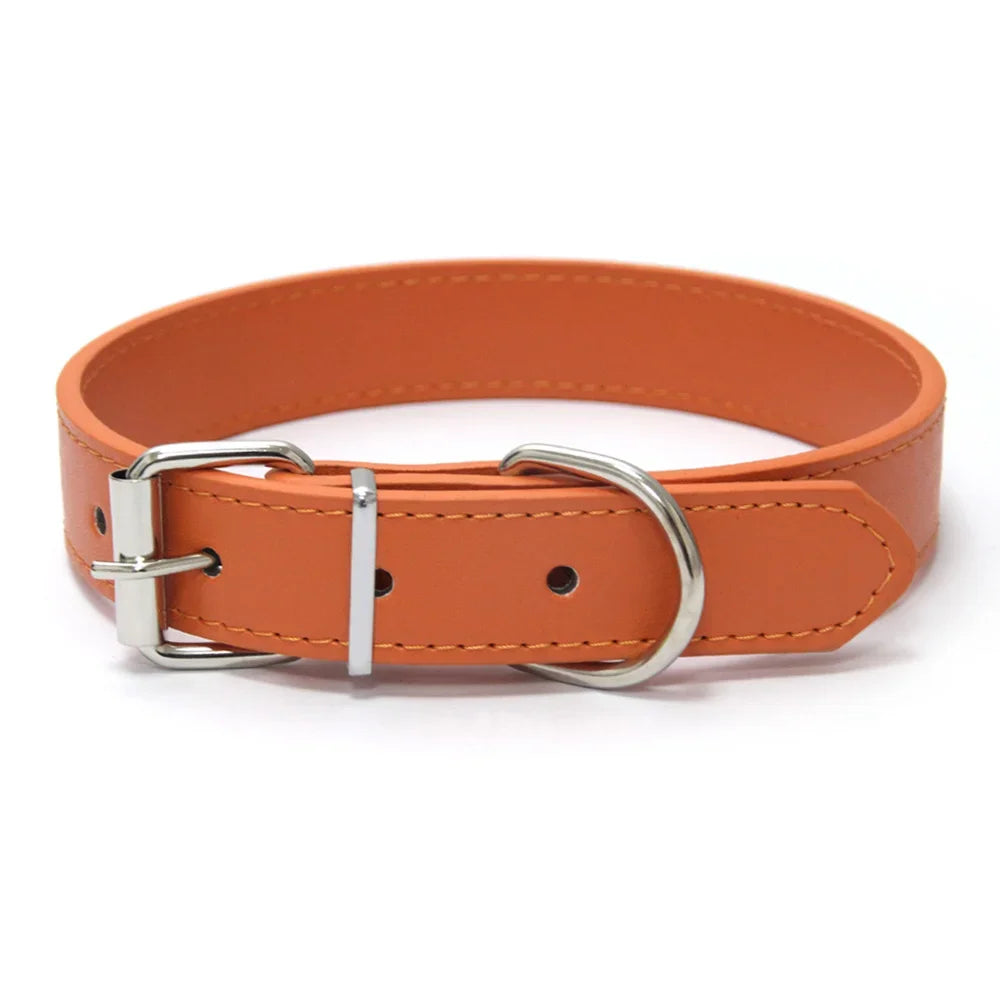
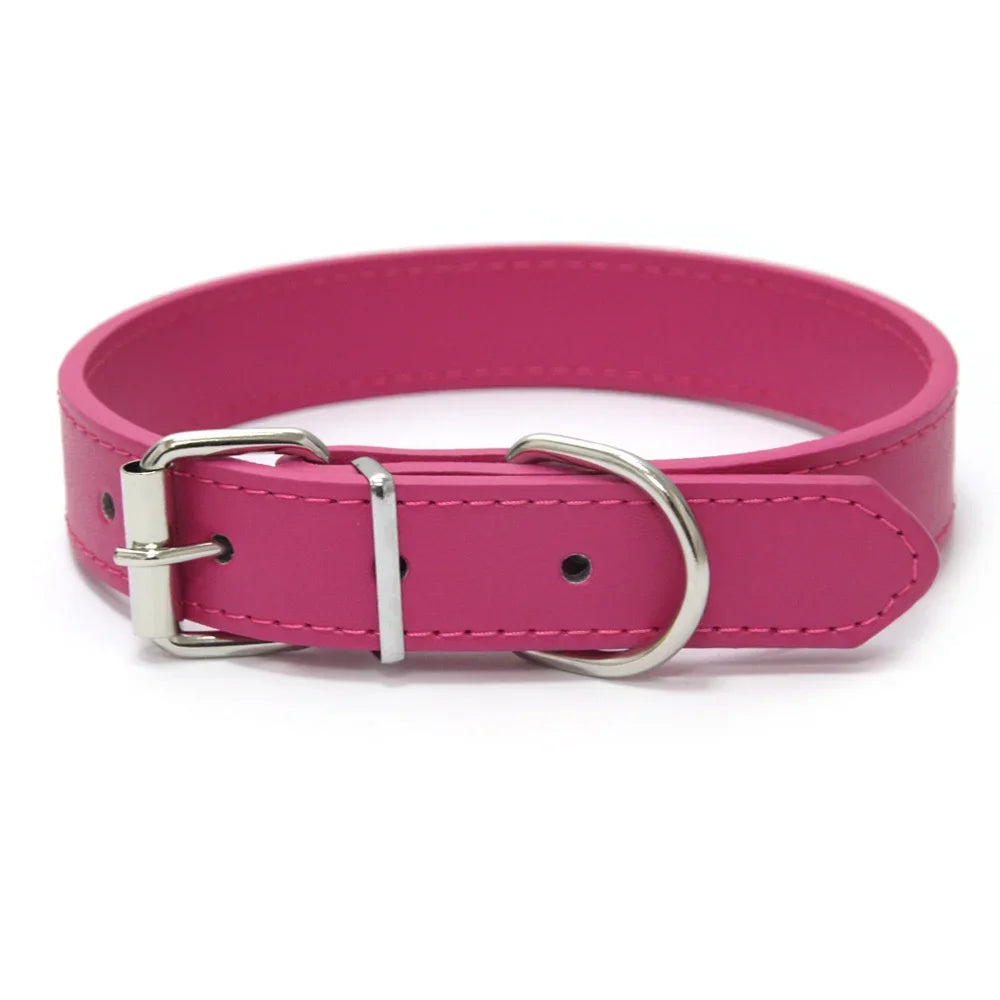
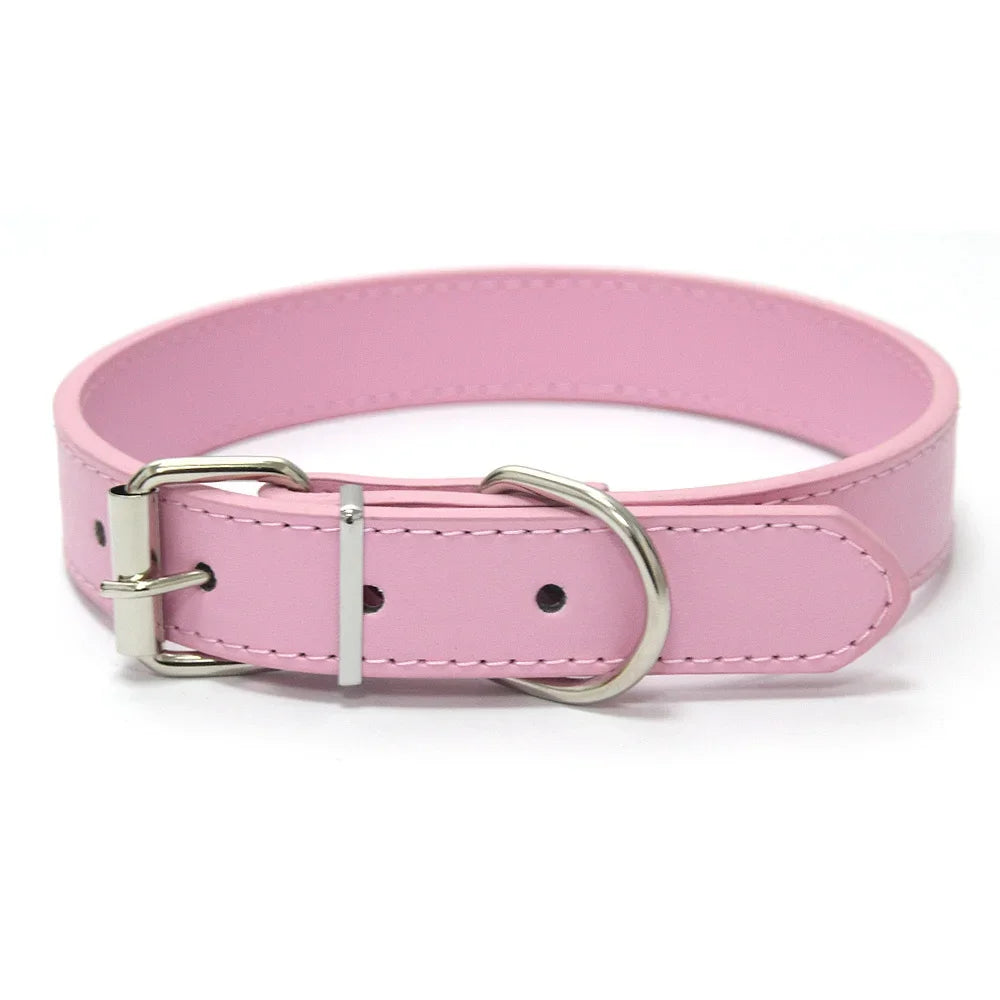
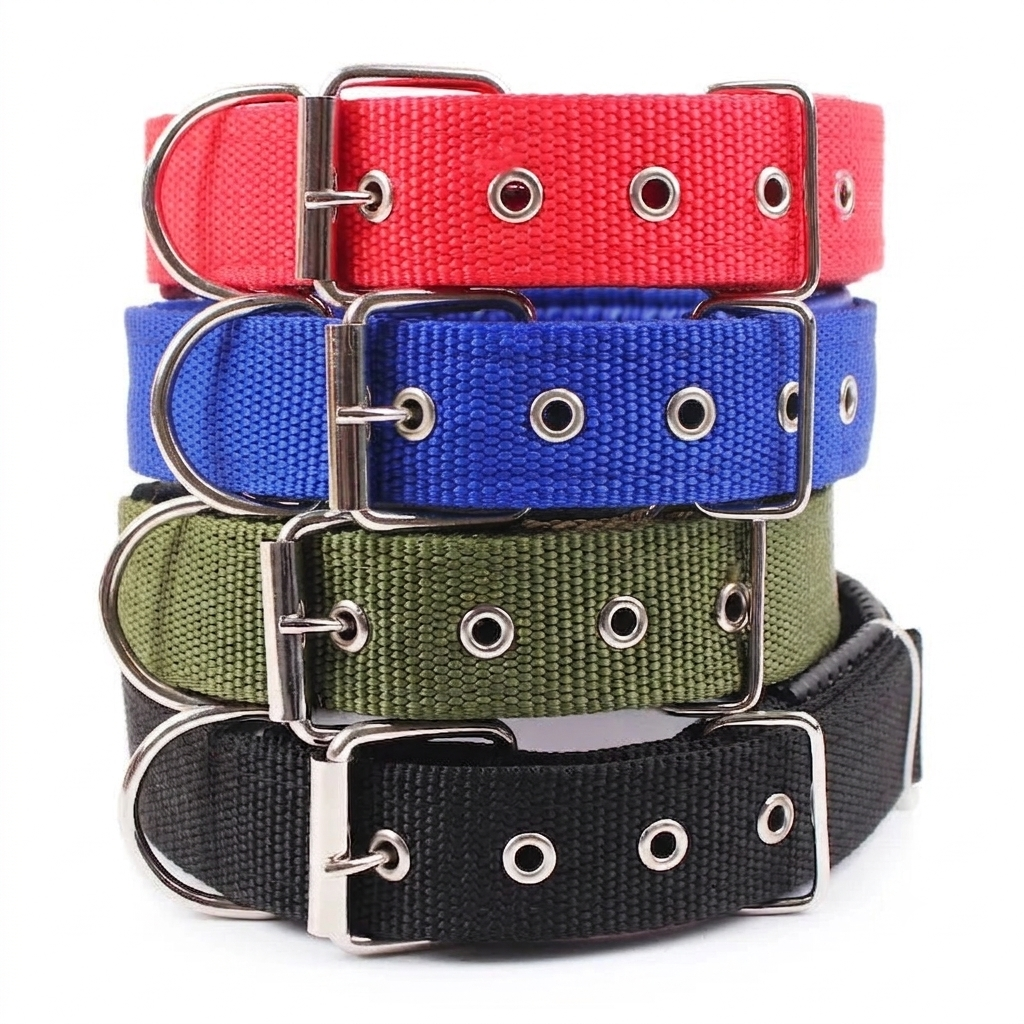
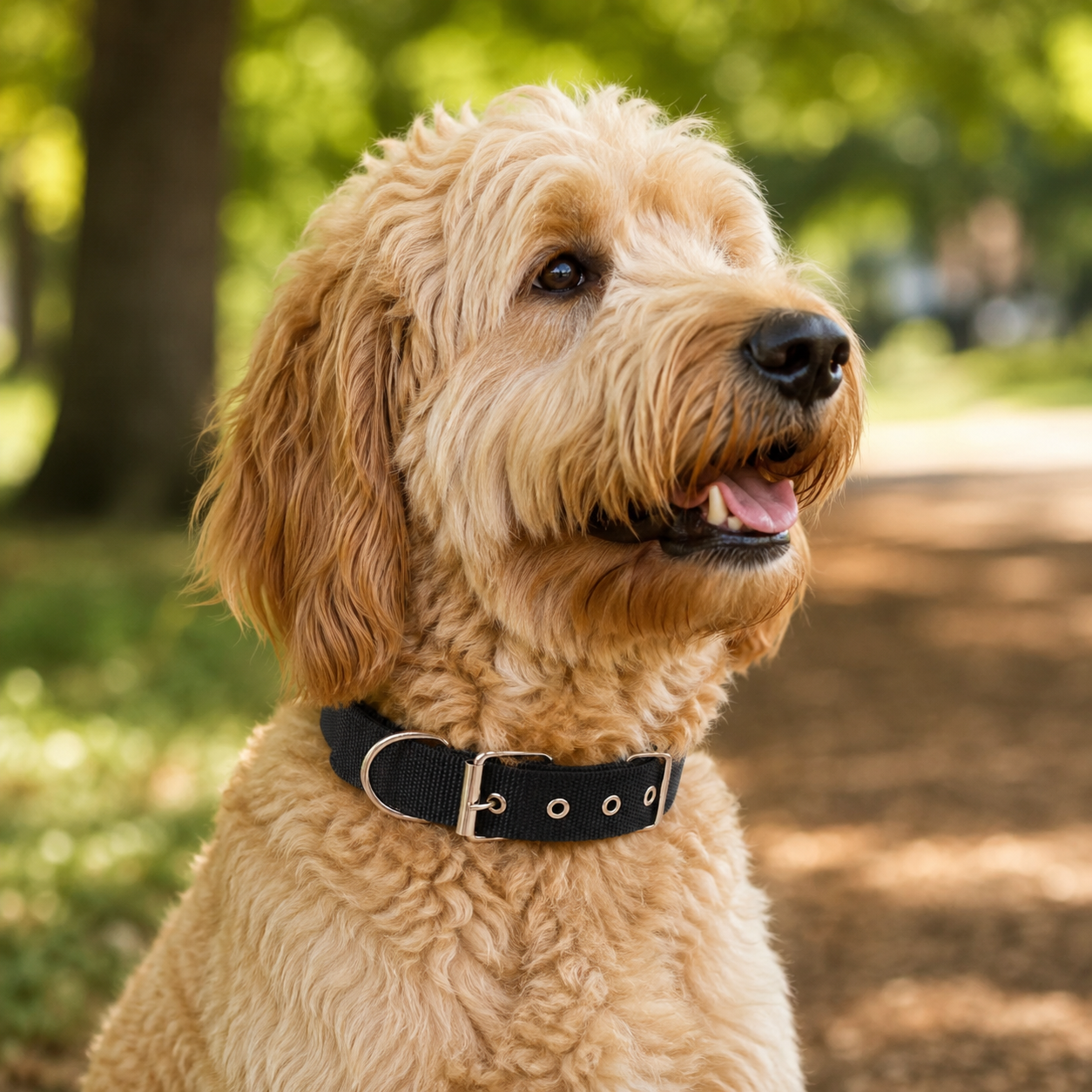
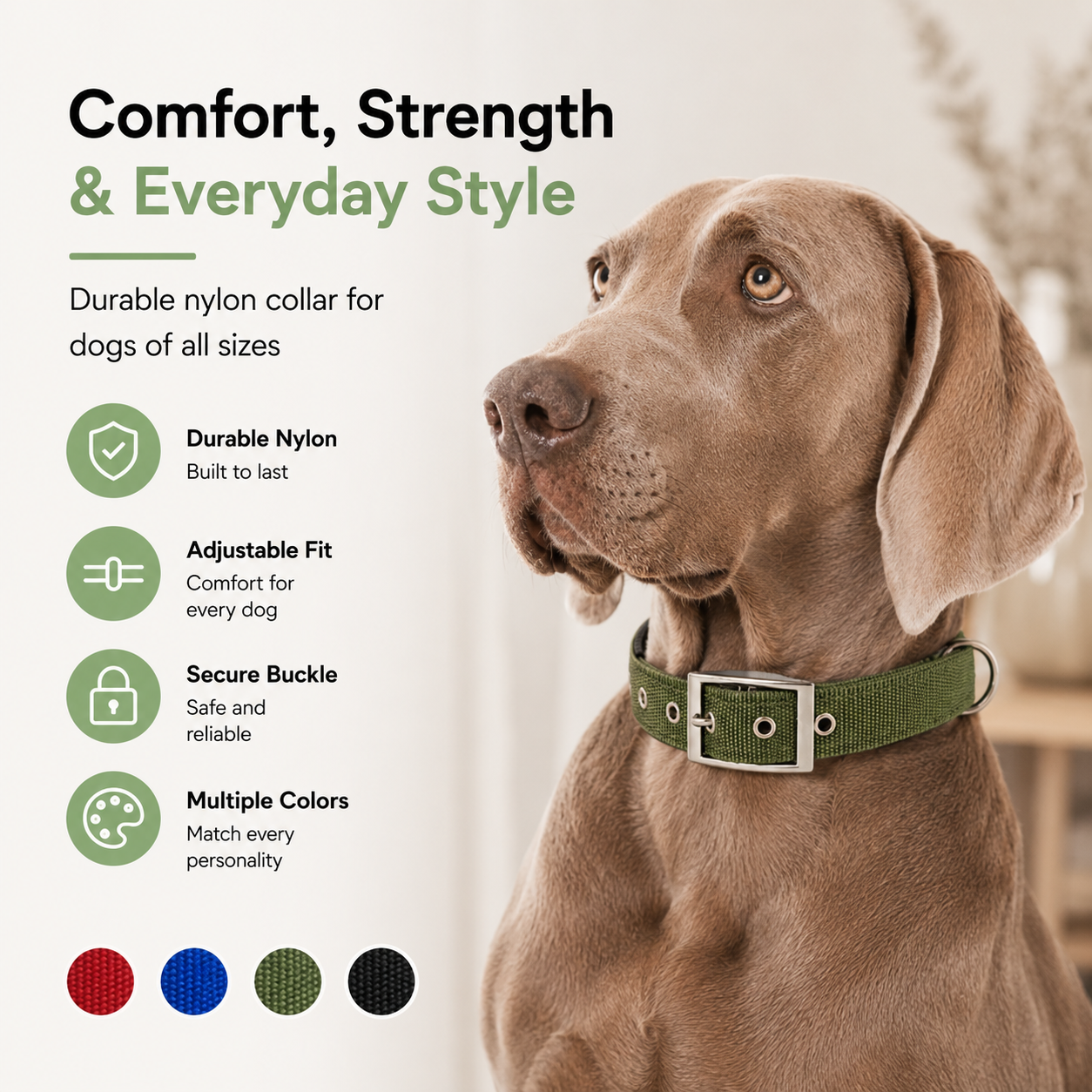
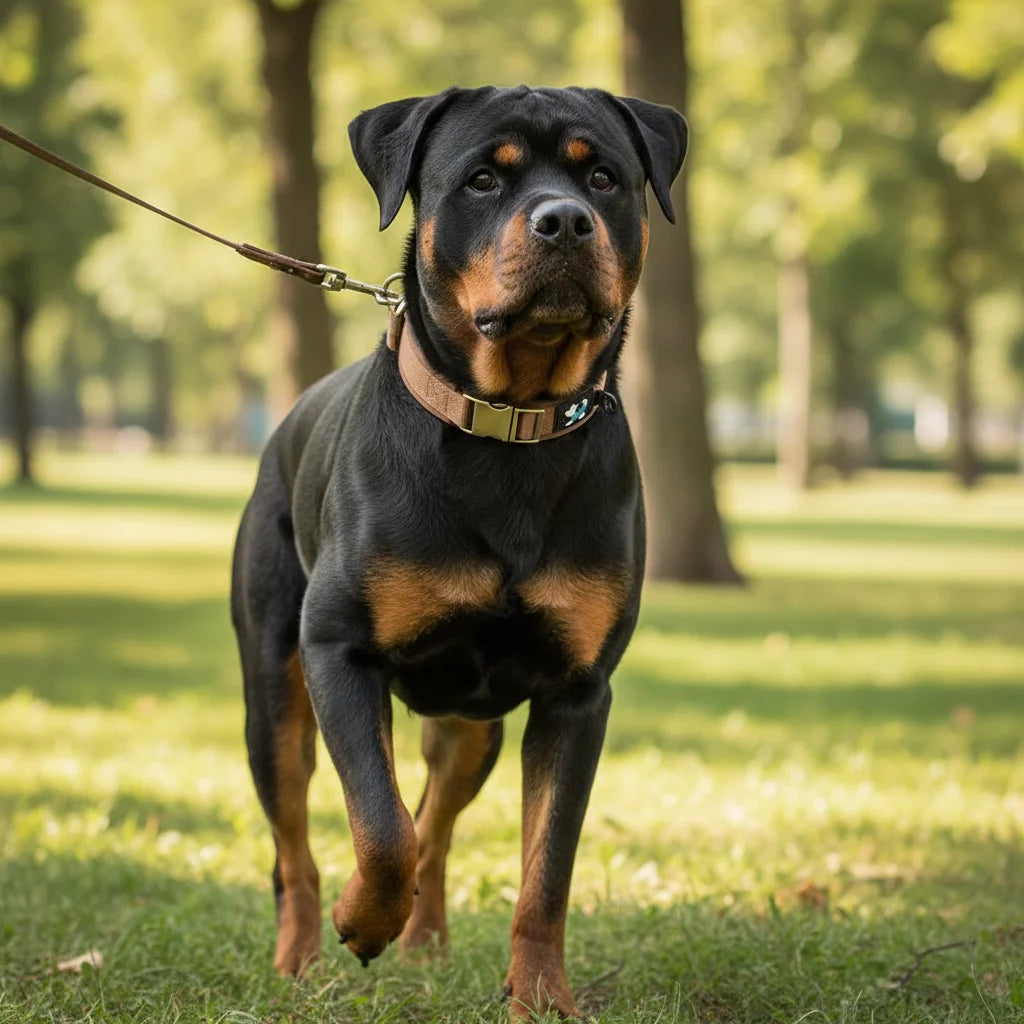
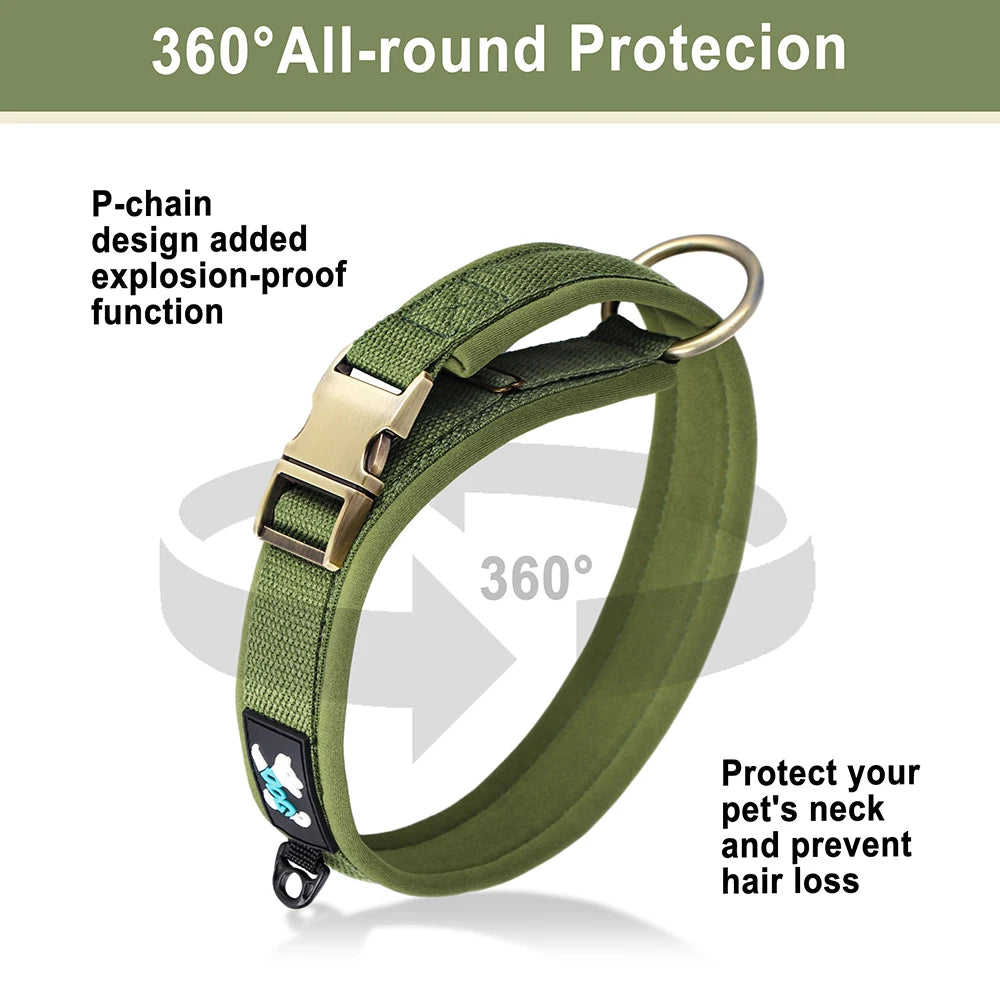
If your dog trots happily beside you on a loose lead, a dog collar is the better choice. For a dog that doesn't pull, a flat collar causes no discomfort at all. It's lightweight, easy to put on and your dog probably won't even notice it's there.
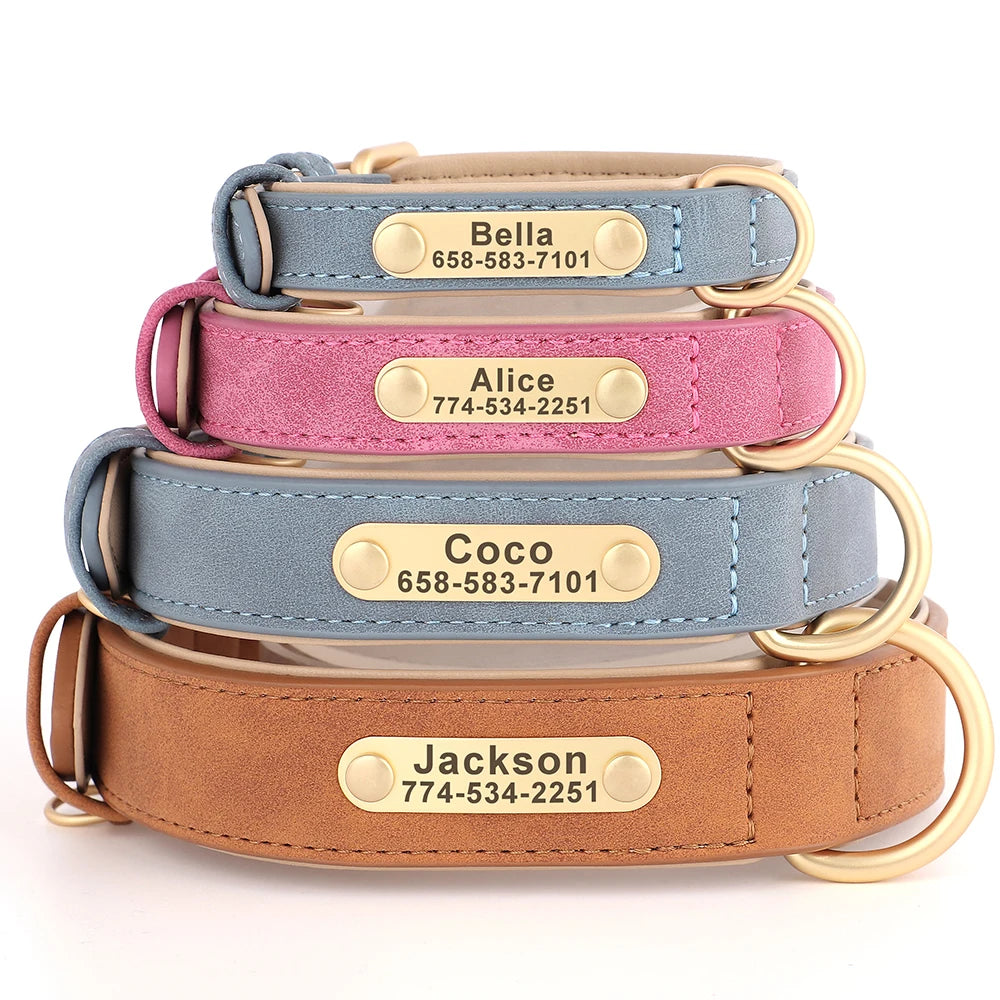
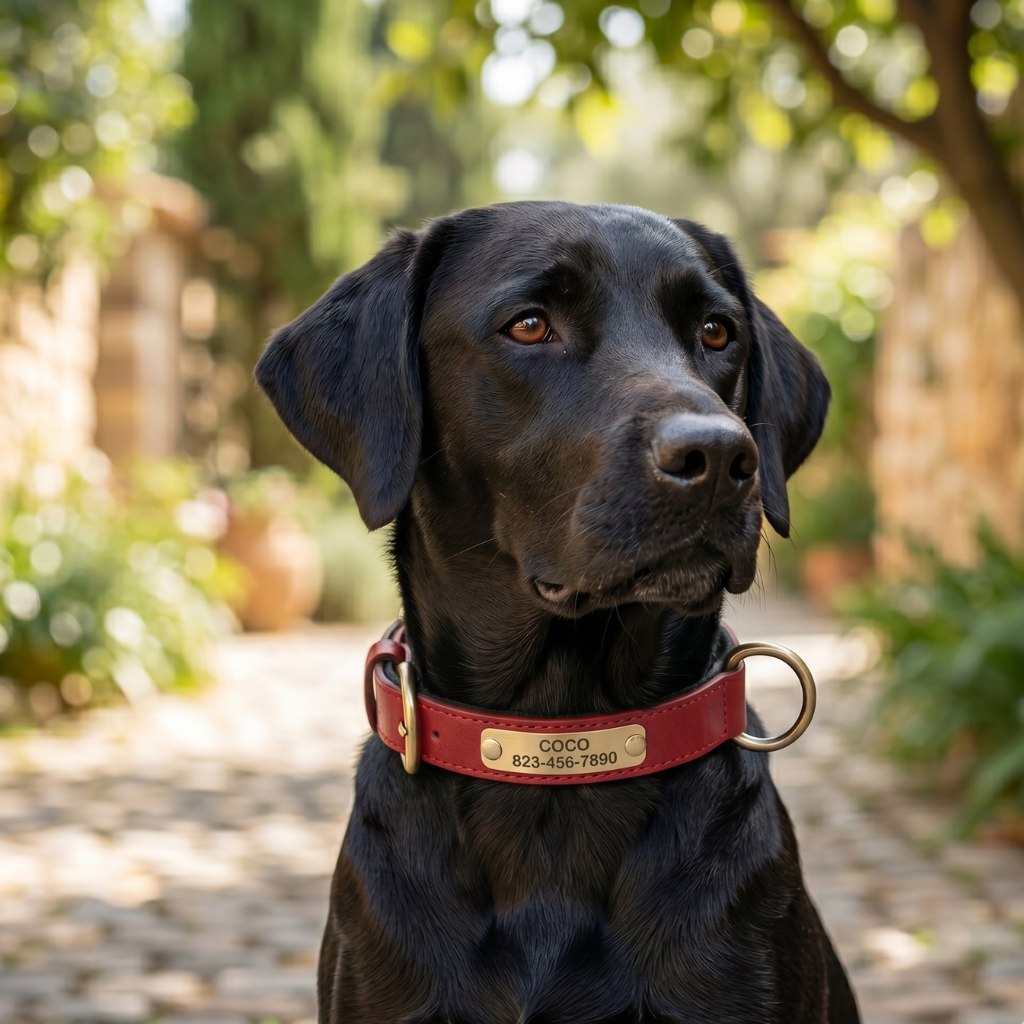
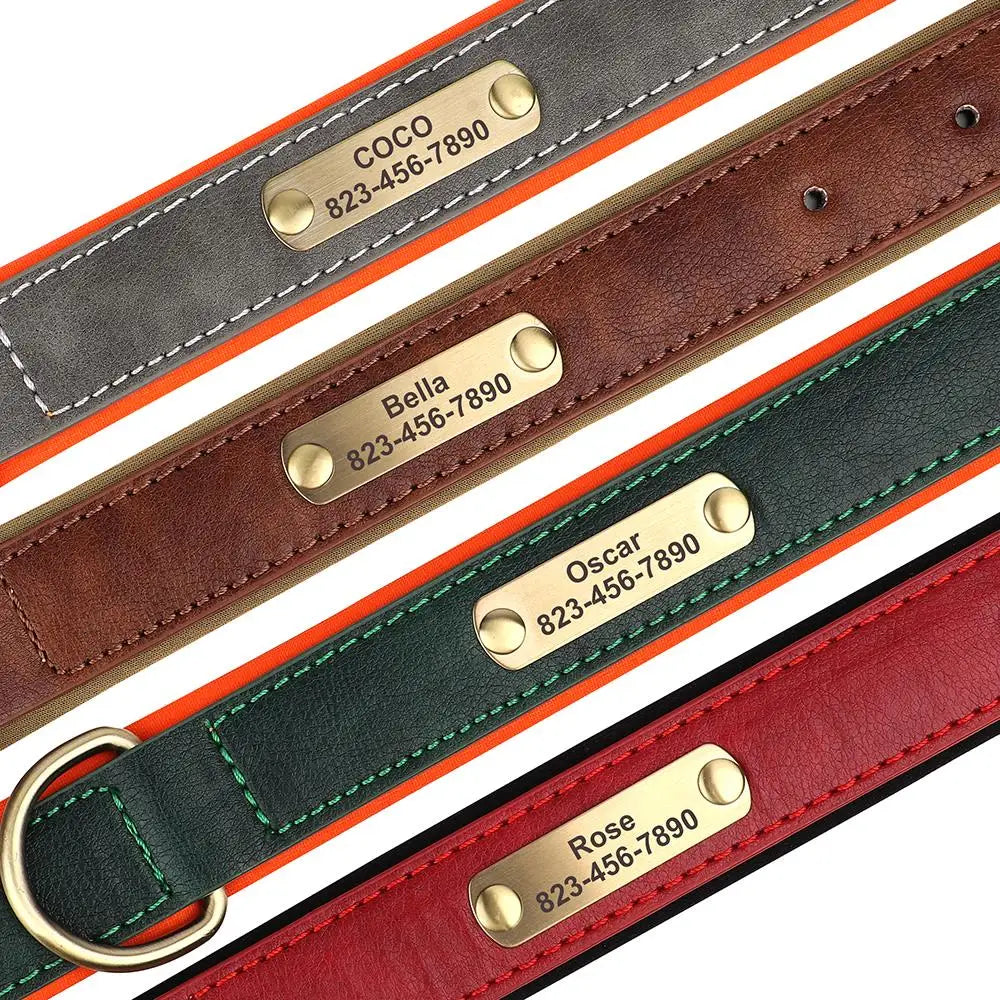
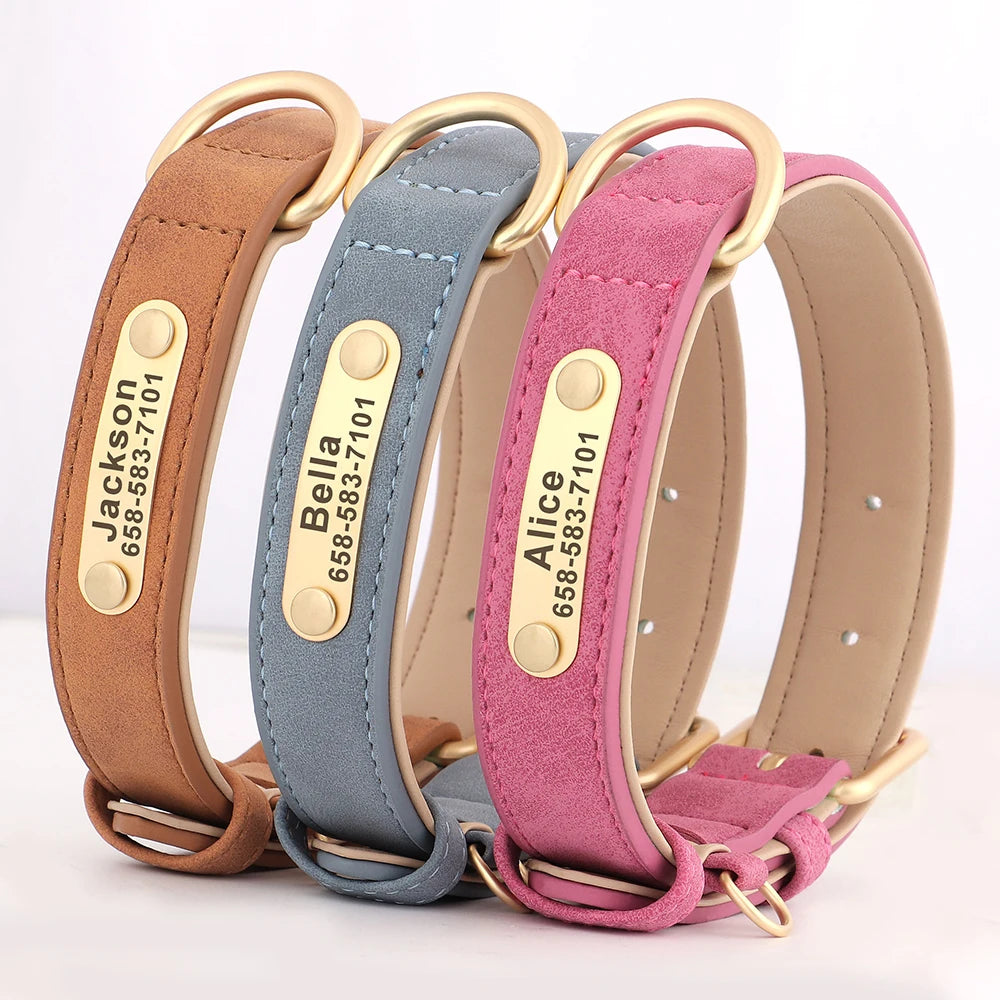
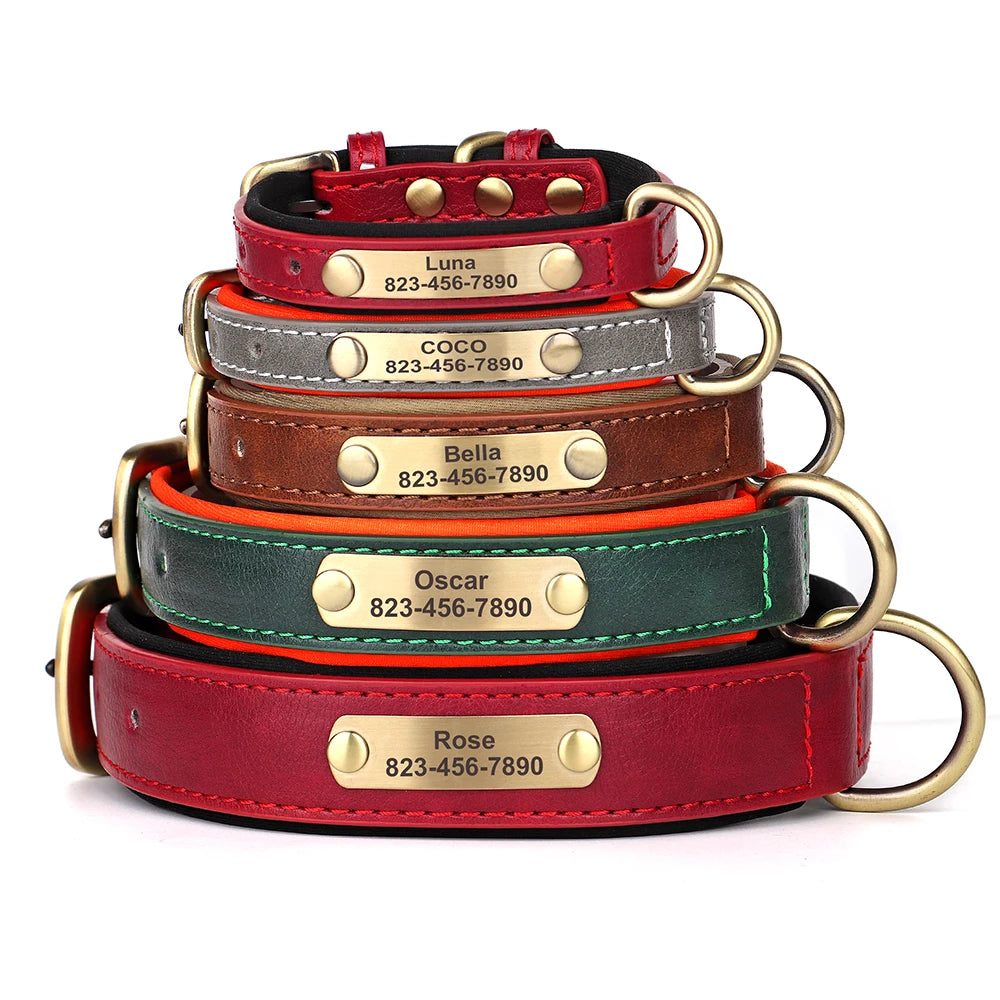
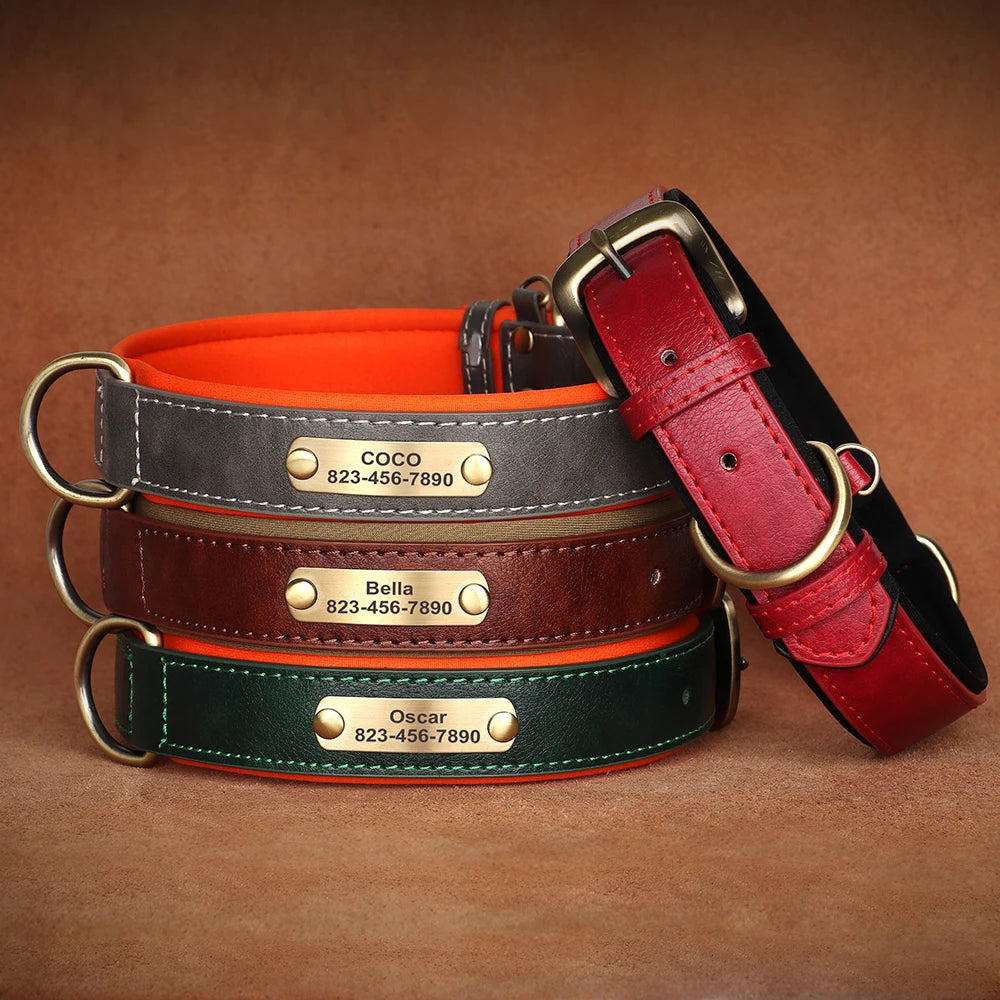
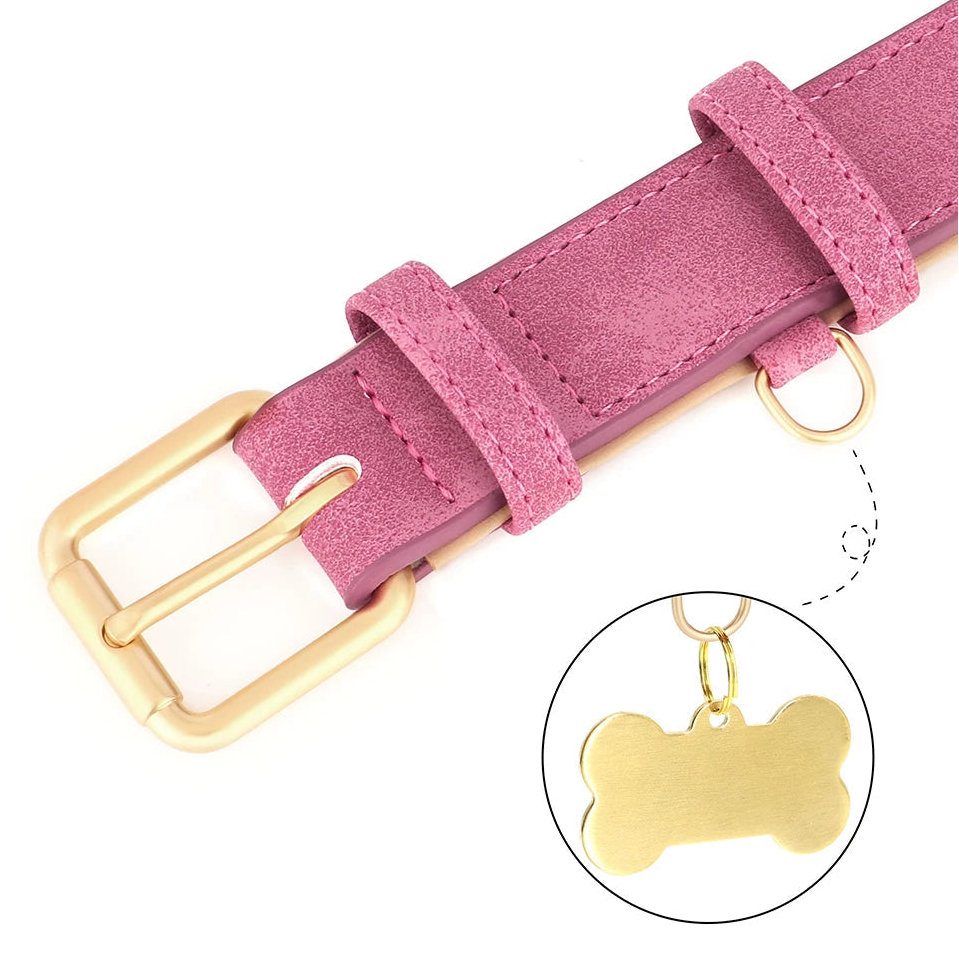
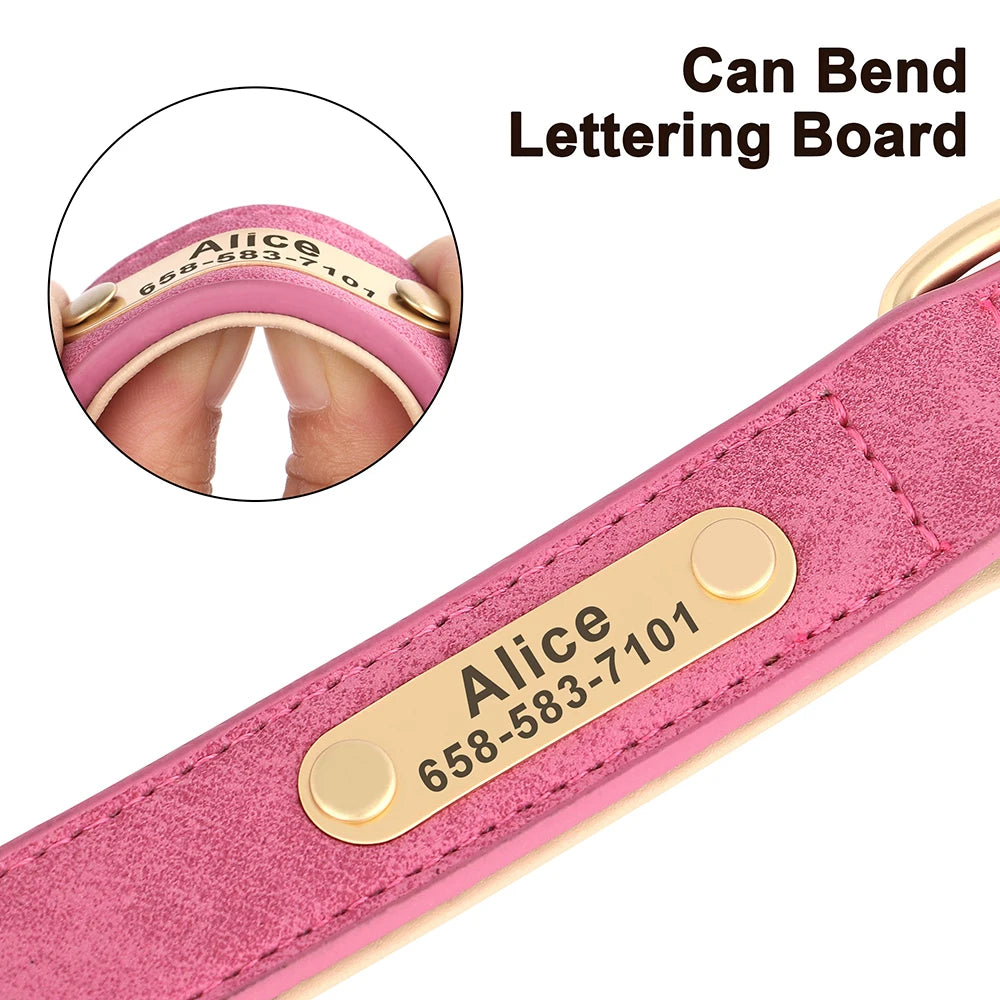
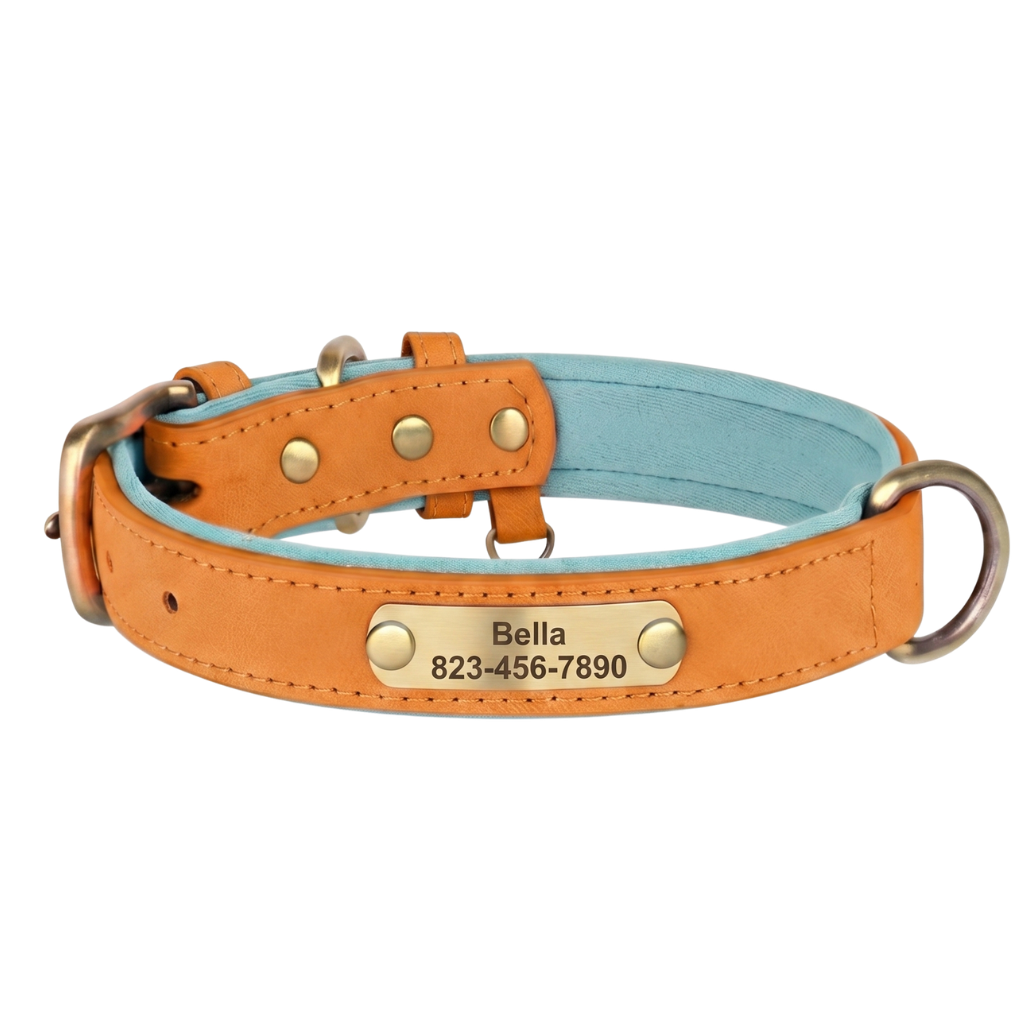
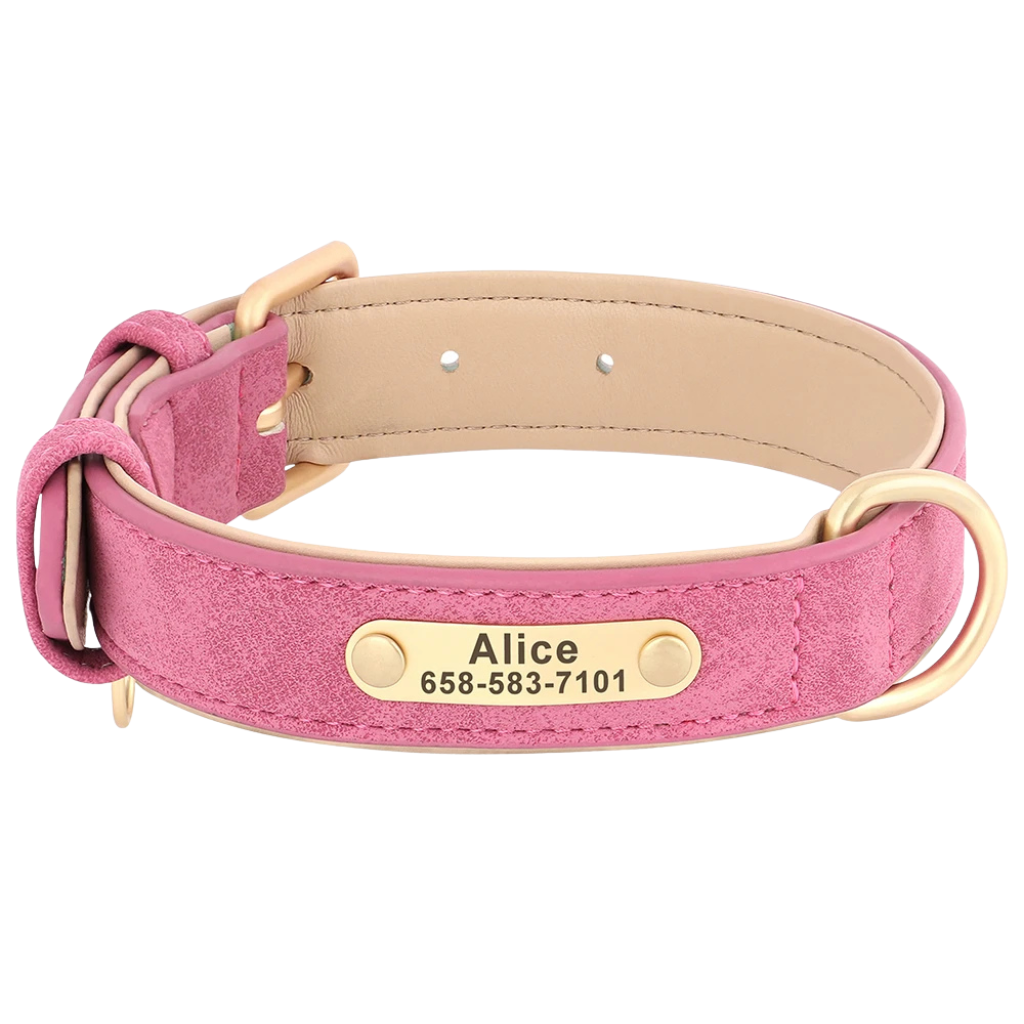
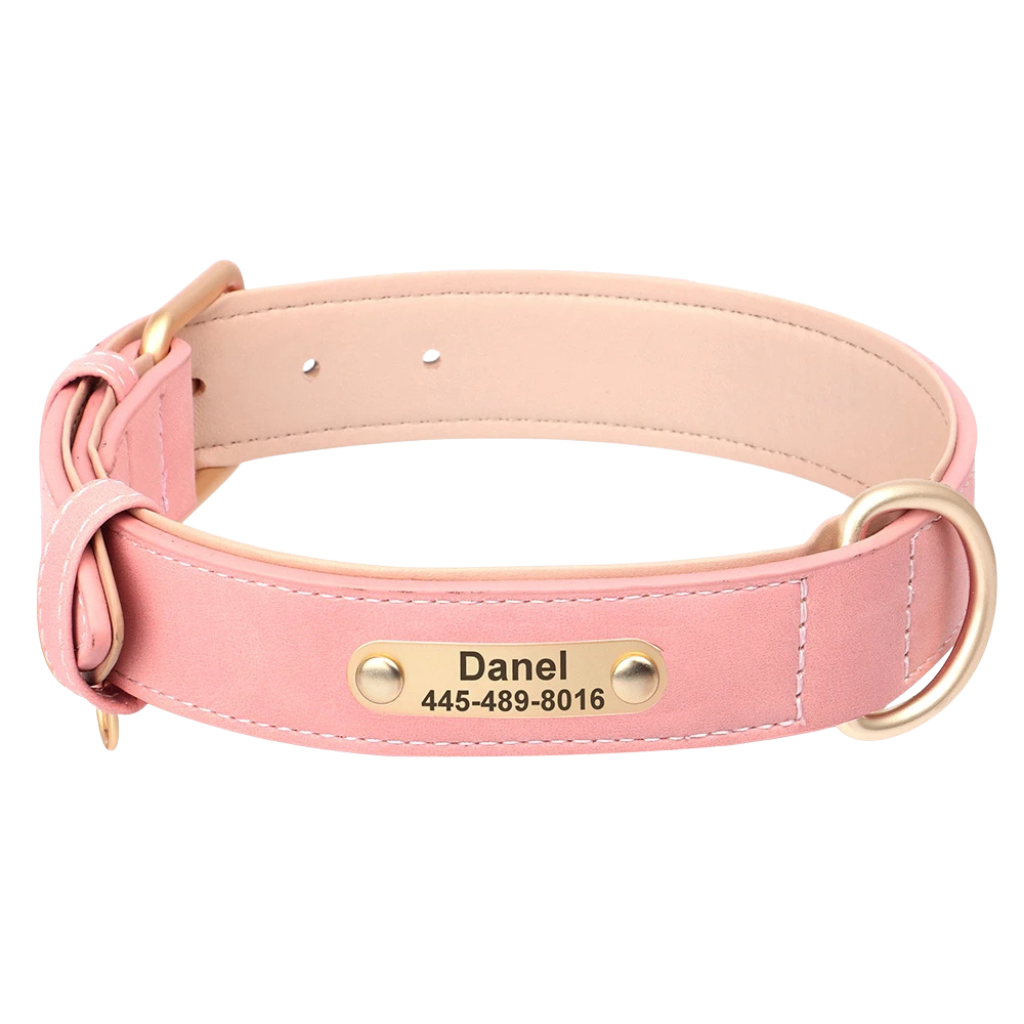
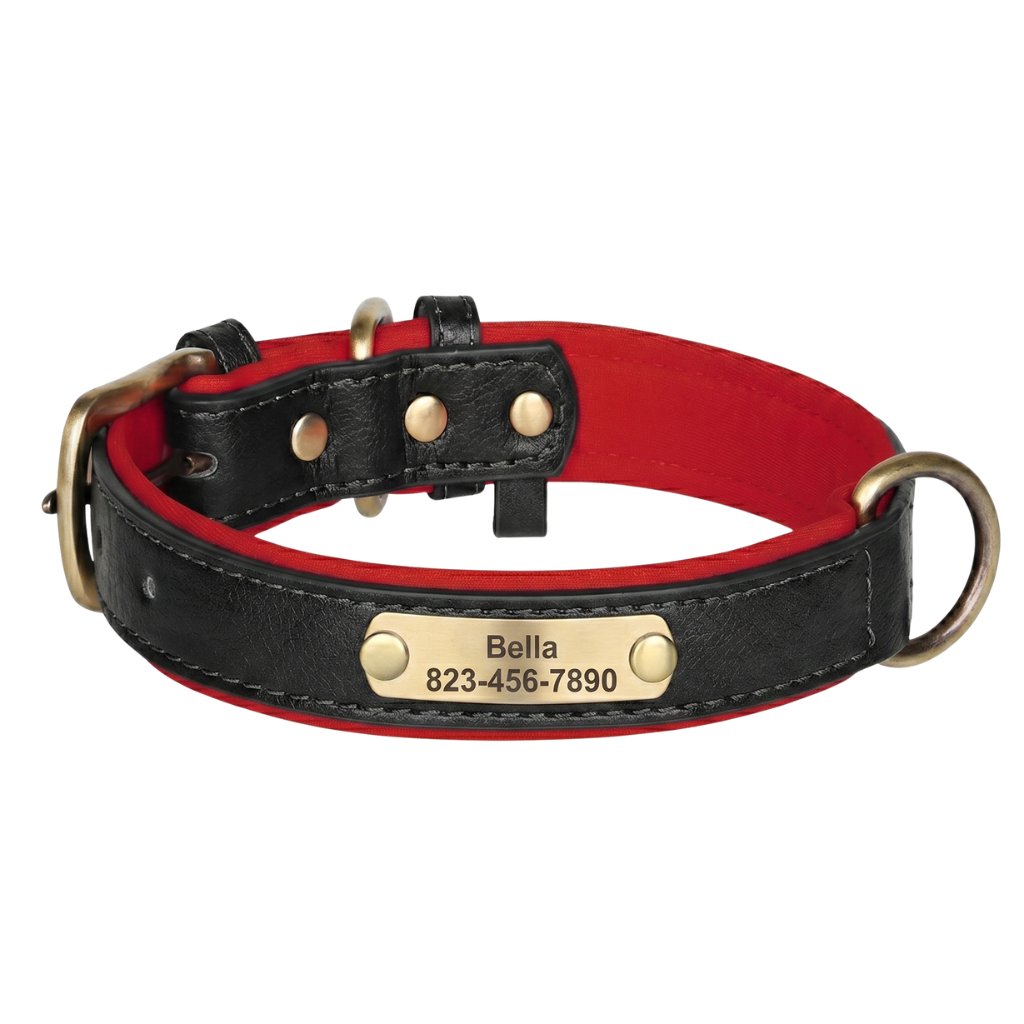
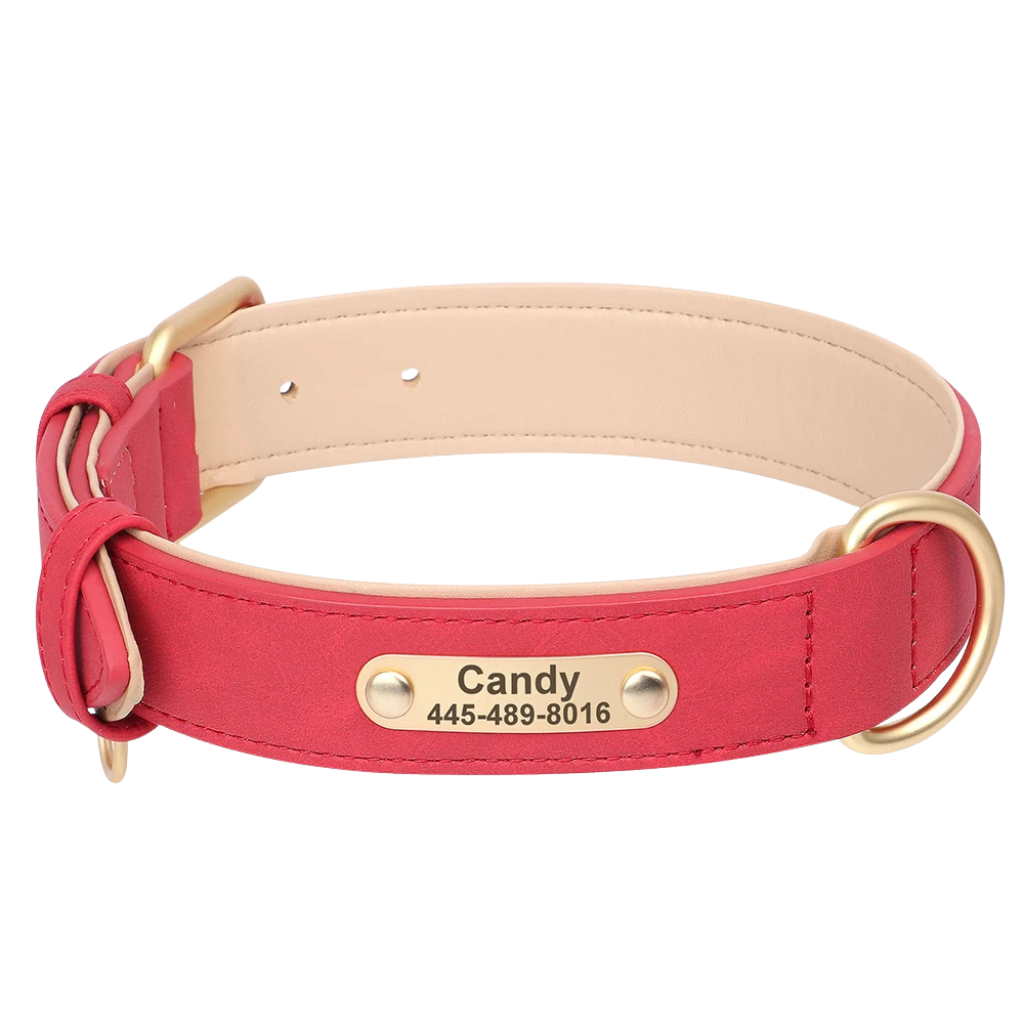
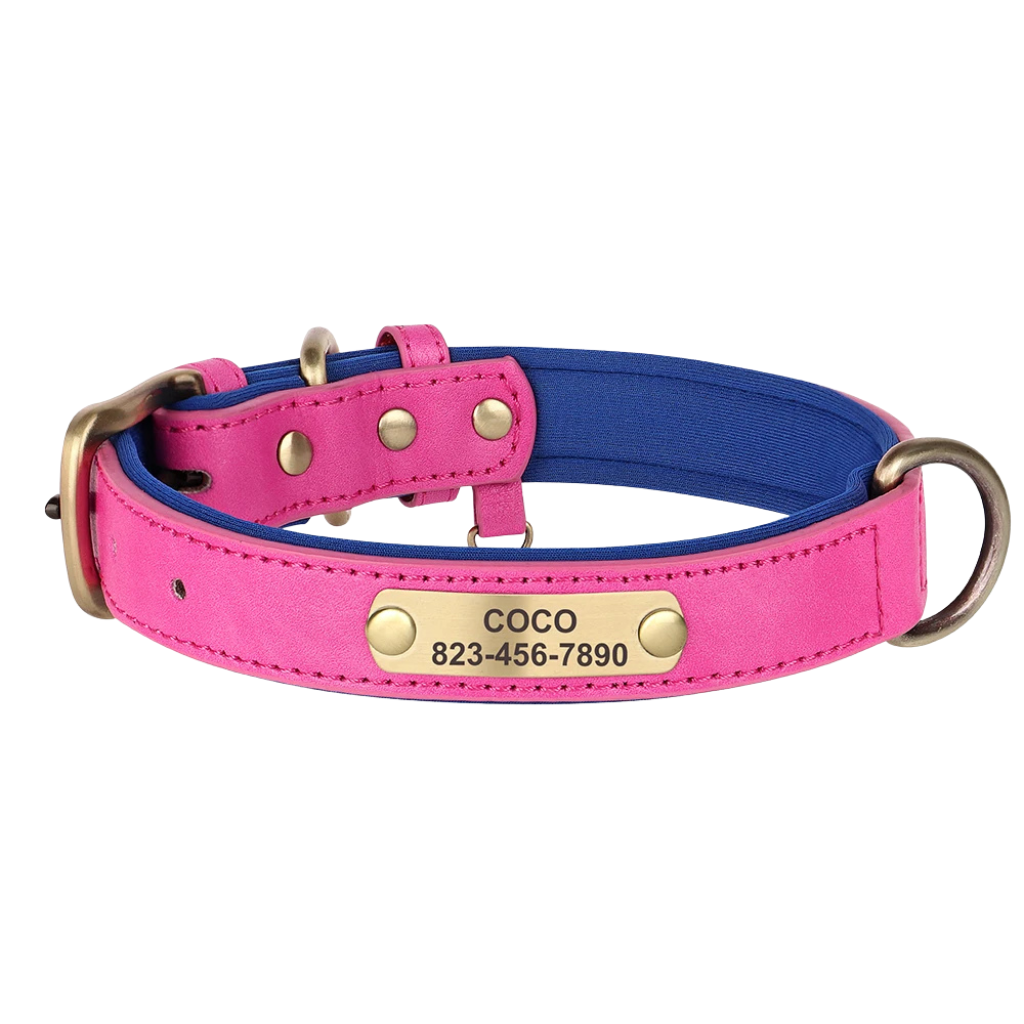
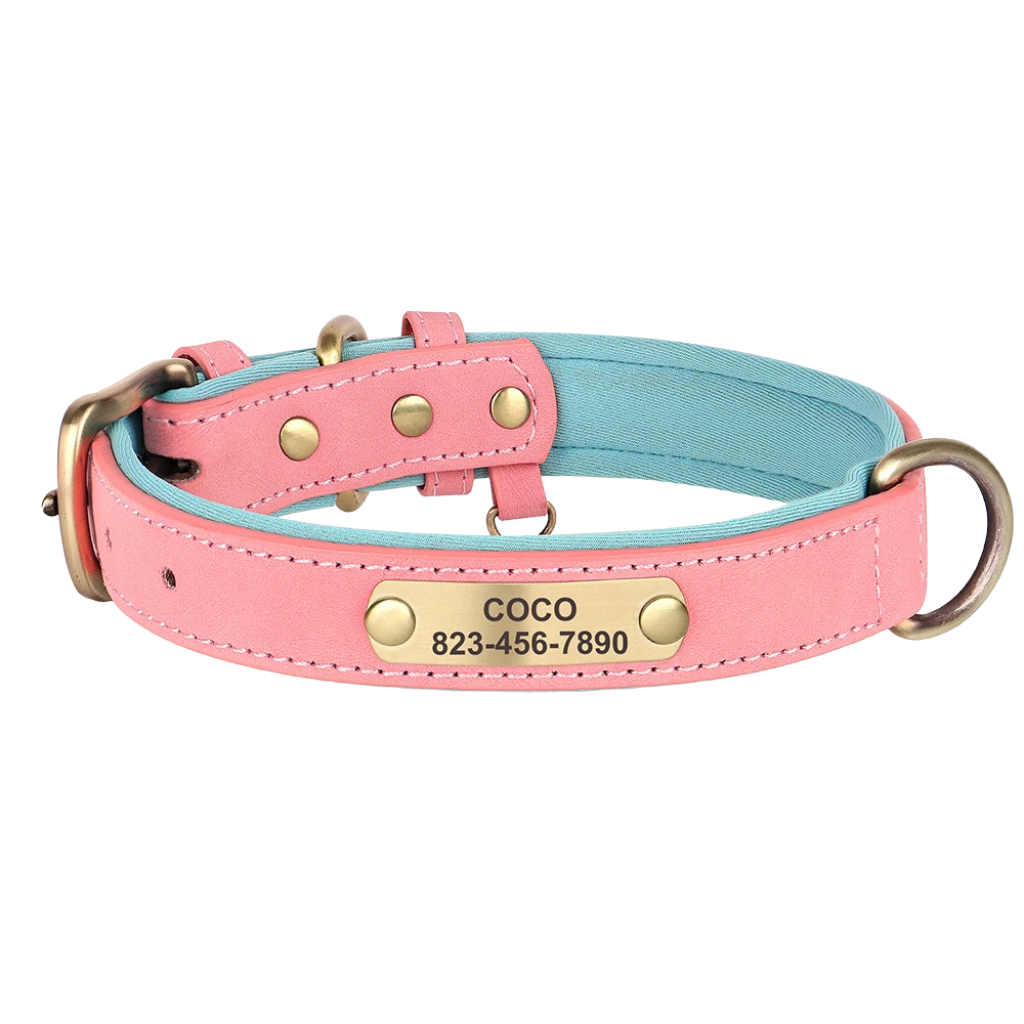
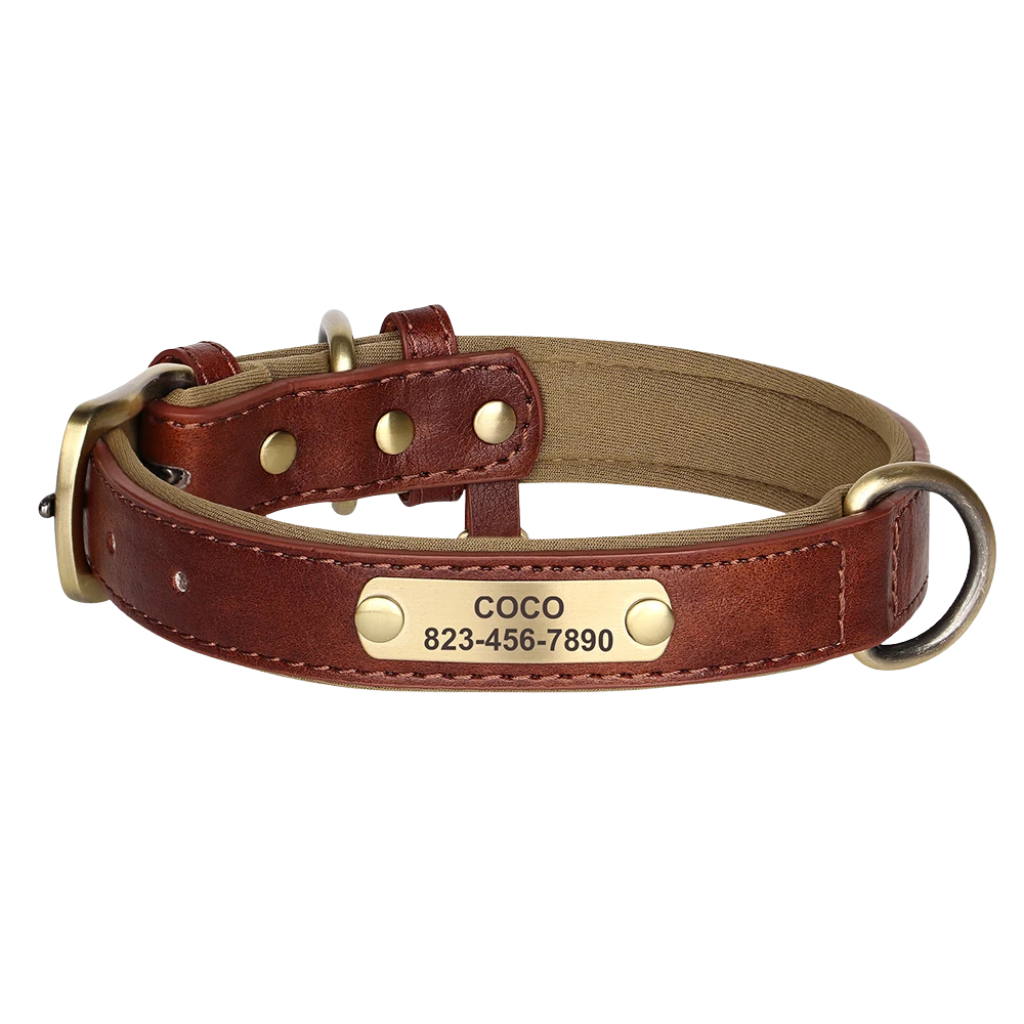
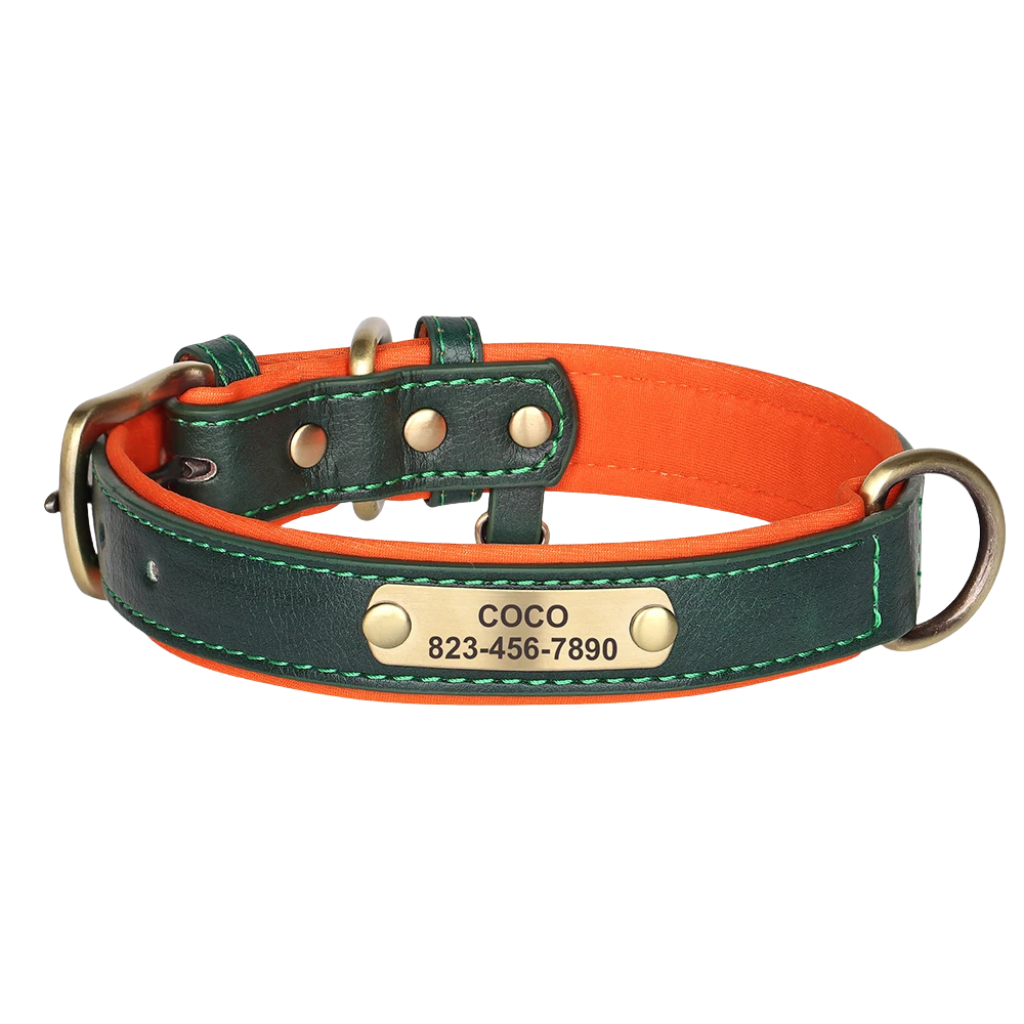
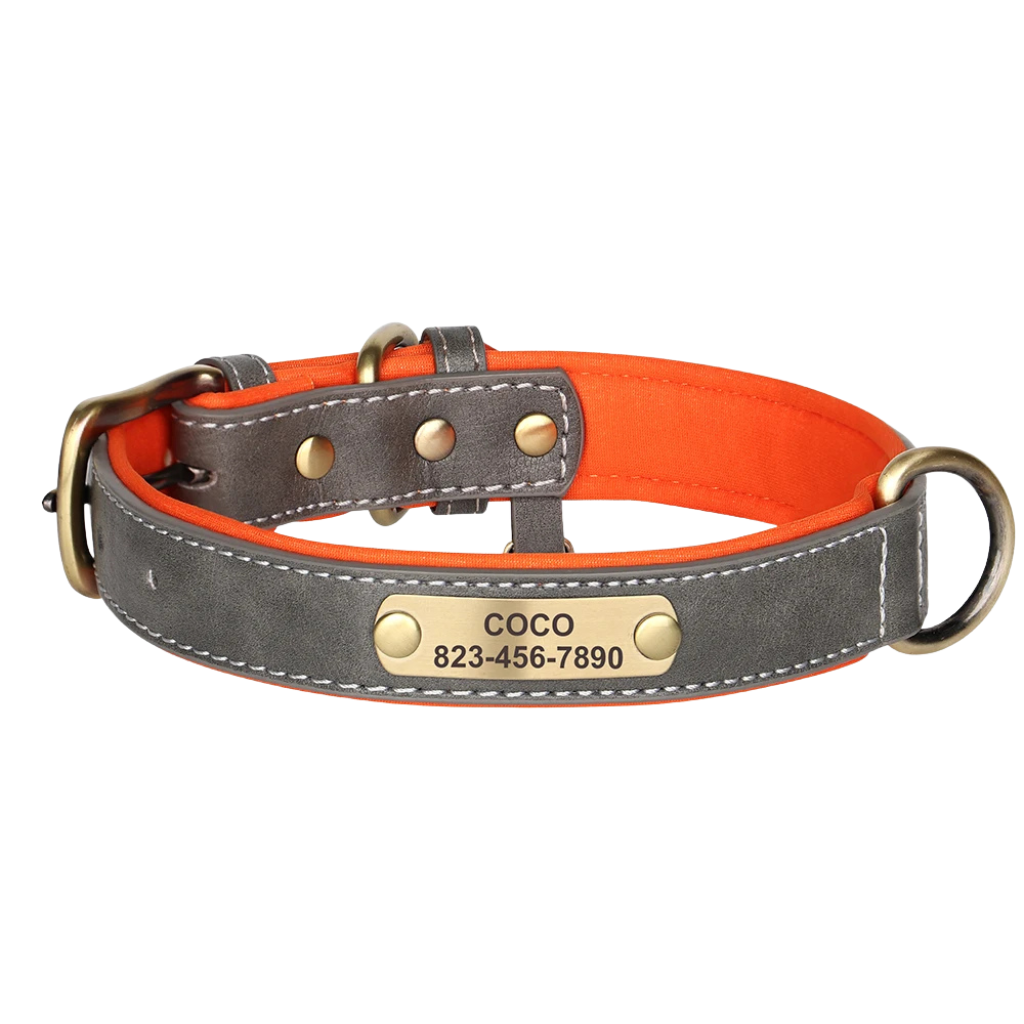
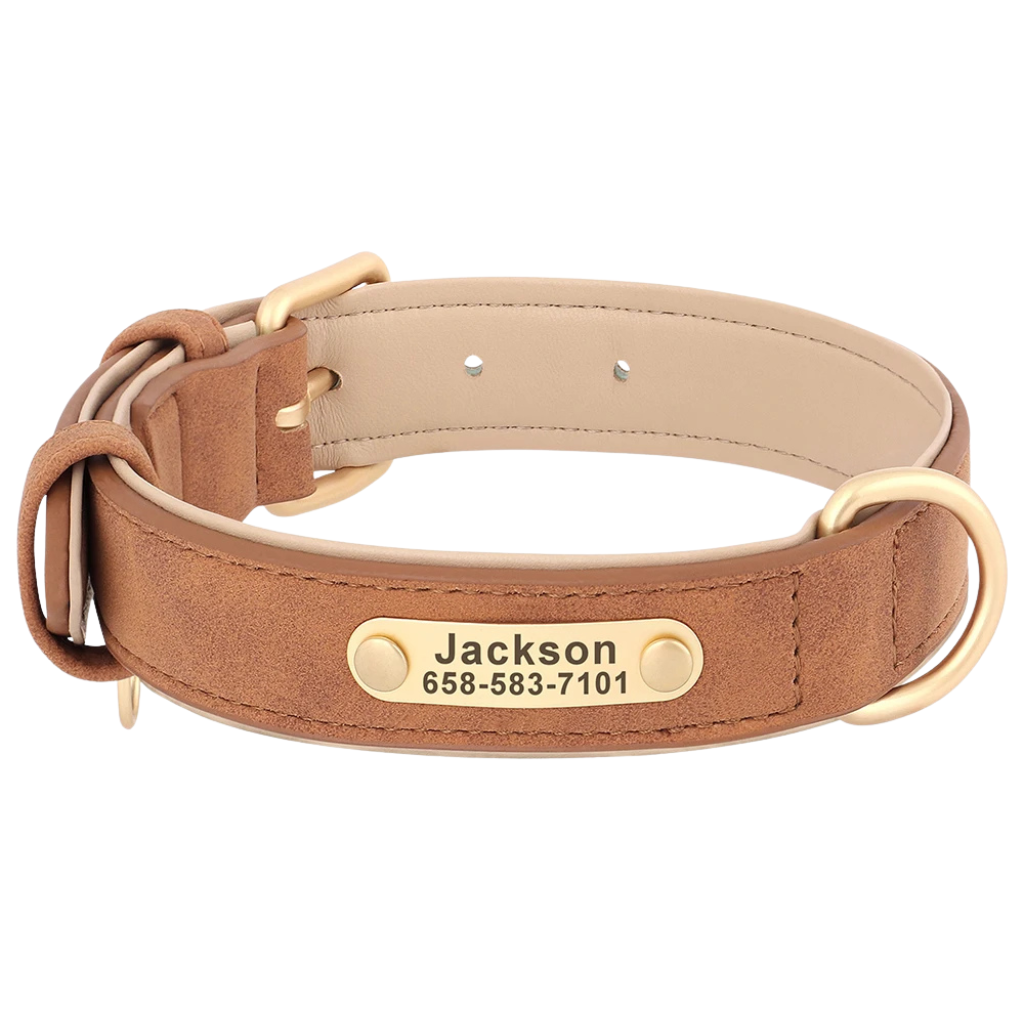
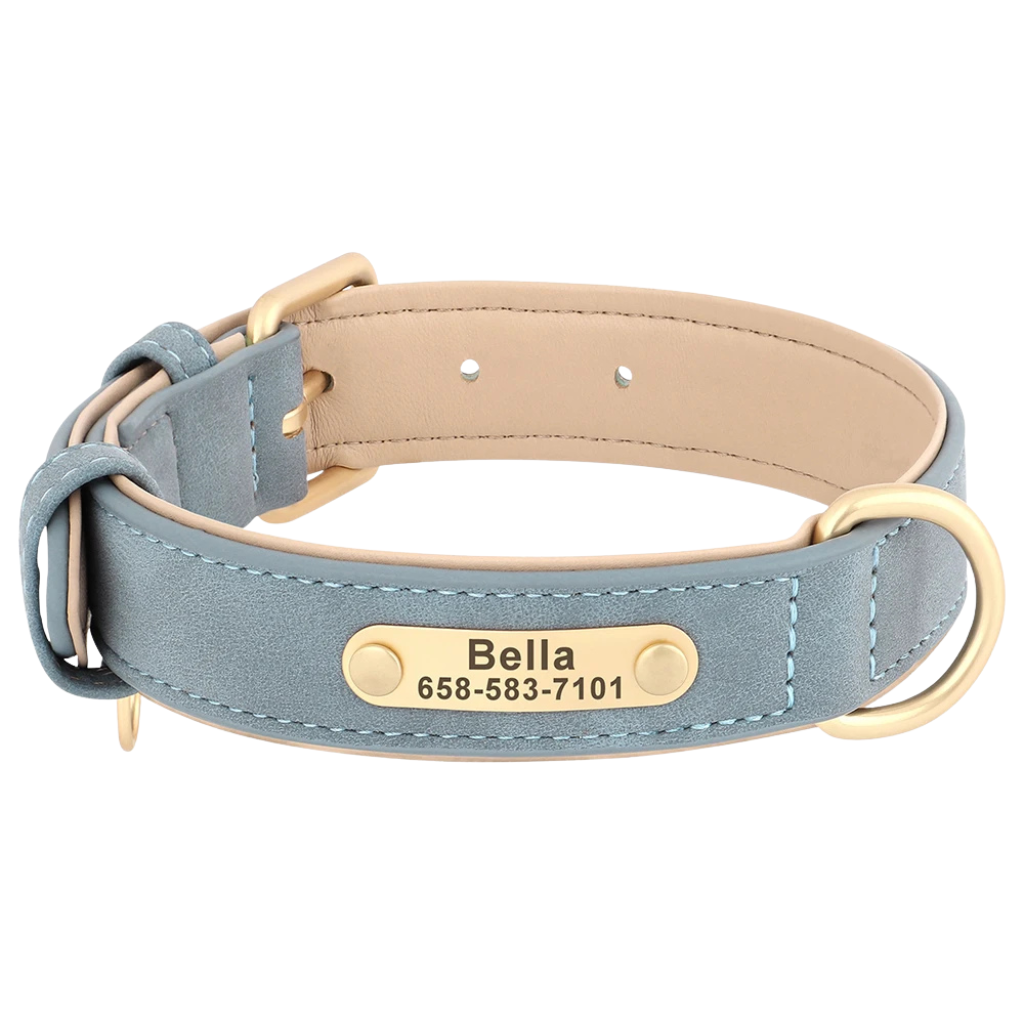
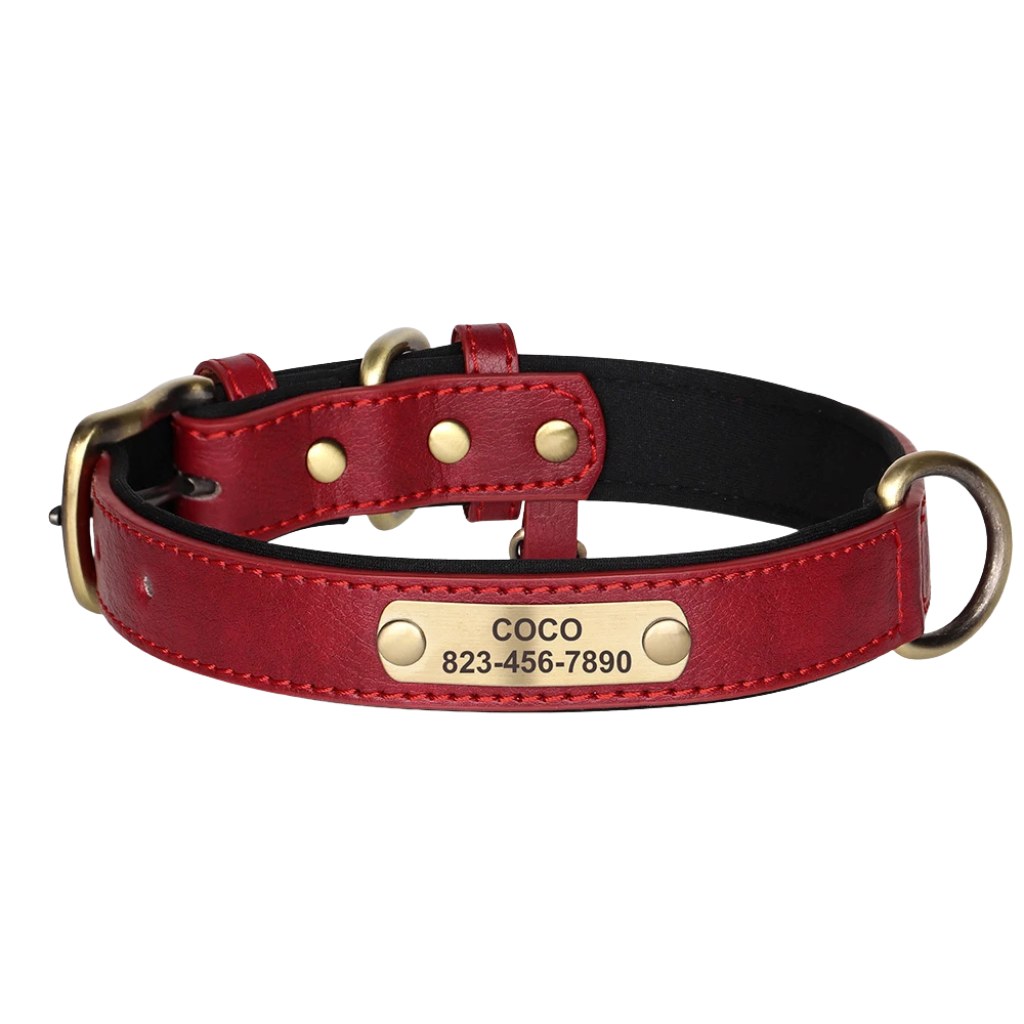
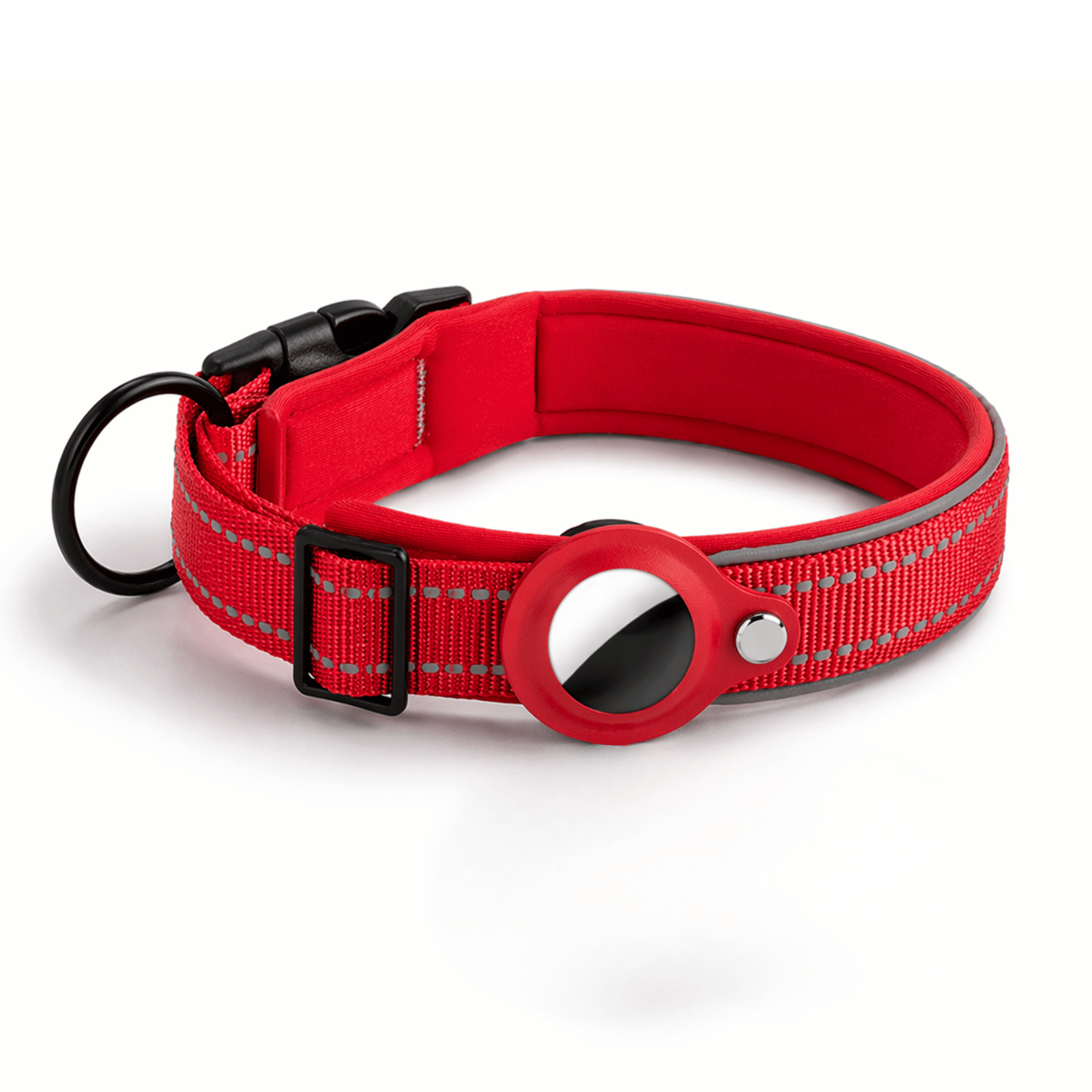
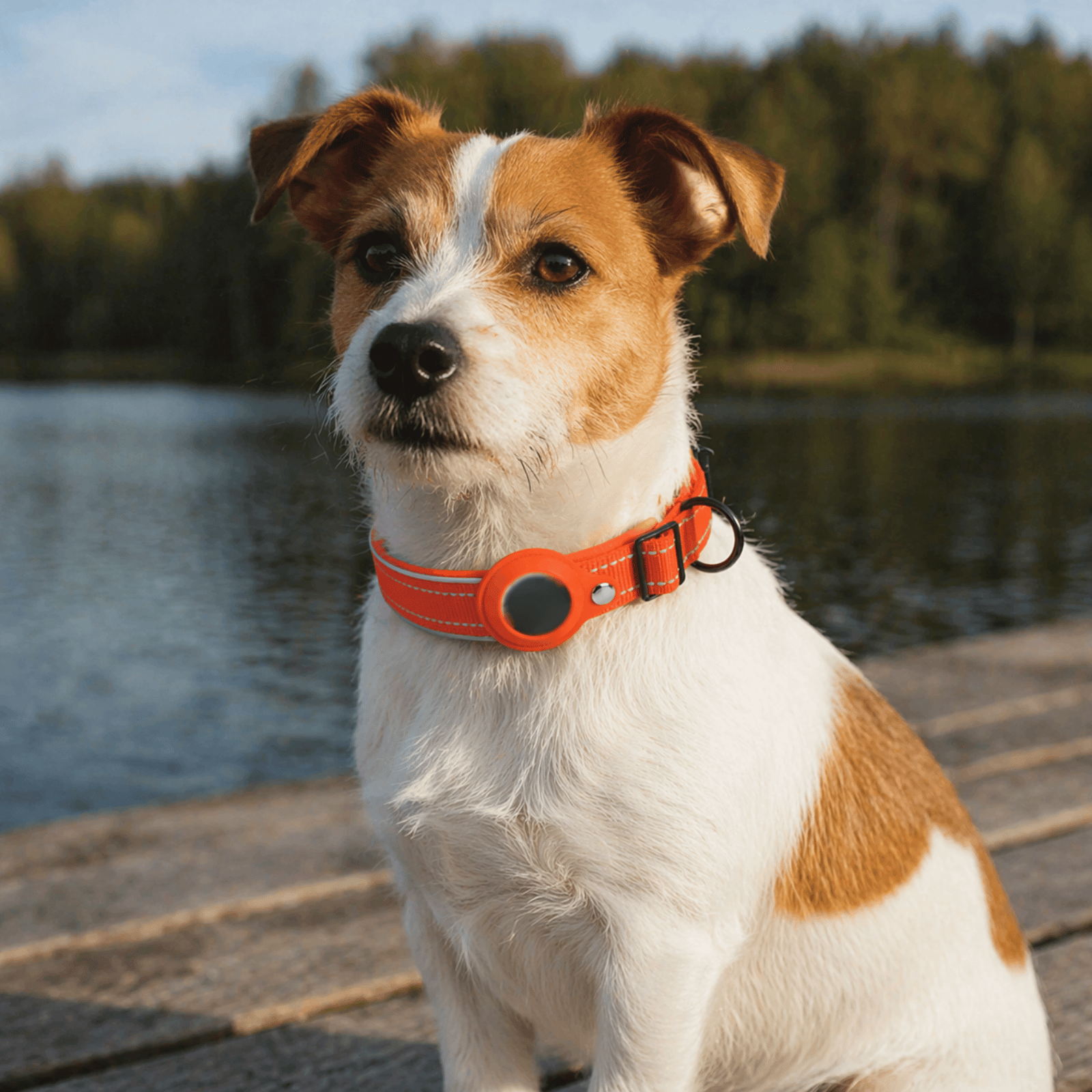
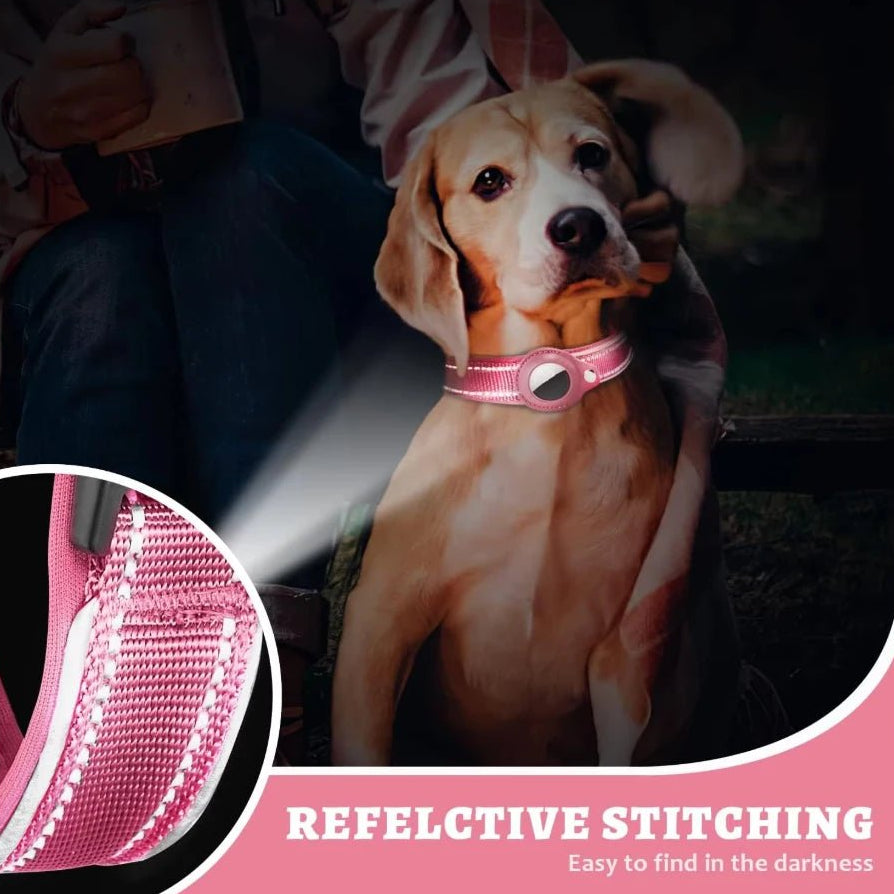
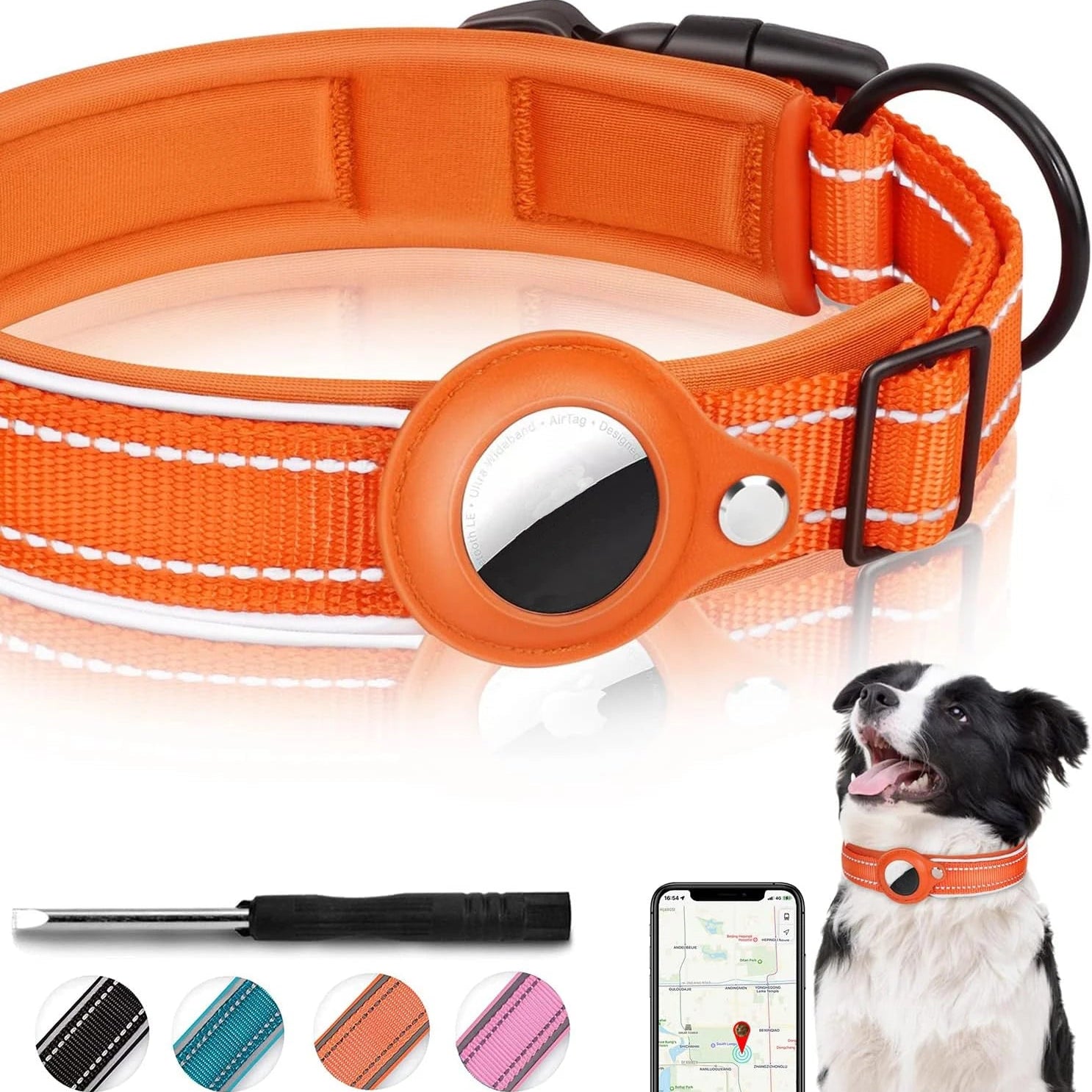
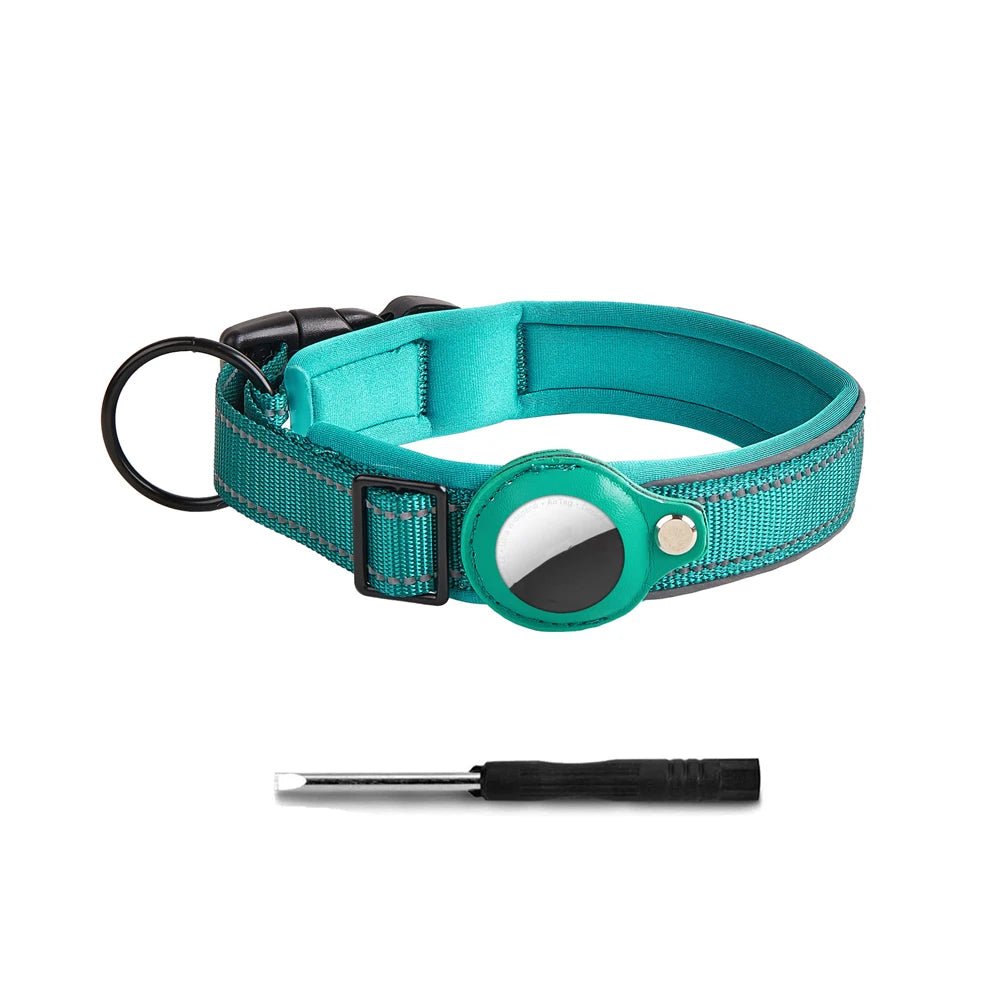
Where collars really stand out is identification. A collar with a visible ID tag is the fastest way to get your dog home if something goes wrong. Your dog might be microchipped, but a tag with your phone number is something anyone can read immediately. No scanner needed, no waiting. Just a quick call and your dog is back where they belong.
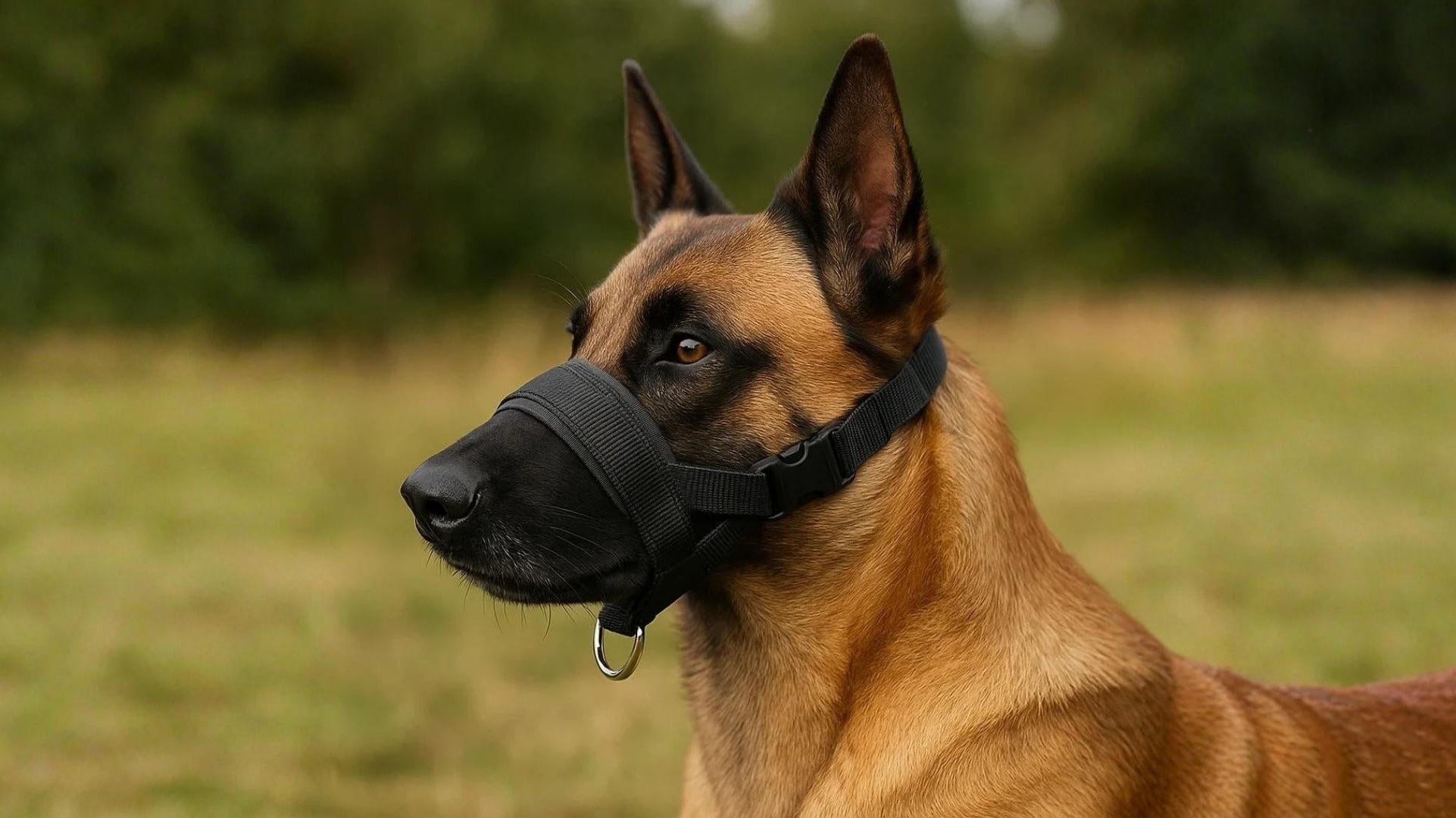
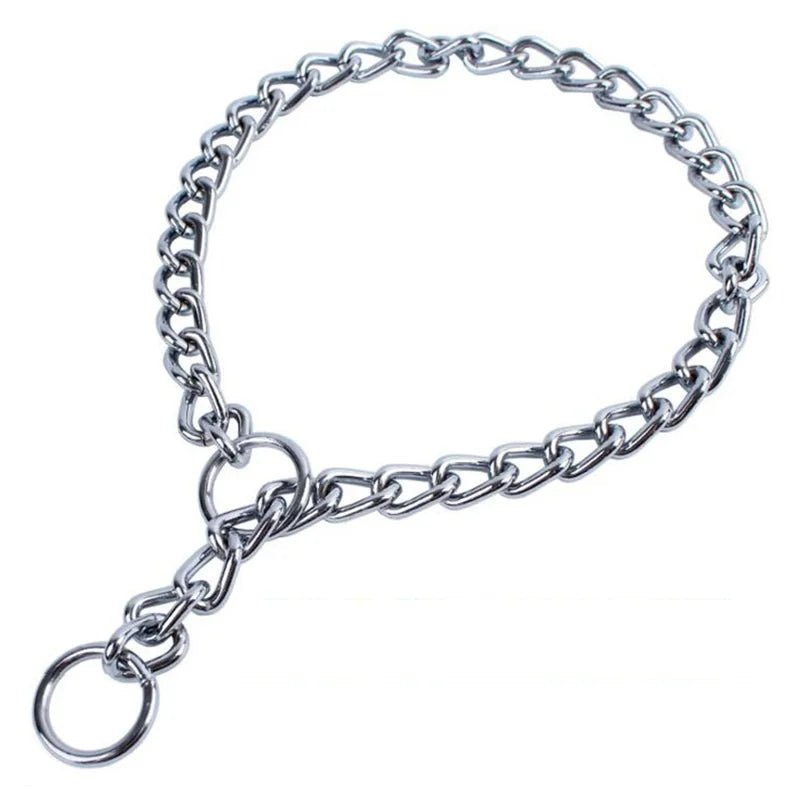
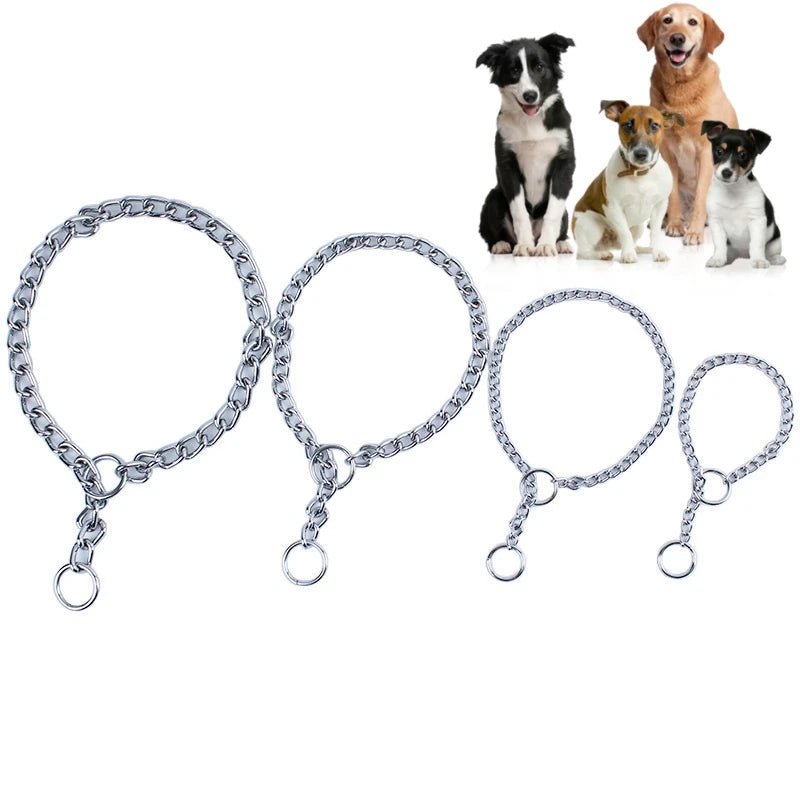
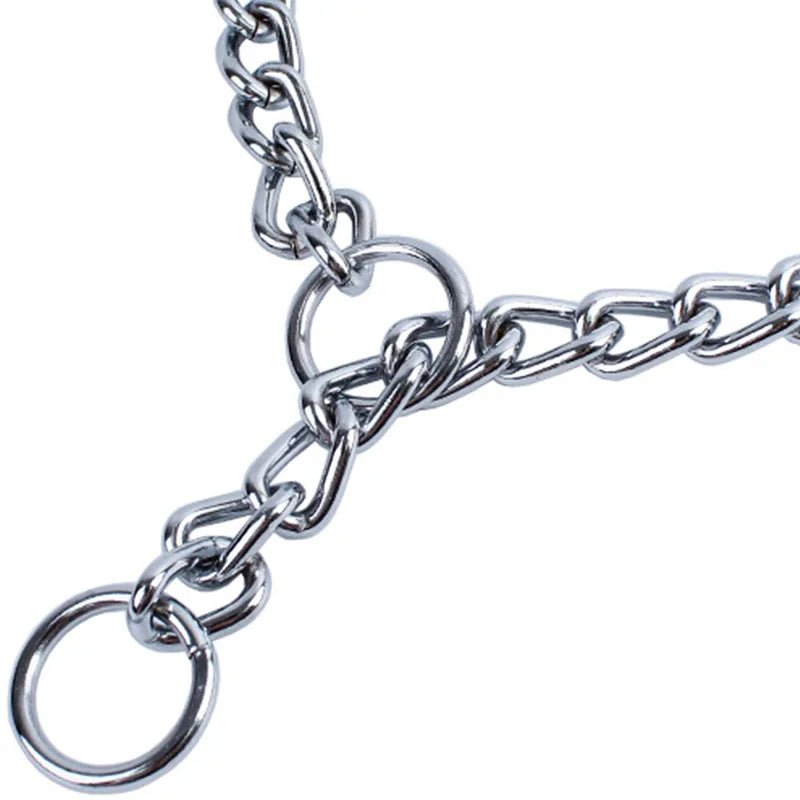
For dogs with narrow heads, like Greyhounds, Whippets and Lurchers, a standard flat collar can be easy to slip out of. A martingale collar is a good alternative here. It tightens gently when your dog pulls back, just enough to prevent escape, without choking or causing pain. It's a popular choice among sighthound owners for good reason.
Collars are also the practical choice for short trips into the garden, a quick toilet break or those moments where you just need to clip a lead on and step outside. Not every outing calls for the full harness routine.
That said, if your dog pulls consistently or has any kind of breathing sensitivity, a collar on its own is not the right choice for lead walks. The convenience isn't worth the strain on your dog's neck.
Harness or Collar for a Dog That Pulls?
Let's be clear on this one. If your dog pulls on the lead, a harness is the safer option. Every time your dog strains against a collar, all that force goes directly to the neck. Over time, that kind of repeated pressure can affect the trachea, the thyroid gland and the blood vessels in the neck. For a dog that pulls on every walk, that's not a minor thing.
You might have heard that harnesses actually encourage dogs to pull, like sled dogs leaning into their gear. That's a common misconception. Sled dogs pull because they're specifically trained to do so, not because the harness makes them want to. A dog that wants to pull will do it with a collar just as hard. The difference is that a harness doesn't put their neck at risk while you work on the behaviour.
A front-clip harness is particularly effective for pullers. Unlike a back-clip design (which can make it easier for some dogs to power forward), a front-clip harness redirects your dog's momentum. When they pull, they get gently steered back towards you instead of charging ahead. It gives you more control without turning the walk into a tug-of-war.
For very strong pullers, some trainers also recommend a head collar (such as a Halti or Gentle Leader), which works by guiding the dog's head rather than their body. These are a different tool entirely and work best when introduced gradually with professional guidance.
But here's the honest truth: any piece of equipment manages pulling, it doesn't fix it. The harness keeps your dog safe and comfortable, but it's consistent training, patience and positive reinforcement that actually teach your dog to walk calmly beside you. The right gear just gives you the space to work on it without worrying about your dog's neck.
Should a Puppy Wear a Collar or Harness?
If you've ever tried to walk a puppy, you'll know it's less of a walk and more of a zigzag adventure with frequent stops to sniff absolutely everything. Puppies are bouncy, curious and have no concept of walking in a straight line. That's completely normal, and it's exactly why knowing whether your puppy should wear a collar or harness matters from the start.
Most puppies can start wearing a lightweight collar from around eight weeks old, just to get used to the feeling of having something around their neck. Keep it on for short periods indoors at first. It's also the safest place to attach an ID tag early on, even before you start walking outside.
For actual walks and lead training, which usually begins around ten to twelve weeks, a harness is the better call. Your puppy's neck and spine are still developing, and a harness means you don't have to worry about accidental strain during those inevitable moments when they lunge at a pigeon or try to greet every person they see.
Let your puppy get familiar with the harness indoors before heading out. Most pups accept it quickly, especially if you pair it with treats and praise. Some take a little longer, and that's fine. Patience and positive associations are what matter. Before you know it, the harness means "walkies" and that's all the motivation they need.
Can You Use Both a Collar and a Harness?
Absolutely. And for most dogs, this is the smartest setup. The idea is simple: your dog wears a collar for identification and a harness for walking.
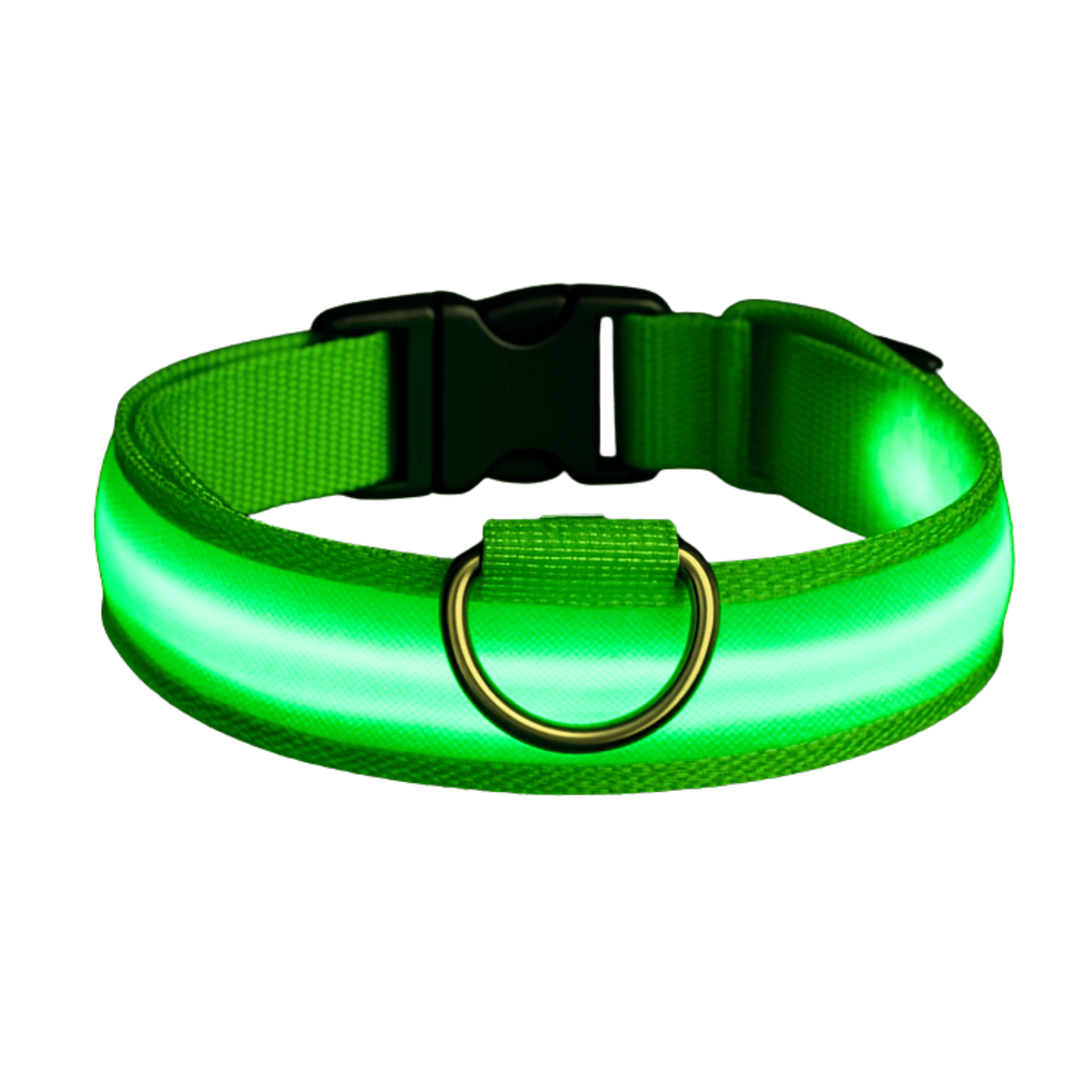
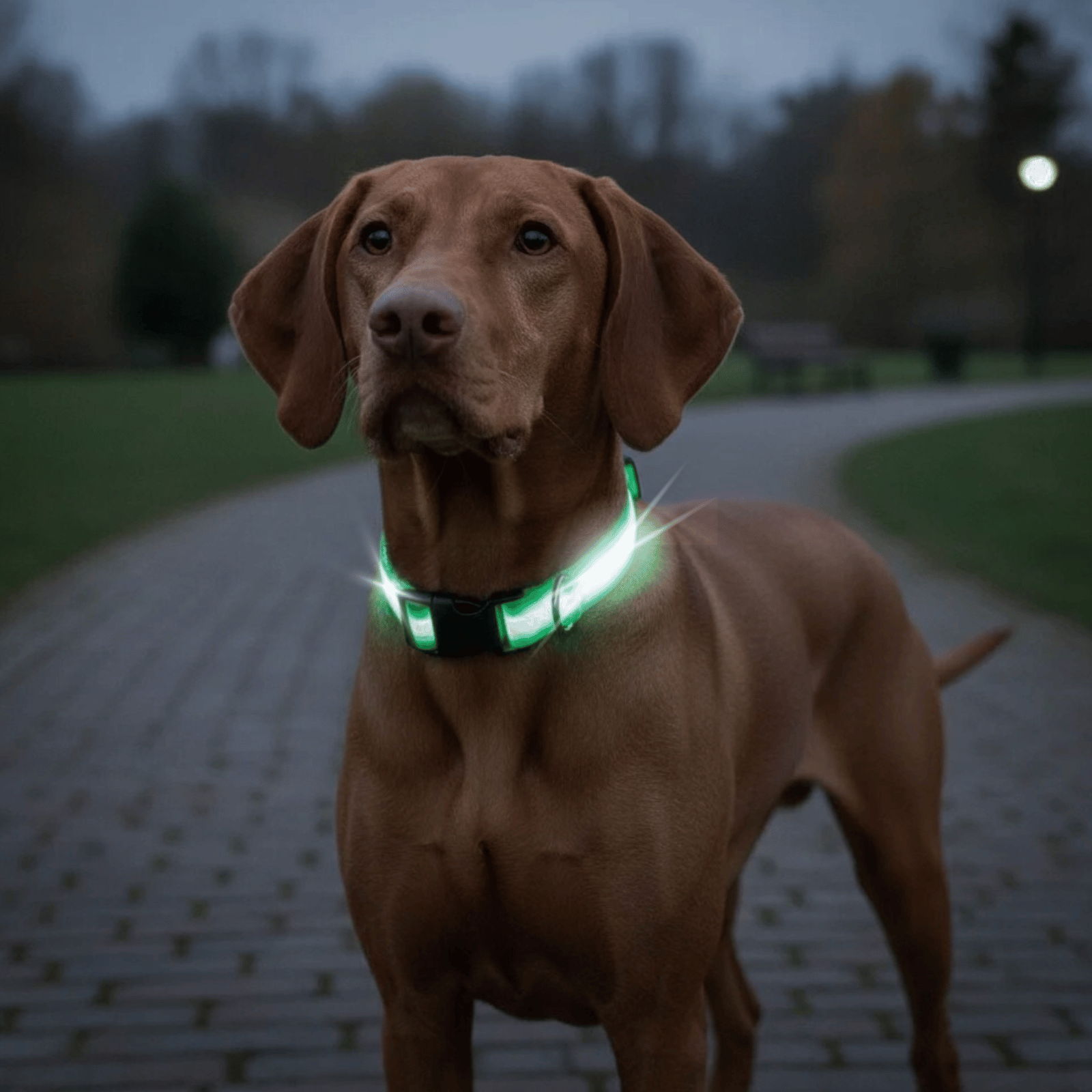
Think of the collar as your dog's "just in case" layer. It carries their ID tag and stays on whenever they're outside, whether that's in the garden, at the park or heading to the car. If something unexpected happens and your dog slips away, that collar is what helps them get home.
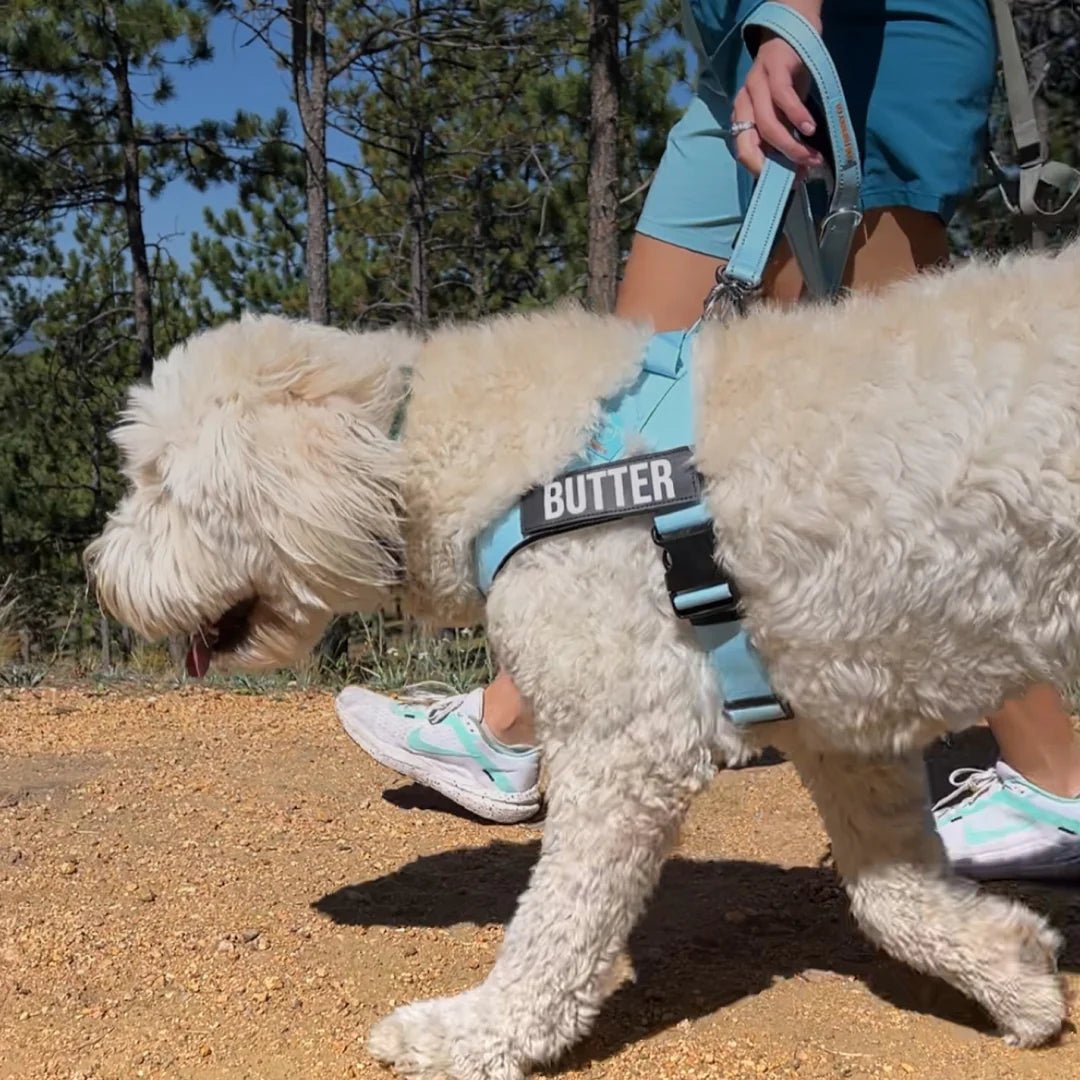
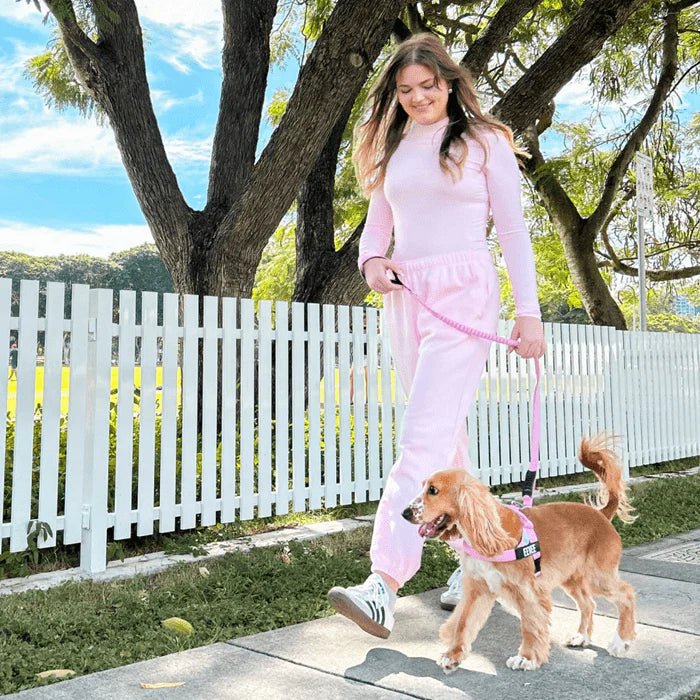
The harness is for any activity where the lead is involved. Walks, training sessions, trips to the vet, a run in the park. Clip the lead to the harness, and your dog gets the comfort and safety they need during exercise while the collar quietly does its job in the background.
Once you get into the habit, it becomes second nature. Collar on, harness on, lead clipped, out the door. Your dog is safe, comfortable and ready for whatever the walk throws at you both.
How to Find the Right Fit for Your Dog?
Even the best collar or harness won't do its job properly if the fit is off. Too loose and your dog can wriggle free. Too tight and it causes rubbing, discomfort or restricted movement. Getting it right is worth the extra minute.
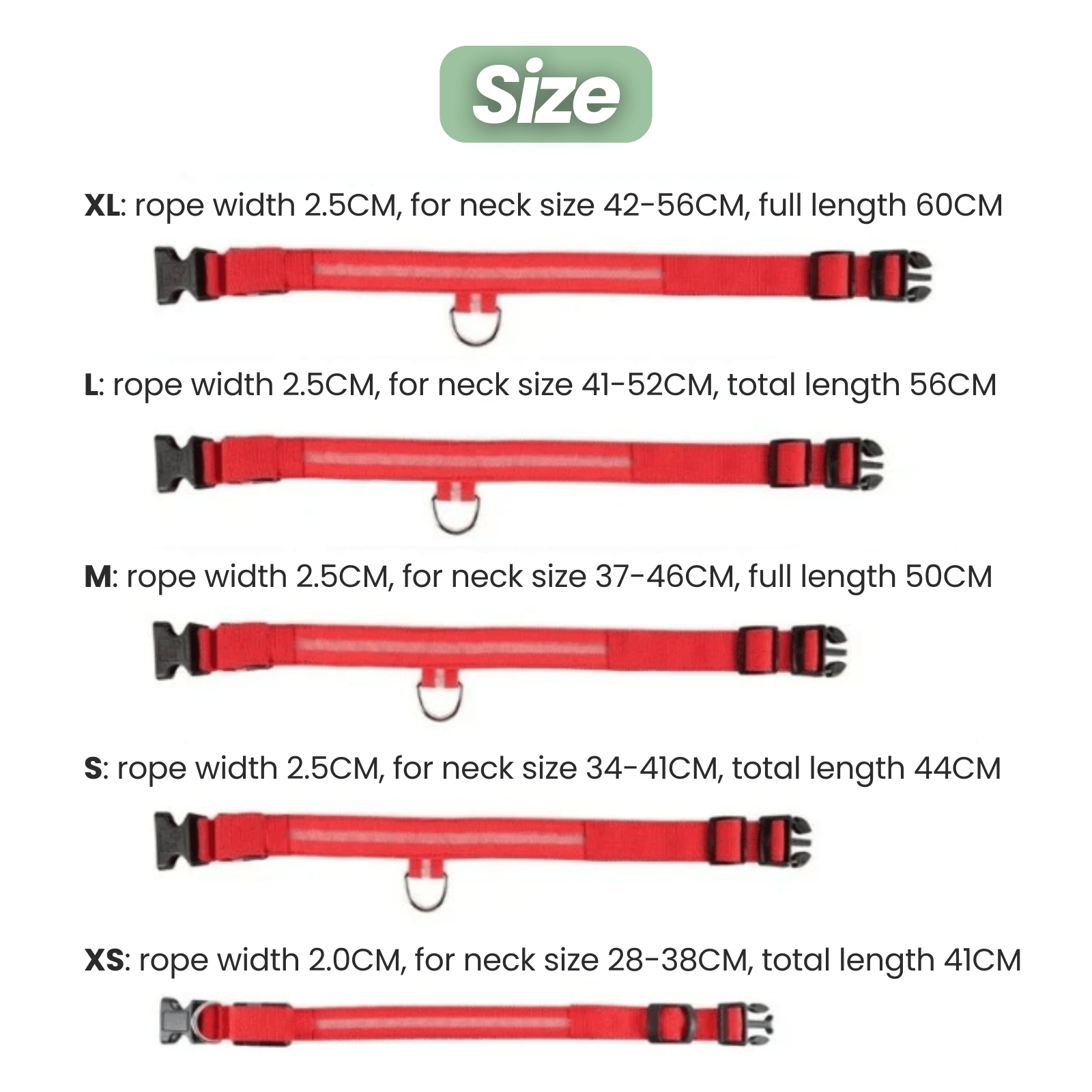
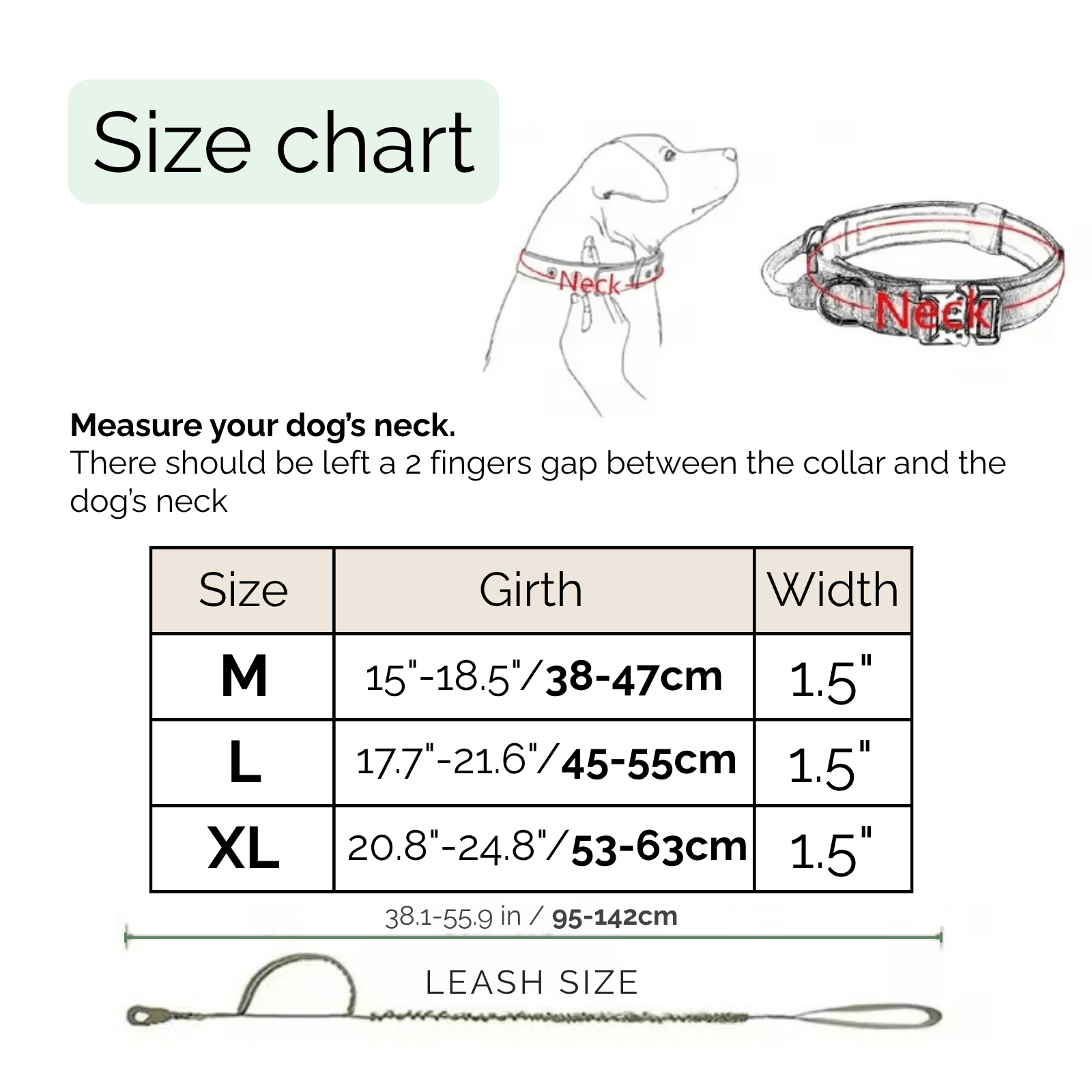
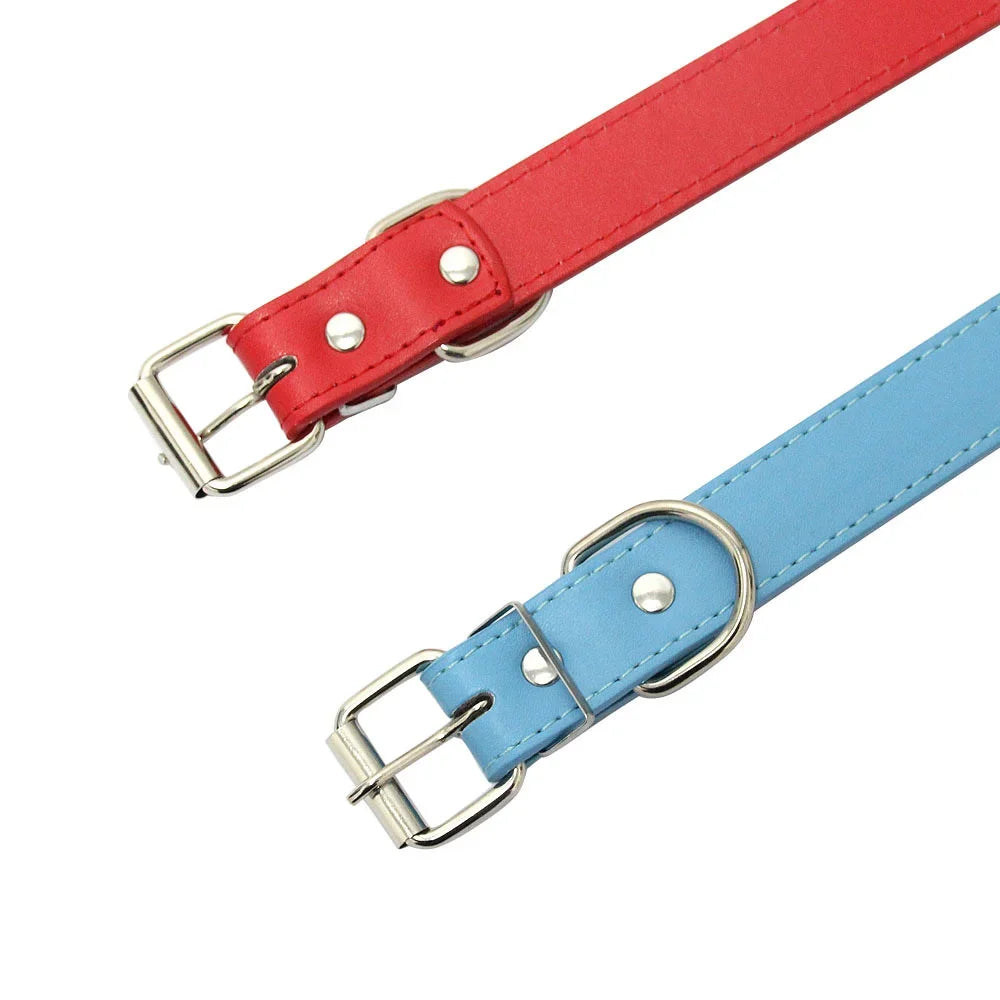
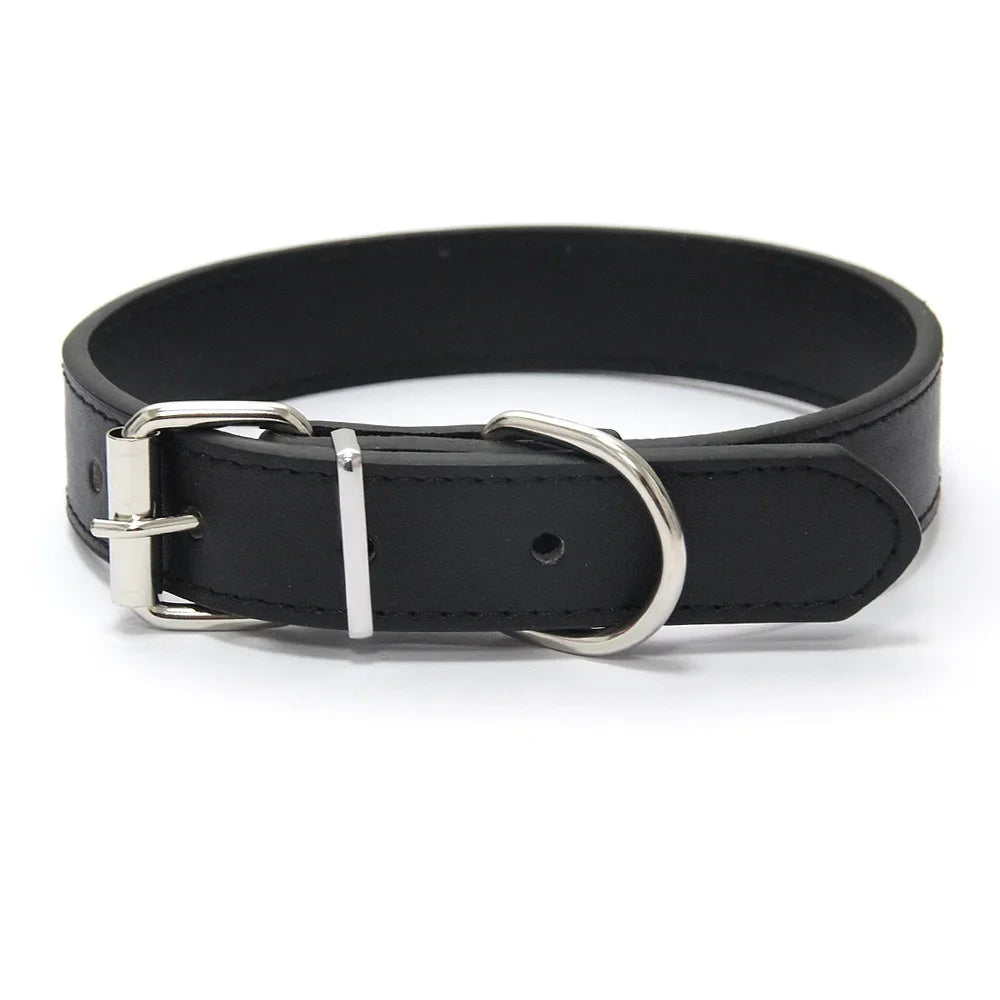
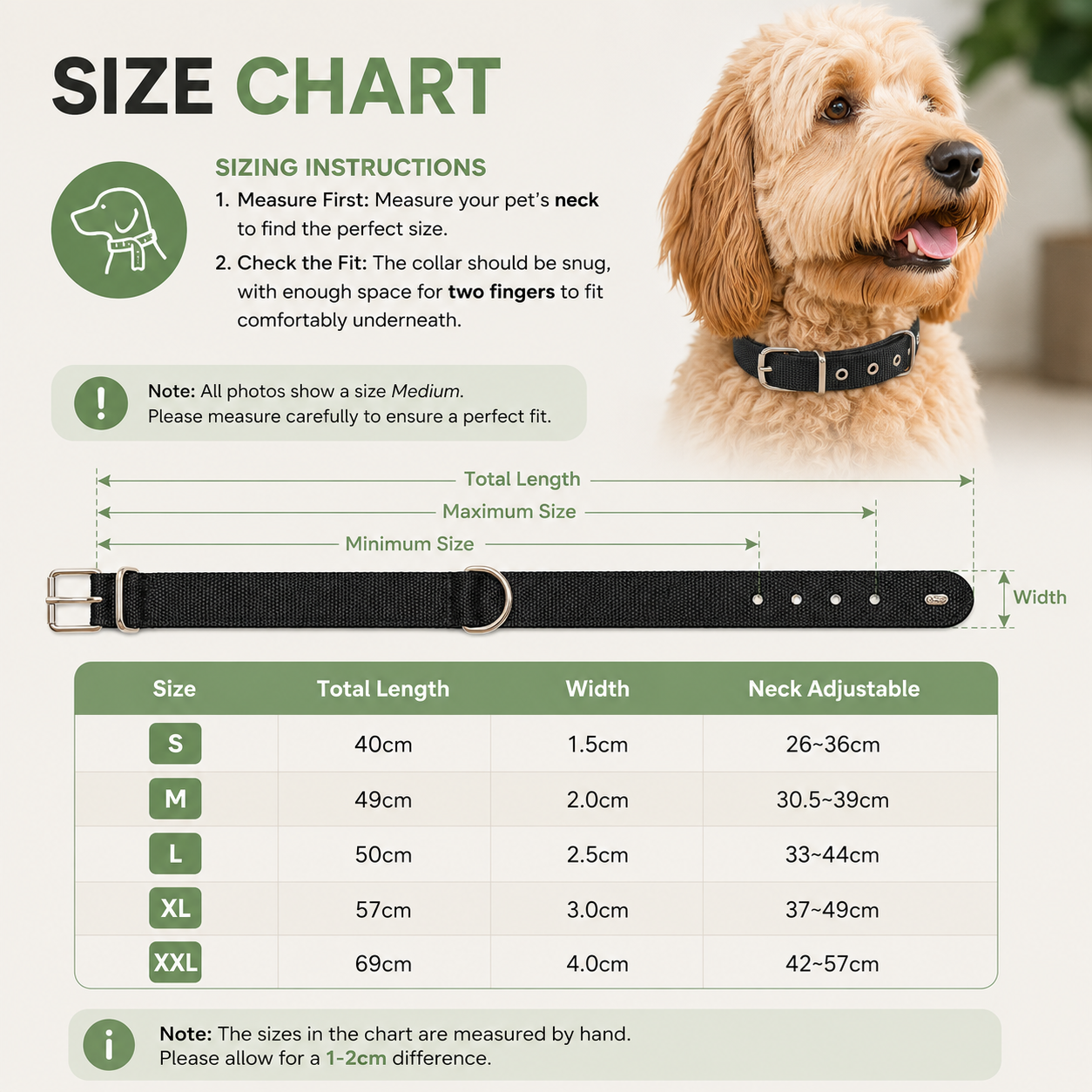
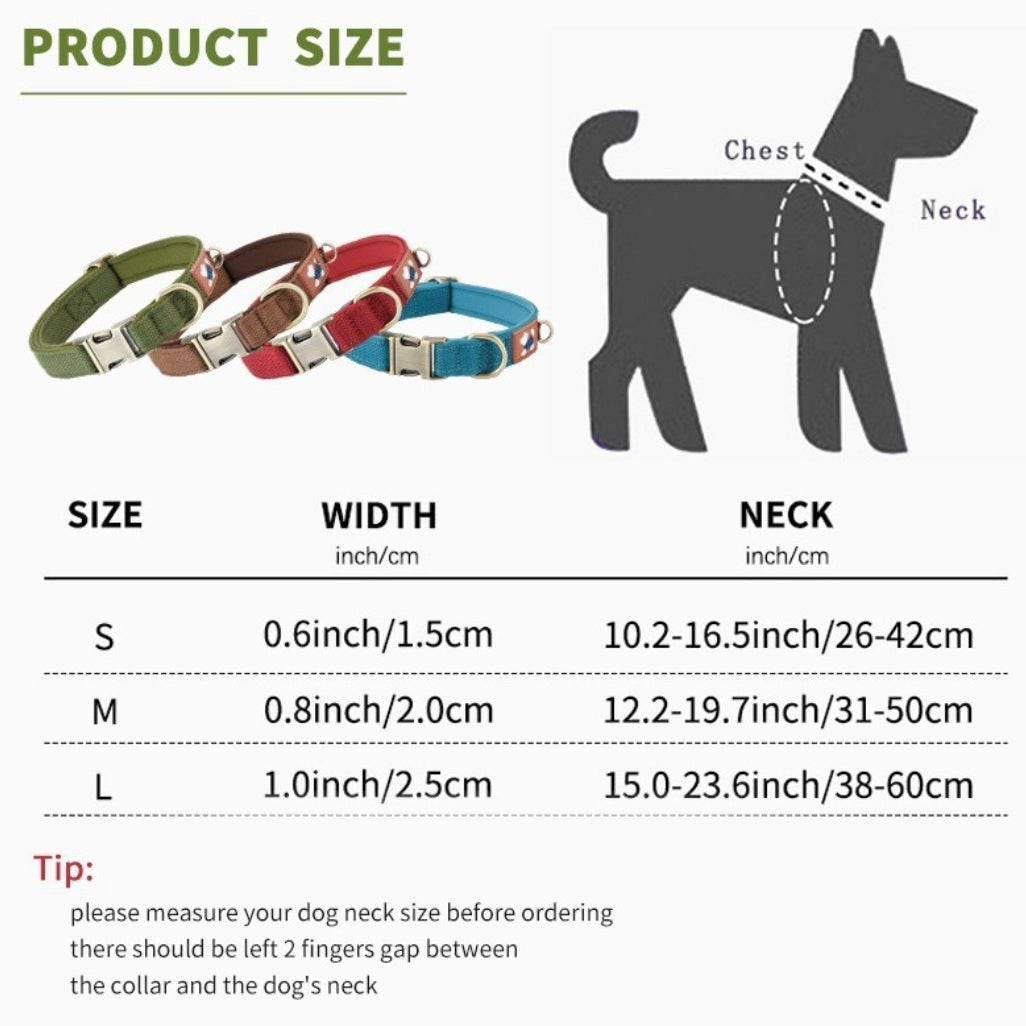
For collars, try the two-finger test: slide two fingers between the collar and your dog's neck. If they fit comfortably, you're in the right range. For smaller dogs, one finger is enough. If the collar spins freely or slips over your dog's ears, it's too loose.
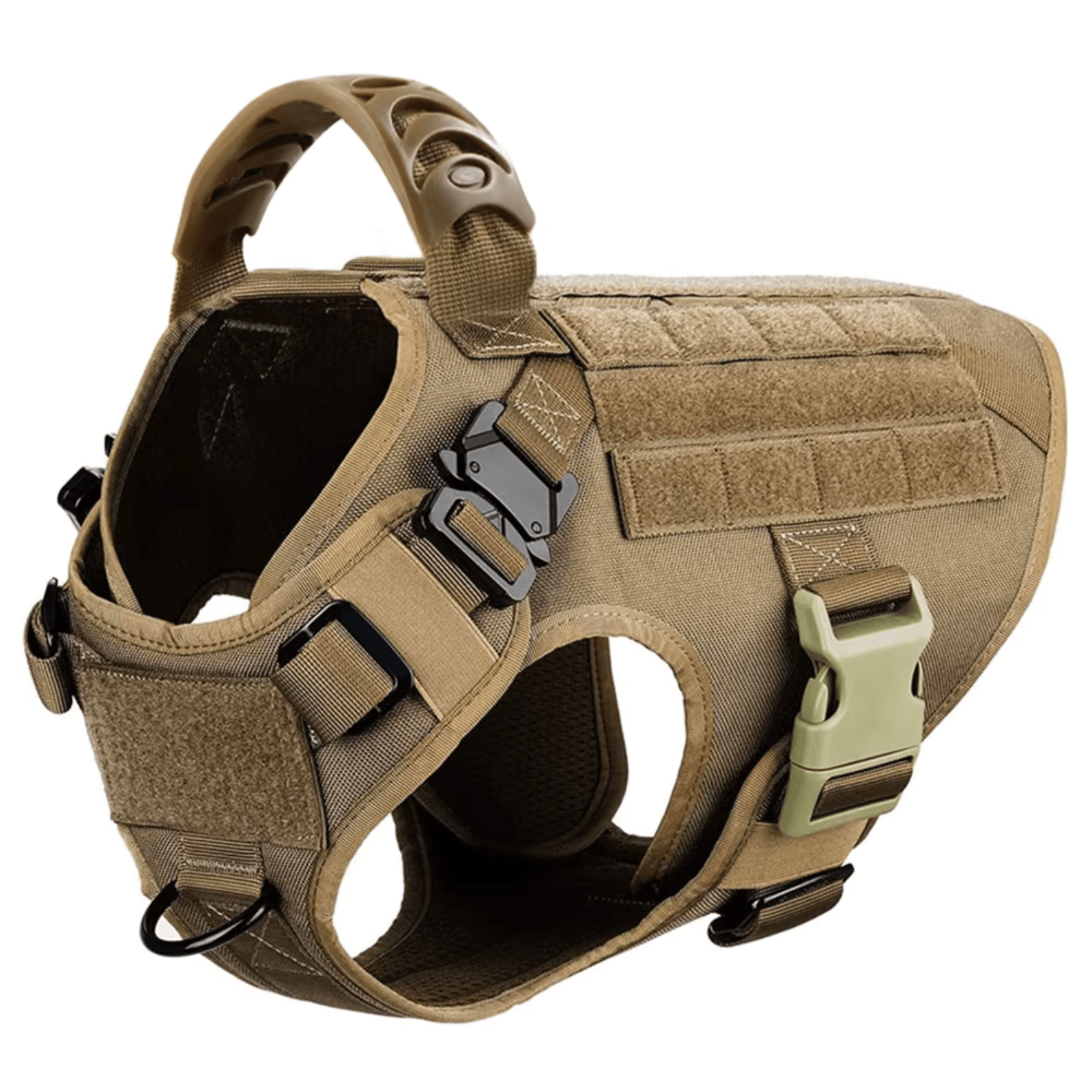
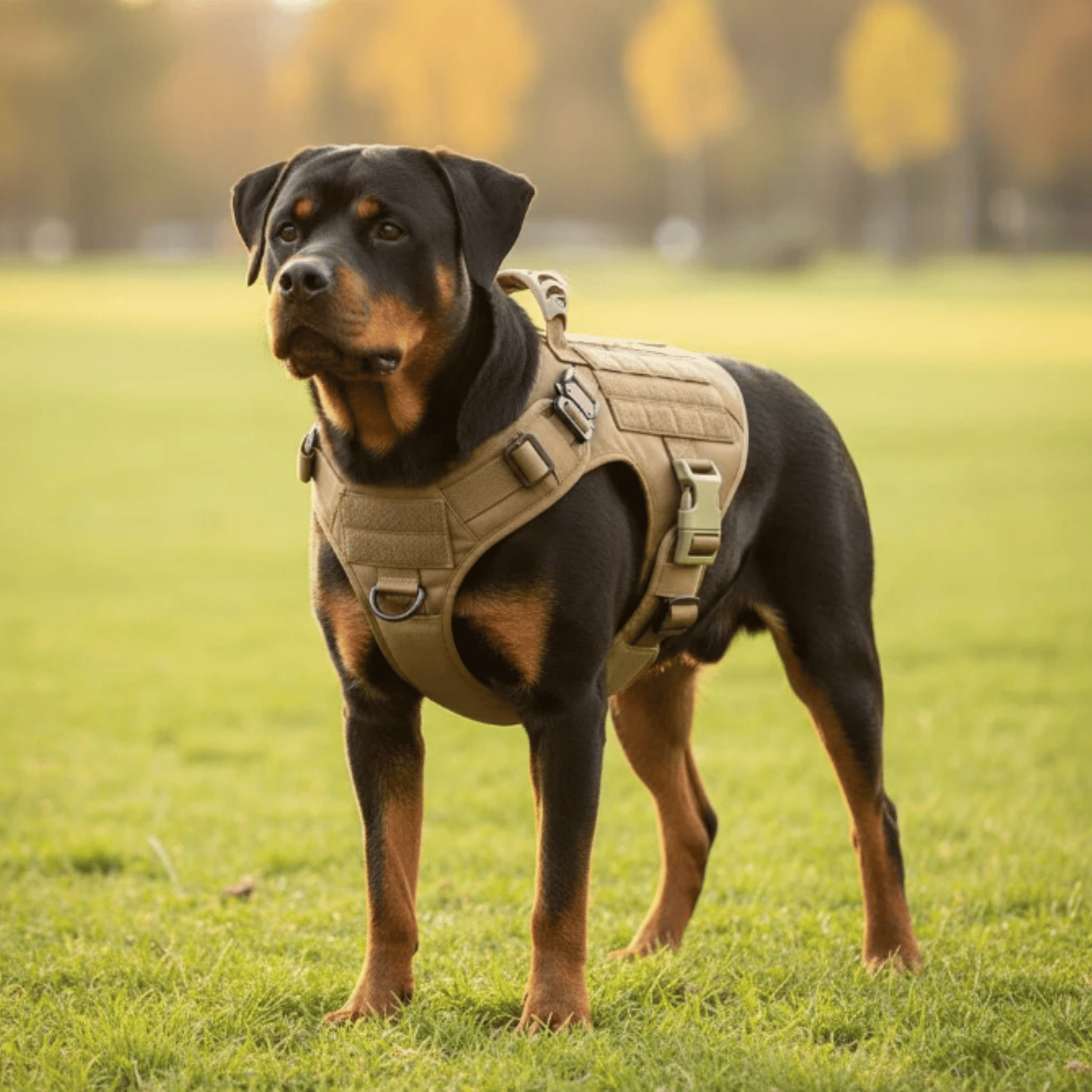
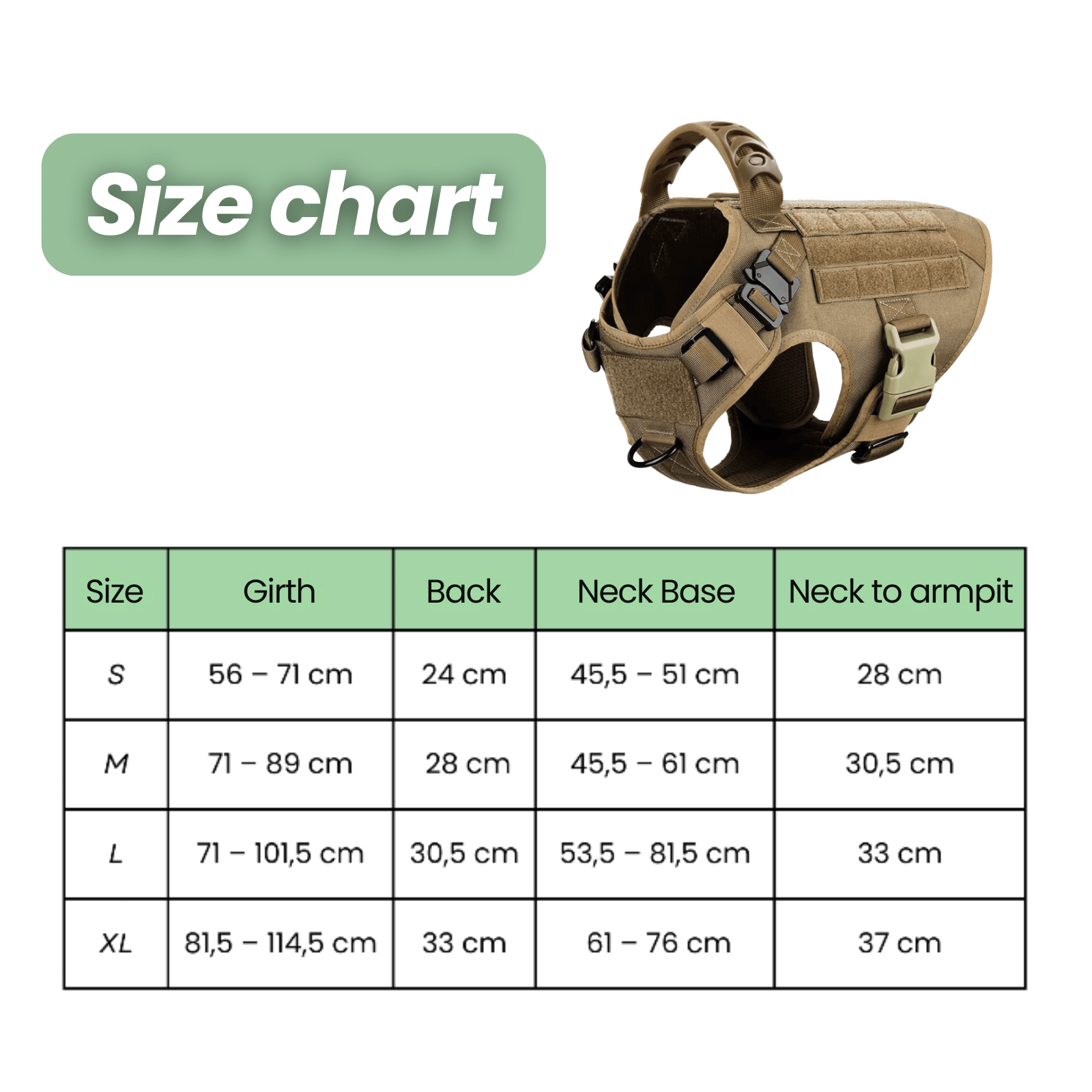
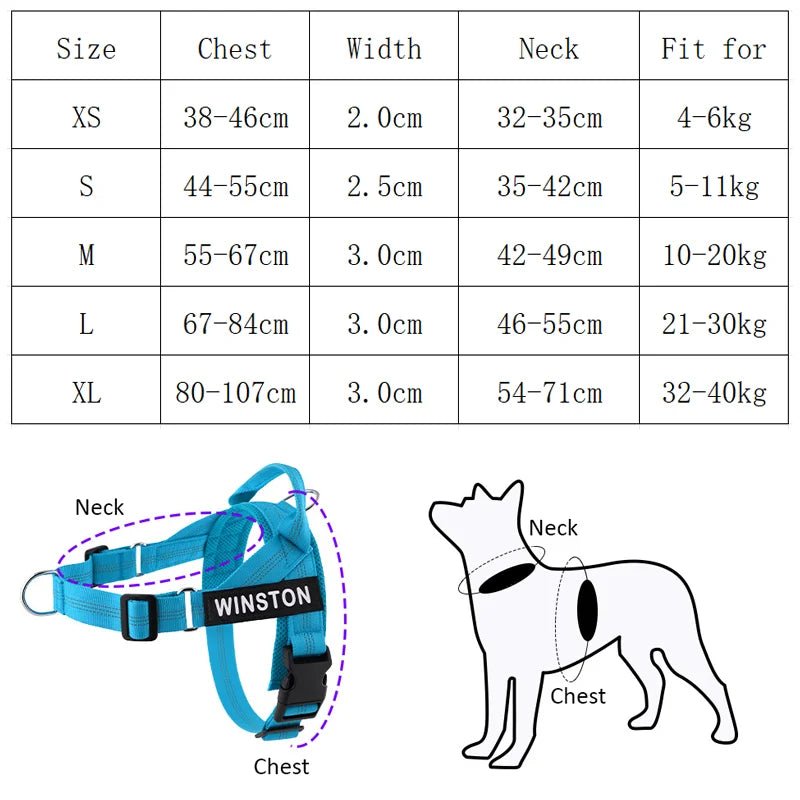
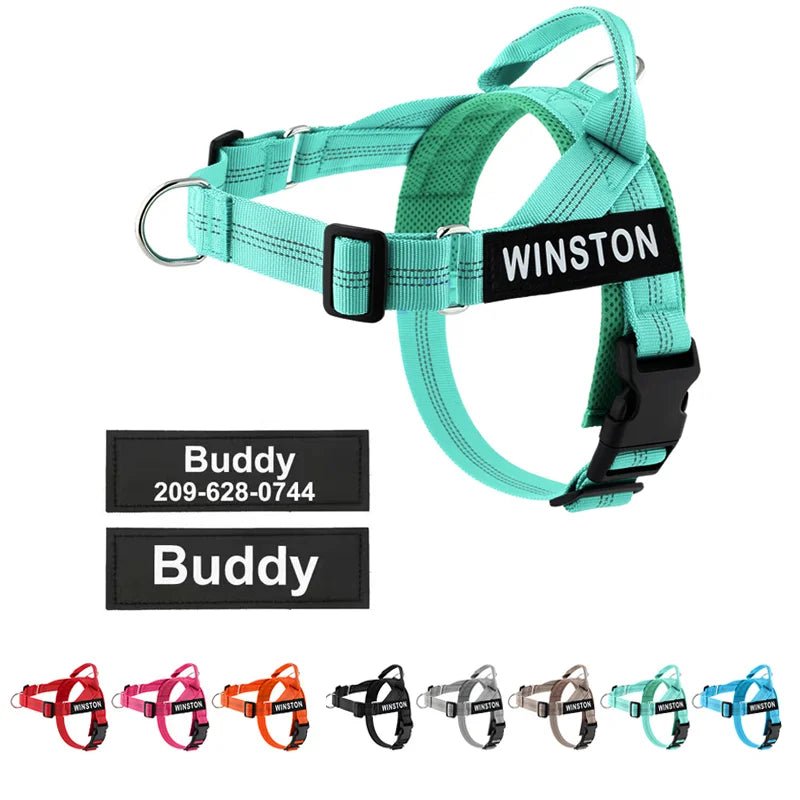
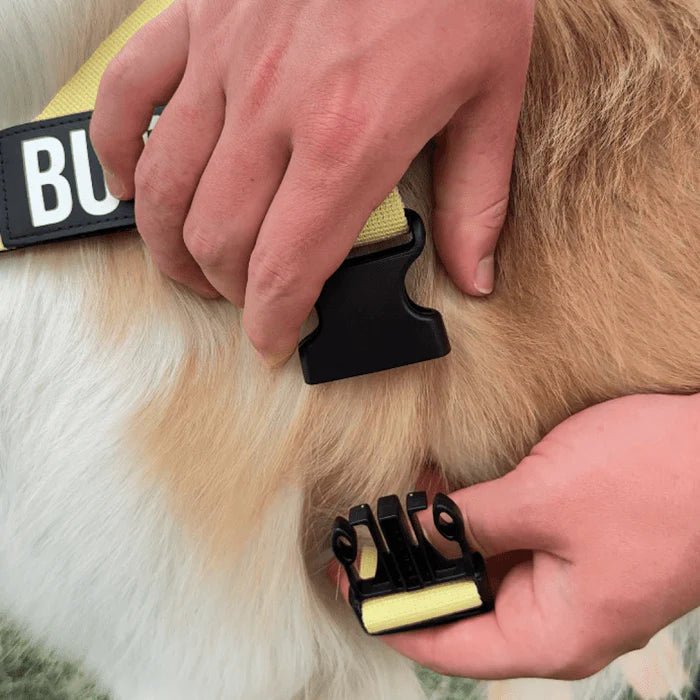
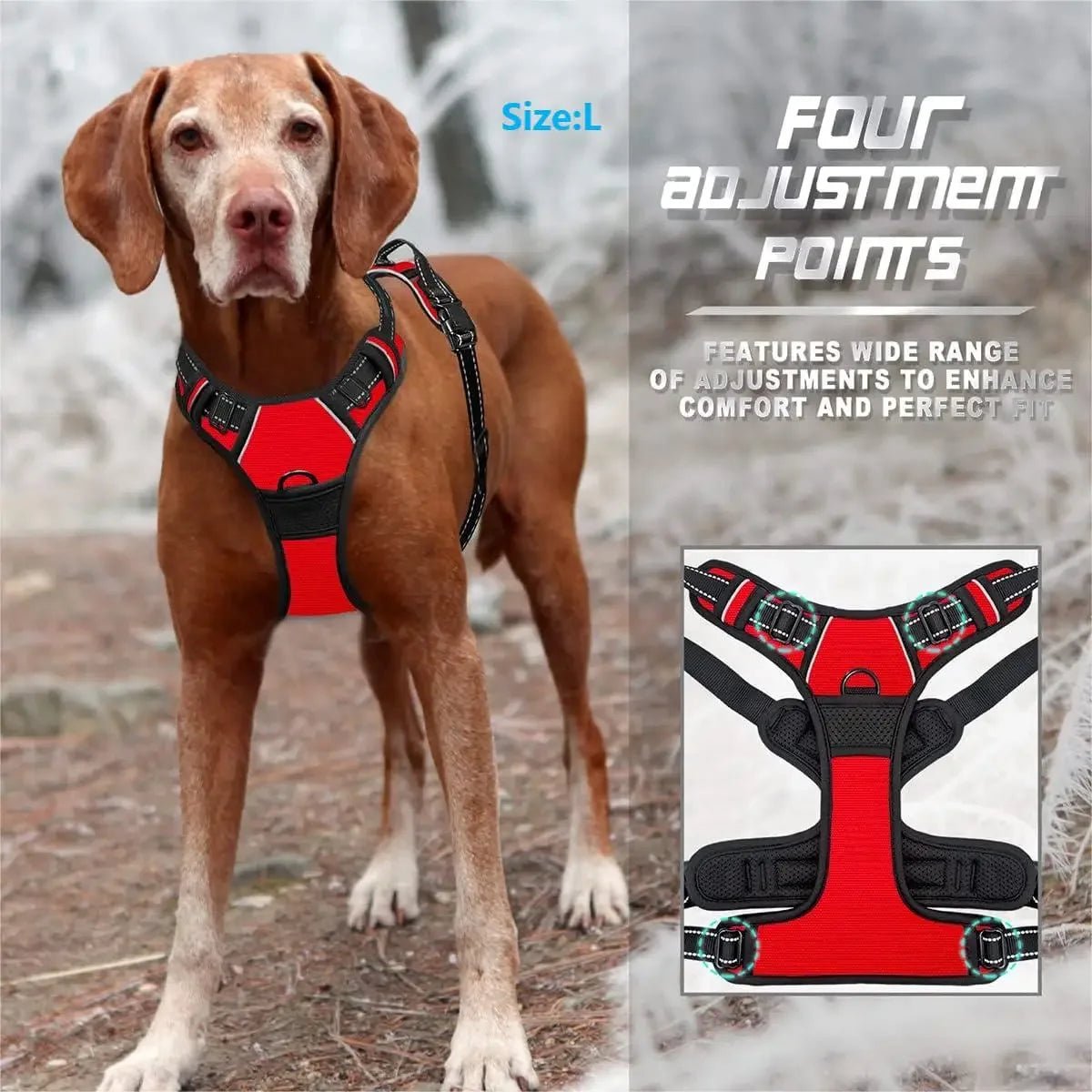
For harnesses, check that the straps sit snugly across the chest without digging in. Your dog should be able to move freely without the harness shifting, twisting or rubbing under the front legs. Most adjustable harnesses have multiple sizing points, so take the time to get each one right.
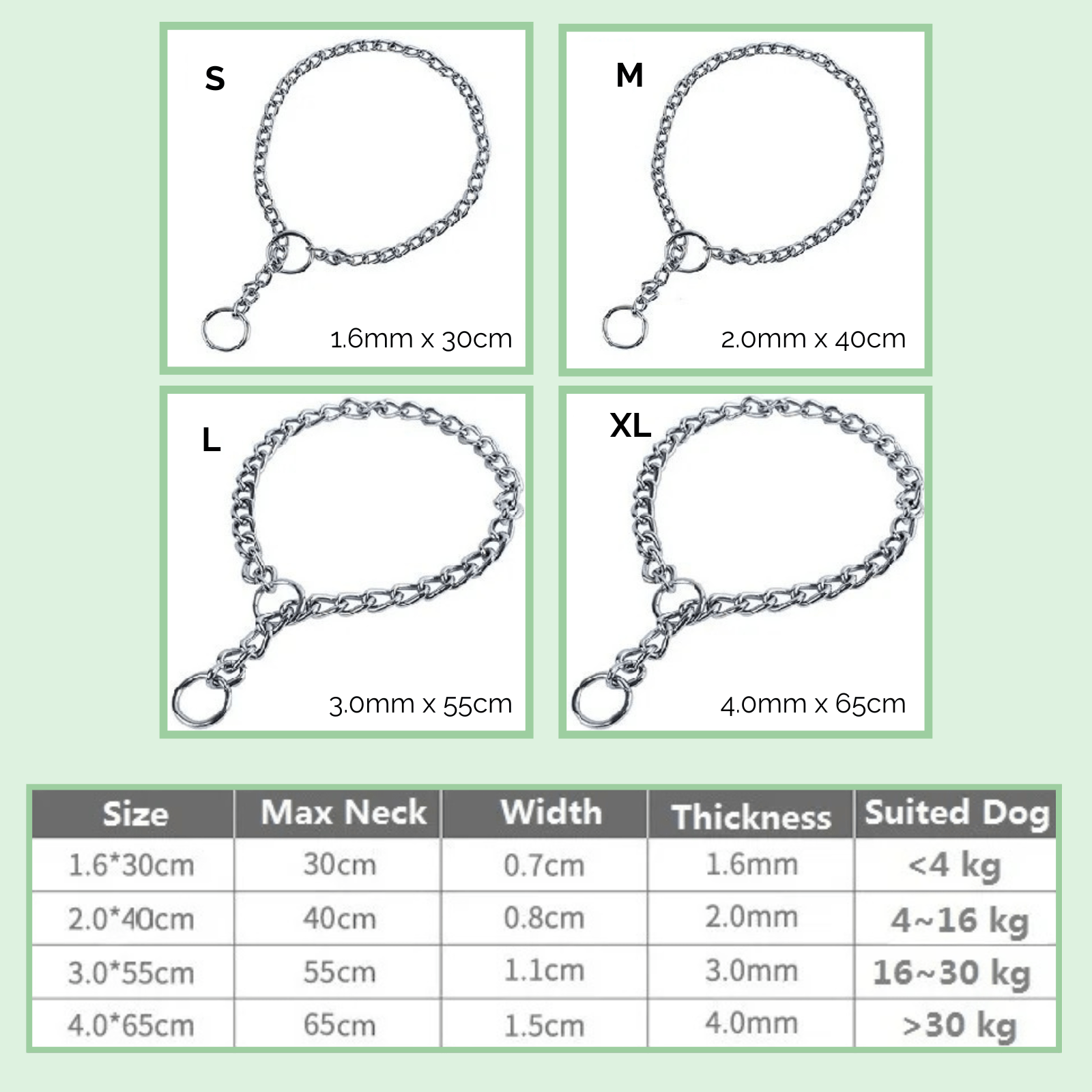
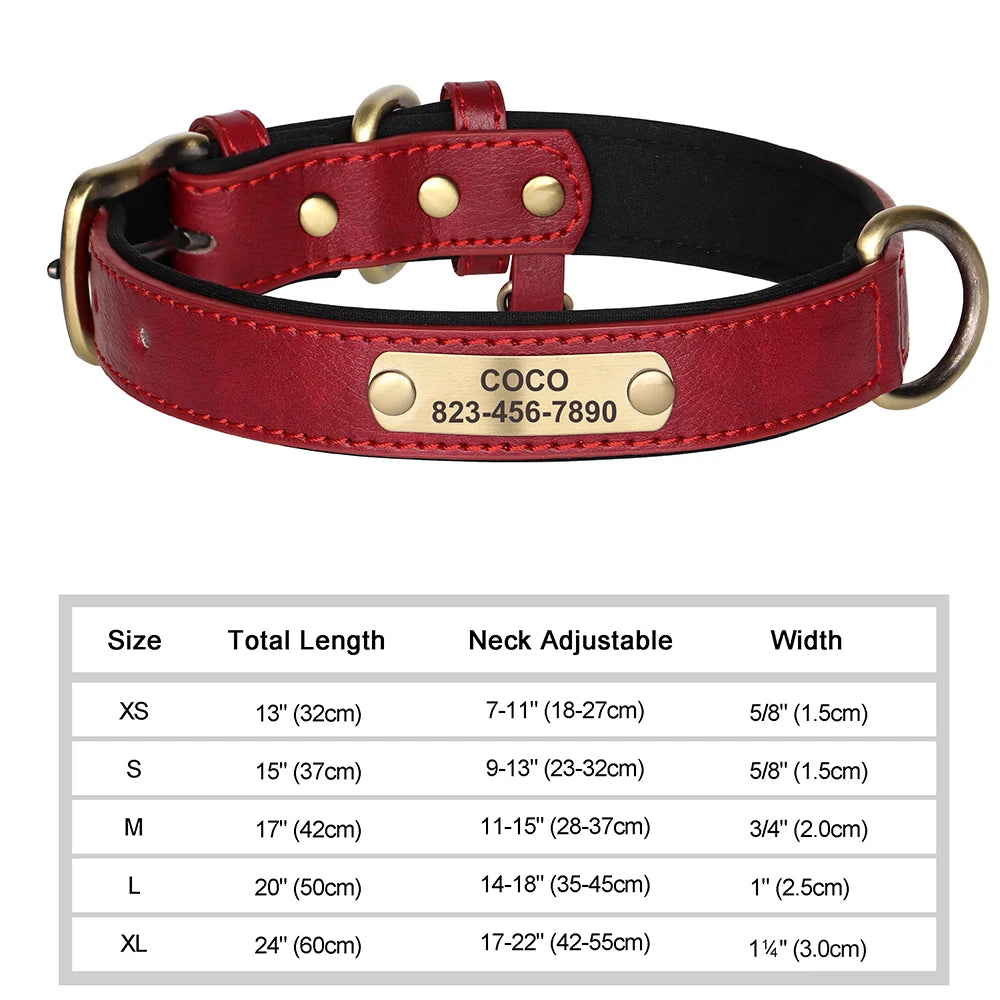
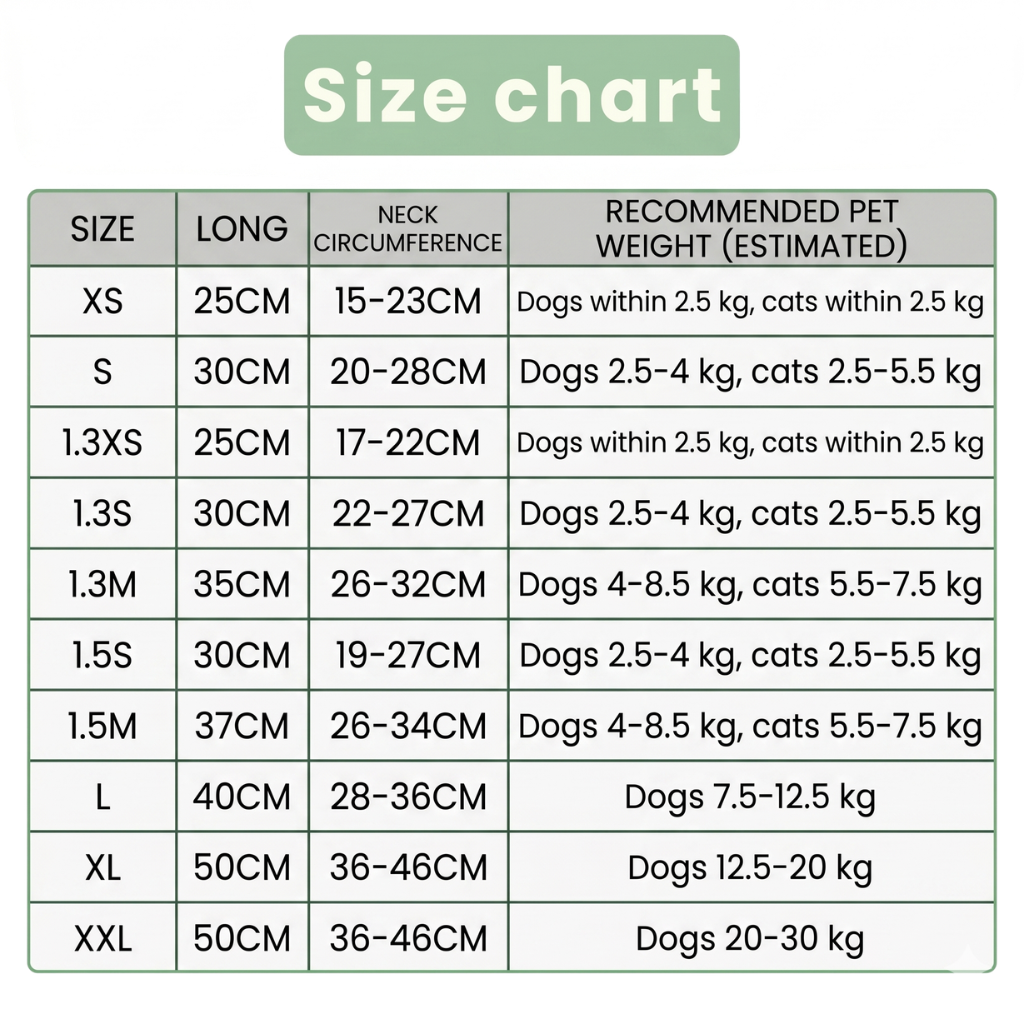
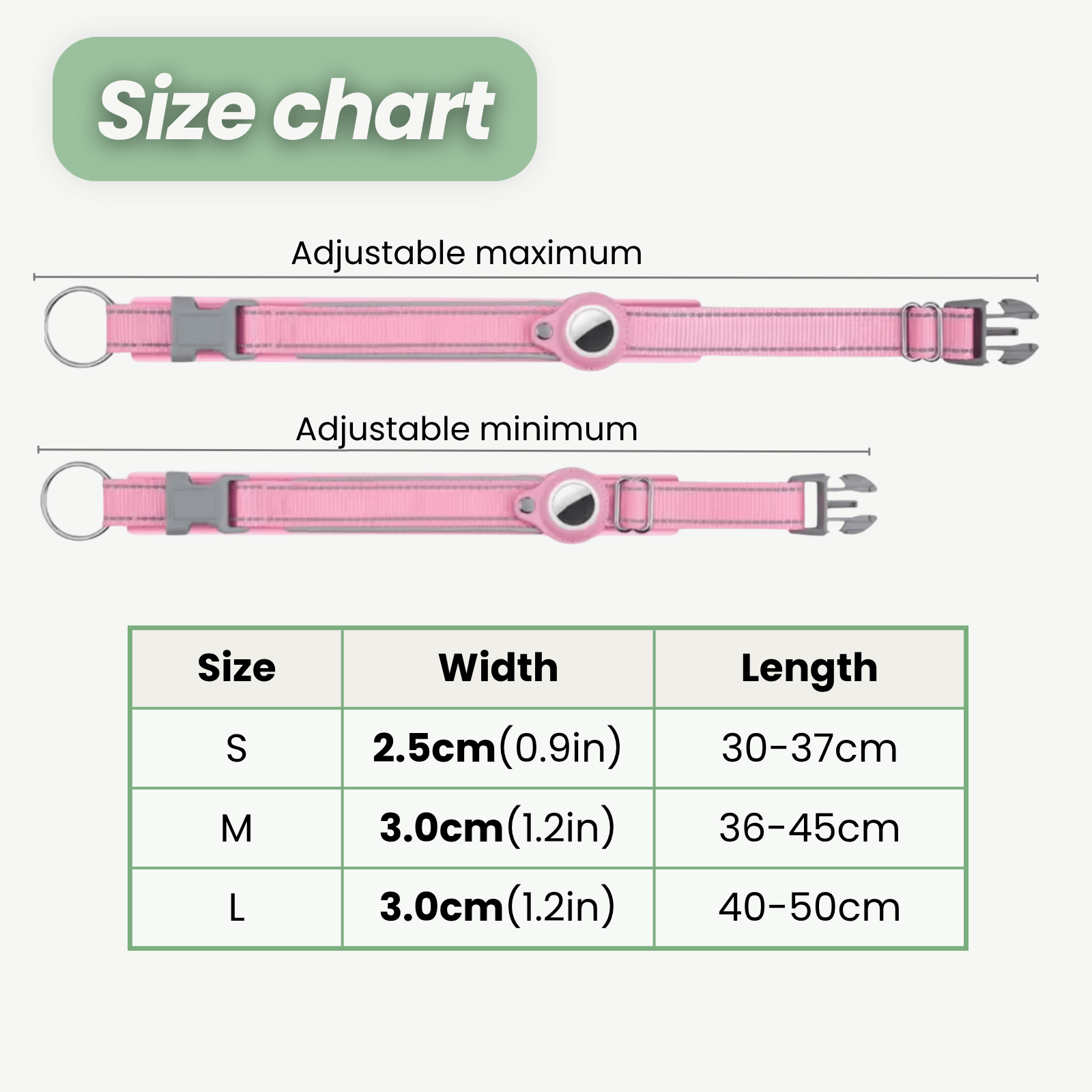
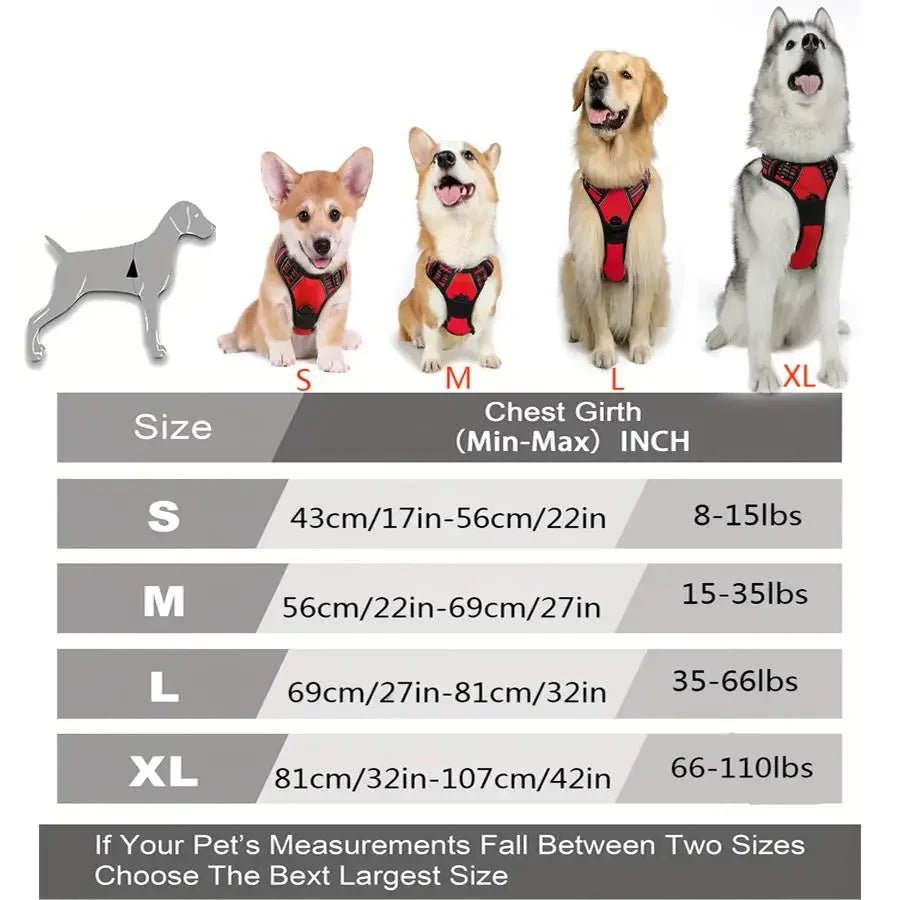
A quick measurement helps too. Wrap a tape measure around the widest part of your dog's ribcage for chest size, and around the base of the neck for collar size. Thirty seconds of measuring can save you the hassle of an uncomfortable fit. And if you have a puppy, remember to check the fit regularly as they grow. What fits perfectly at twelve weeks will be too tight by sixteen.
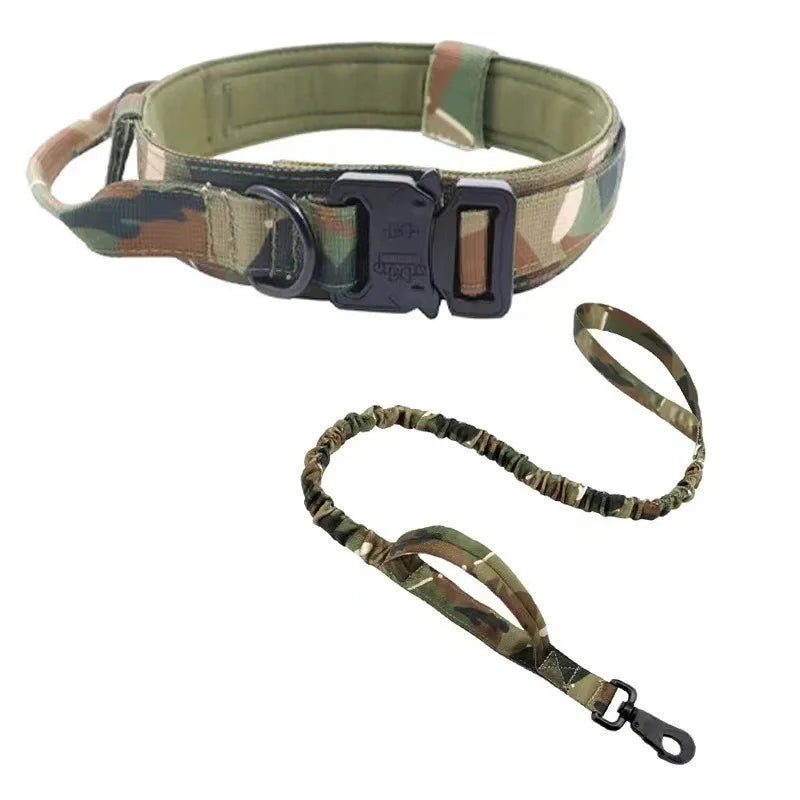
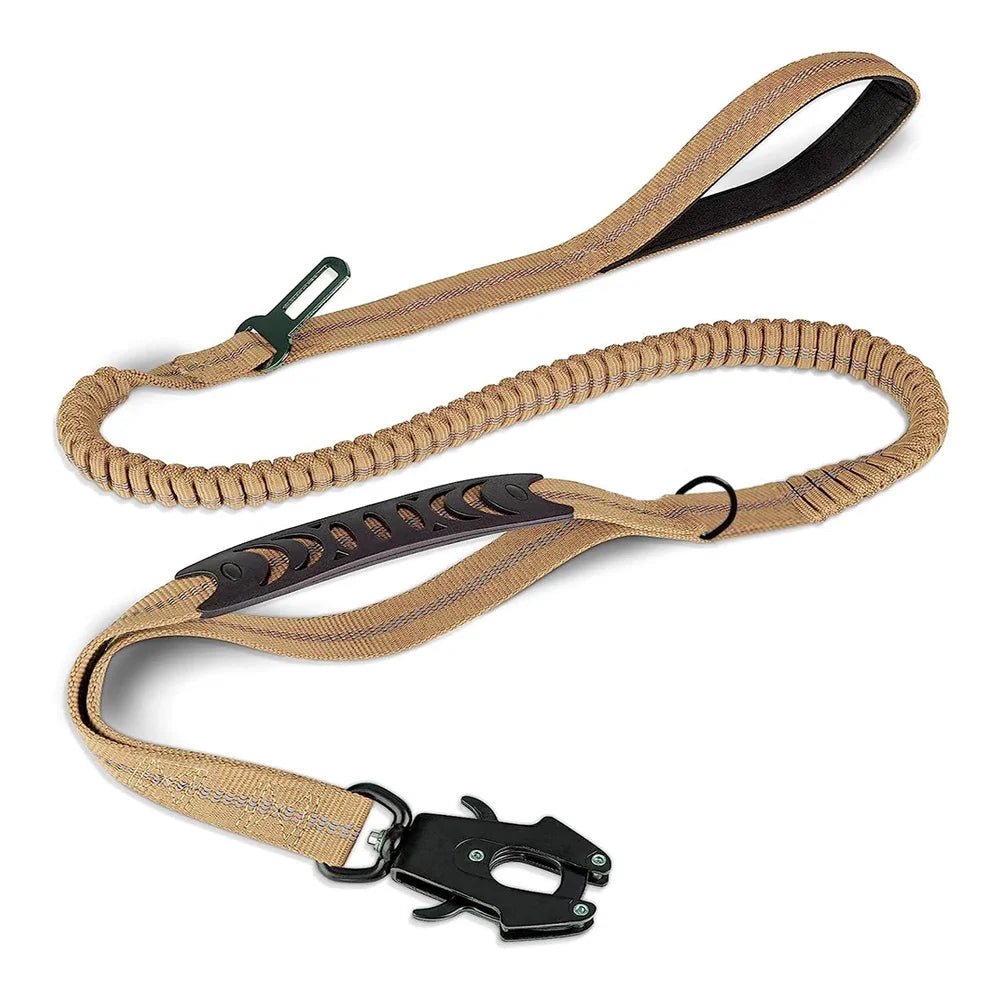
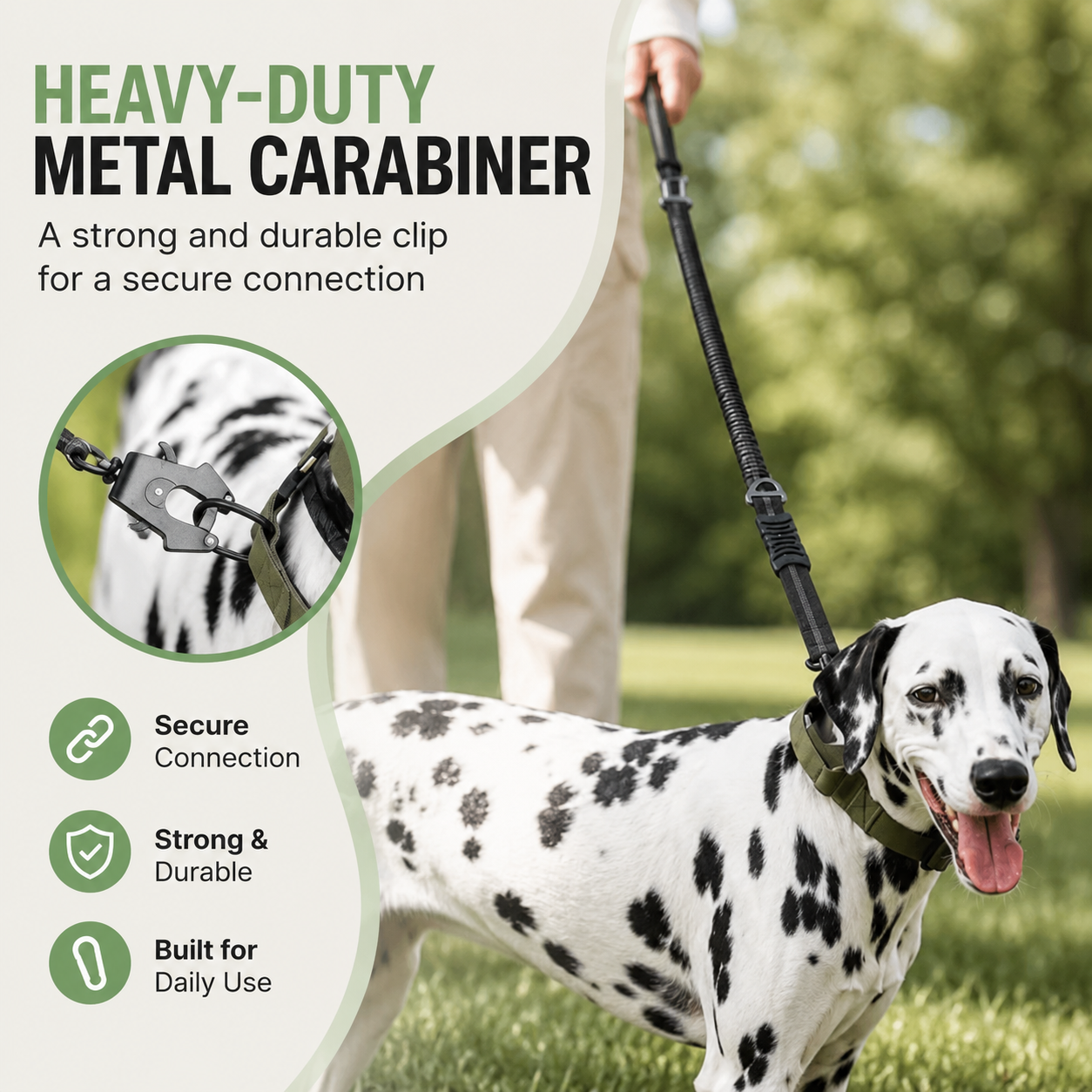
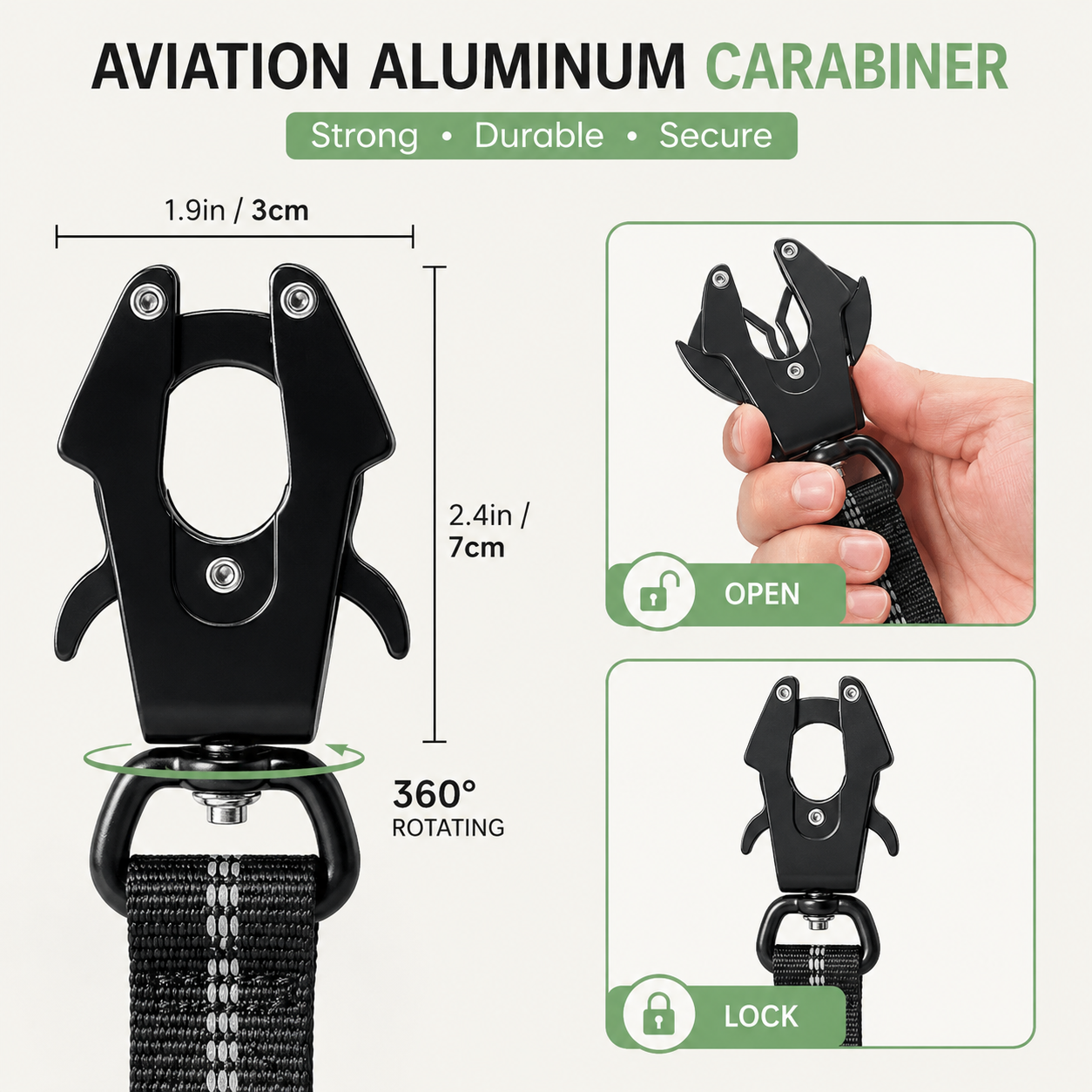
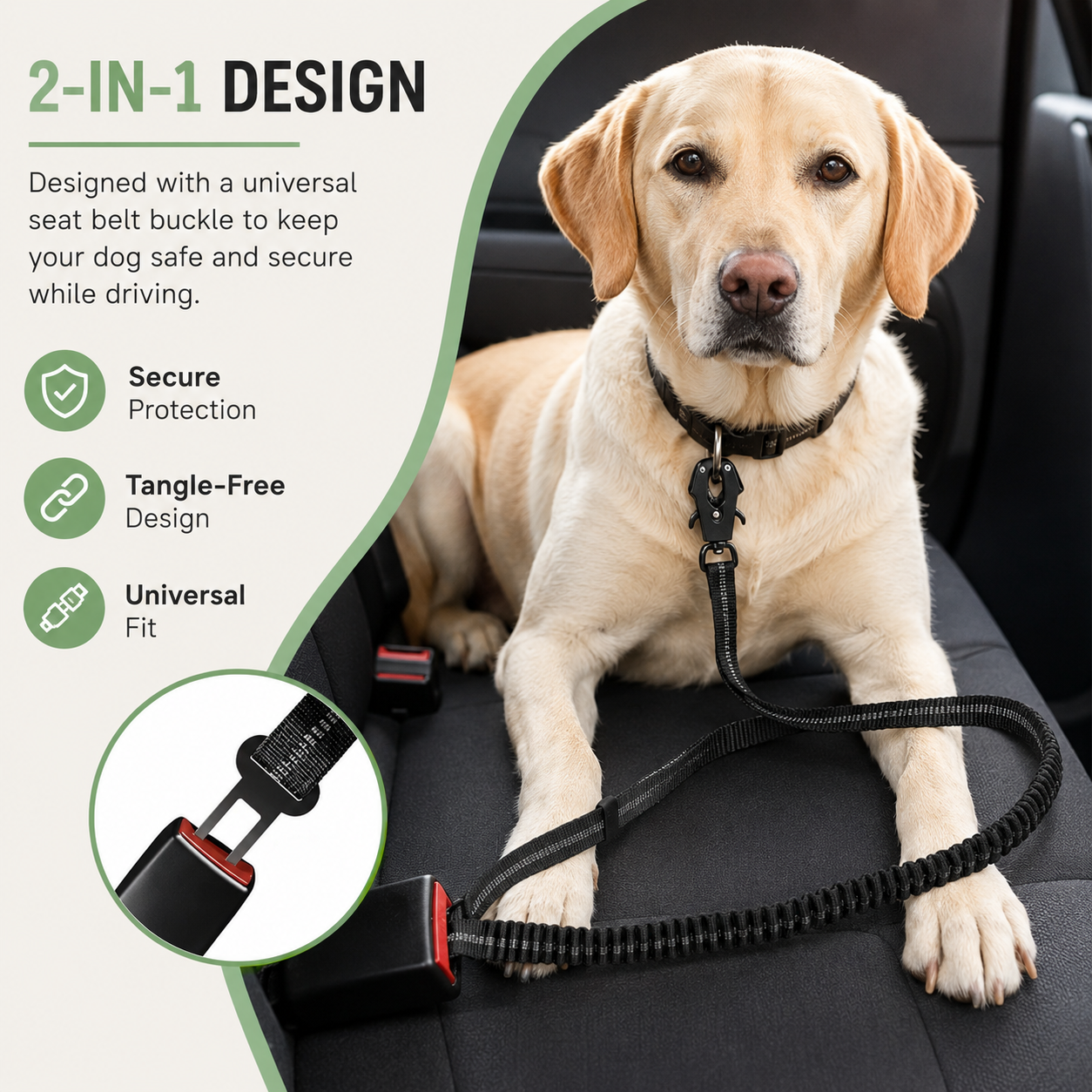
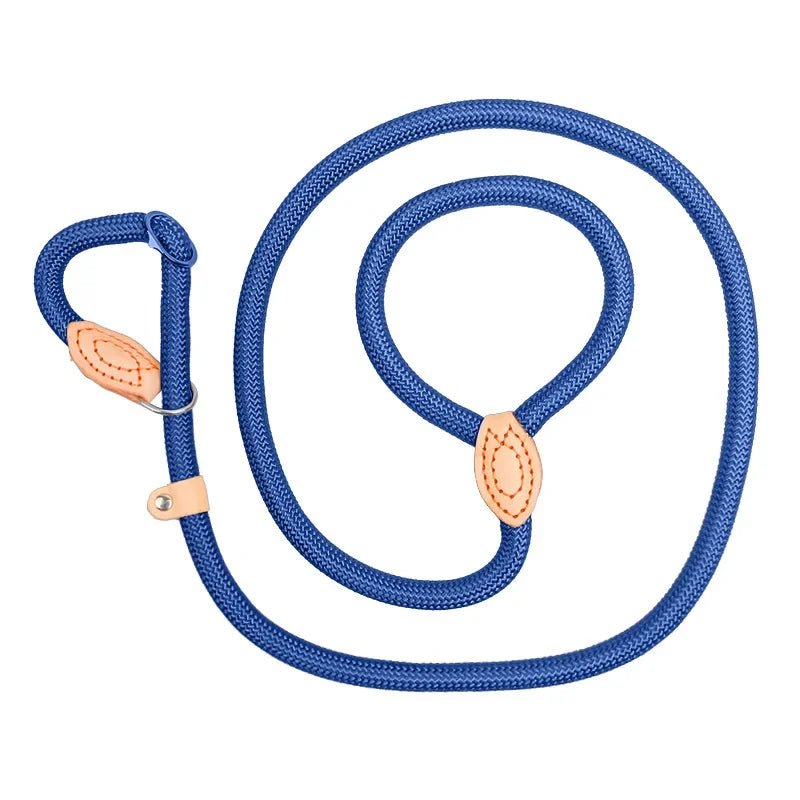
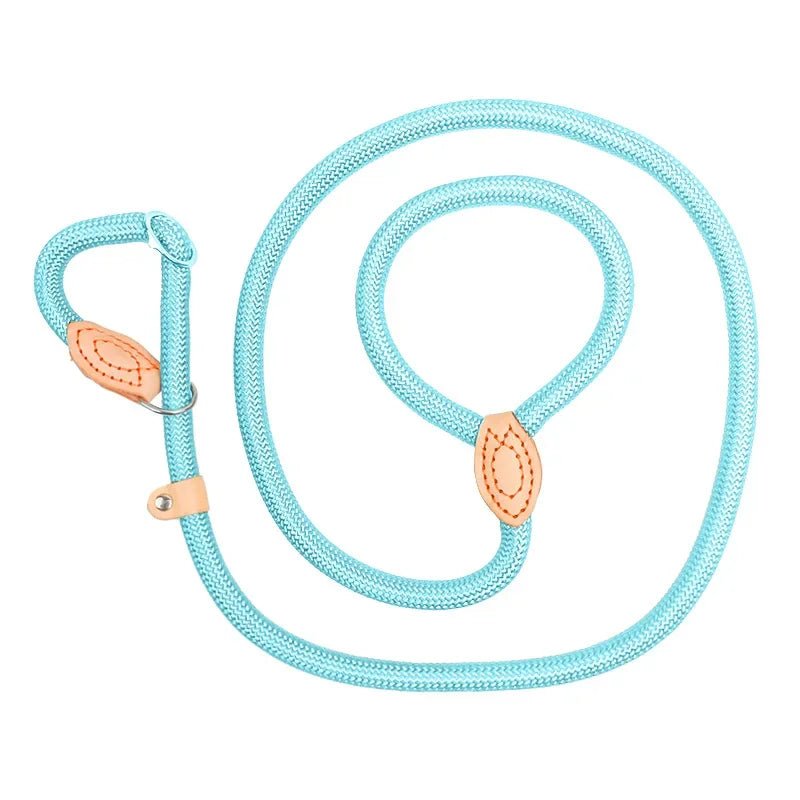
Ready to find the right gear for your dog? Have a look at our collars and leads or browse our harness collection to find something that fits properly and feels good on every walk.