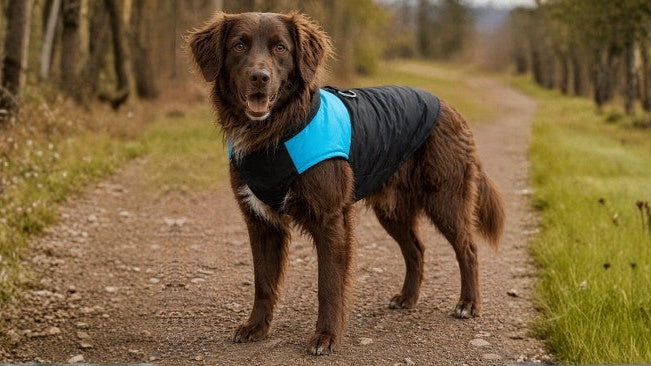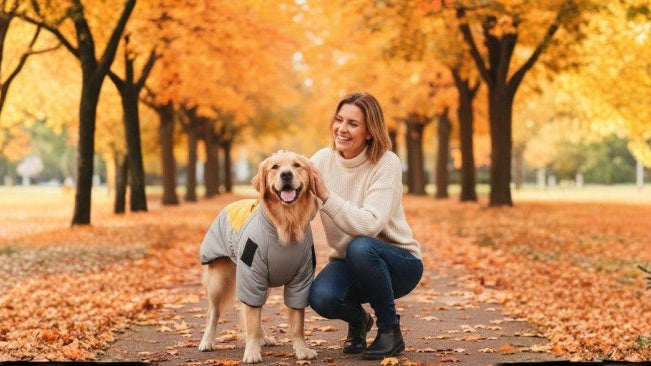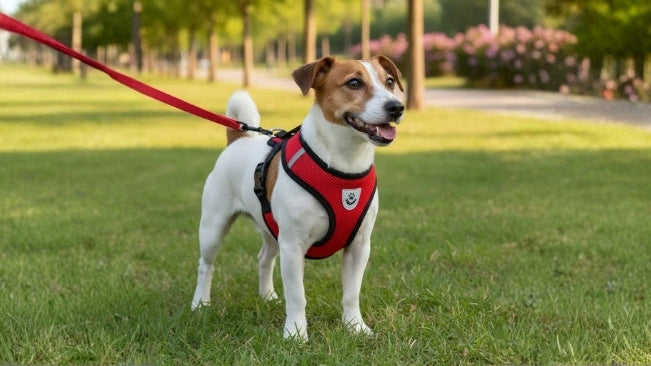

Dogs do not all need coats in winter: it depends on the dog. A thin-furred, small, young or older dog feels the cold; a thick-coated dog usually copes fine.
Do all dogs need a winter coat?
Not all dogs need a winter coat. A fit, healthy dog with a thick double coat is well insulated and handles a normal winter on its own, especially while it keeps moving on a walk. The dogs that benefit from one of our winter dog coats are the ones whose own fur does less of the work: fine or short hair, a small body that loses heat quickly, or an age or health that makes warmth harder to hold onto.
So the honest answer to whether your dog needs one is that it depends on the dog in front of you, not on the season. The rest of this guide helps you place your own four-legged friend on the right side of that line.
Which dogs benefit from a coat in winter?
Several groups of dogs benefit from a coat in winter because their body struggles to make or keep enough heat. If your dog falls into one of these categories, an extra layer on cold walks is worth considering:
- Thin-coated and short-haired breeds such as Greyhounds, Whippets, Boxers and Chihuahuas, whose fur gives little insulation.
- Small and toy breeds, which lose body heat faster than larger dogs simply because of their size.
- Low-slung breeds such as Dachshunds and Corgis, whose belly sits close to cold, wet ground.
- Puppies, whose bodies are not yet good at regulating their own temperature.
- Older dogs, which hold body heat less well and often move more stiffly when it is cold.
Lean dogs with little body fat, and dogs living with a health condition, can also feel the cold more sharply. If that describes your pet, your vet is the best person to advise on how much extra warmth they need.
Which dogs do not need a coat in cold weather?
Dogs bred for cold climates usually do not need a coat in cold weather, and adding one can do more harm than good. Double-coated breeds such as Siberian Huskies, Alaskan Malamutes, Chow Chows and Bernese Mountain Dogs carry a dense undercoat that traps a layer of warm air against the skin, which is exactly what a coat tries to add.
Zip a padded jacket over that natural system and you risk holding in too much heat, so a well-insulated dog can overheat even in winter. A heavy-set, thick-furred dog that happily trots through frost without shivering is telling you it does not need the extra layer. When a dog is already equipped for the weather, the kindest choice is to let its own coat do the job.
At what temperature does a dog need a coat?
There is no single temperature at which every dog needs a coat, but a few rules of thumb help. As a general guide, once it drops below around 7°C the more vulnerable dogs, the thin-coated, small, young and older ones, start to feel it and benefit from a layer.
At or below freezing, 0°C, that group widens and even some sturdier dogs appreciate the warmth on a long, still, damp walk. Below roughly minus 5°C, keep every walk short and watch your dog closely whatever its breed. Wind and rain make any temperature feel colder, so treat these figures as a starting point and let your dog's behaviour, covered next, have the final say.
How to tell if your dog is cold in winter?
The clearest sign your dog is cold in winter is its own behaviour, which reads more honestly than any thermometer. Watch for shivering, whining, a hunched posture, or a dog that lifts its paws off the ground, slows right down or plants itself and refuses to walk on. Some dogs will turn for home or try to tuck under a bench.
If you see these signs, cut the walk short and warm your companion up gradually rather than all at once. It works both ways: a dog that pants, drools or wriggles to get out of its jacket may be too warm, so take the layer off. When in doubt, trust what your dog is showing you.
What type of winter coat is best for your dog?
The best type of winter coat depends on the weather your dog walks in and how much warmth it needs. Most owners choose from a few clear styles:
- A waterproof raincoat, a light shell that keeps a dog dry in wet weather without adding much warmth.
- A fleece-lined coat, which adds insulation and suits frosty mornings or dogs that feel the cold.
- A multipurpose coat, waterproof and windproof with a padded or fleece layer, which suits most British winter days on its own.
- A softshell coat, breathable and stretchy for active dogs that would overheat in heavier padding.
- A high-visibility coat, useful on dark winter mornings and evenings so your dog stays easy to see.
For a wet, blustery winter, a breathable waterproof layer usually beats a thick jacket that soaks through, because a damp coat chills a dog rather than warming it.
How should a dog coat fit?
A dog coat should fit snugly without restricting how your dog moves. It needs to cover the back between the base of the neck and the base of the tail, sit close to the body without pulling, and leave the legs and belly free enough for a full stride, a squat and a good shake.
A simple check is to slide two fingers between the coat and your dog: if they slip in easily but the coat does not sag, the fit is about right. Watch for a dog that bites at the coat, freezes in place or rubs against the furniture, as that usually means the fit is wrong rather than that the dog dislikes coats. Measure along the back before you buy, since a coat that fits your neighbour's spaniel may swamp or squeeze yours.
Getting your dog through winter comfortably comes down to knowing your own companion: its coat, its size, its age and the way it behaves when the cold bites. At Duke & Scoop we pick everything the way we would for our own dogs, so if your four-legged friend is one of those that genuinely feels the chill, a well-chosen winter coat is a small thing that makes the colder months a lot kinder. Keep an eye on your dog, dress for the weather it actually walks in, and let its comfort lead every choice.